 |
|
 |
|
 |
|
 |
|
 |
|
 | 6.
Reinhold Vasters Pendant? This album covers research being done to ascertain whether this is a pendant made by Reinhold Vasters, as well as whether the (mostly) matching pendant from two Parke Bernet auctions is the same pendant or a "twin."
In the 1820s Renaissance jewelry, long out of fashion, became popular among the European elite. Some genuine pieces had survived, but the limited supply of genuine Renaissance jewelry could not keep up with 19th century demand.
A great write-up on Reinhold Vasters and his possible connection to the jeweler Alfred André (1839-1919) and the brilliant dealer, Frédéric Spitzer (1815-90) is in the Christie's catalog for the Collection of the late Baroness Batsheva de Rothschild 14 December 2000 at http://www.christies.com/LotFinder/lot_details.aspx?intObjectID=1938943
Some partial text:
In the last thirty years or so, jewelry and silver historians have begun to realise the sheer number of pieces made in the latter part of the 19th Century in the Renaissance style. The discovery, in the Victoria and Albert Museum library, of some 1,000 designs for jewelry and the mountings of hardstone by the goldsmith, Reinhold Vasters of Aachen, has revolutionised our thinking on the subject. Work by Charles Truman and Dr Yvonne Hackenbroch on Vasters and, more recently, by Rudolf Distelberger on the Parisian jeweller, Alfred André, have to some extent clarified the picture. However, the links between these two craftsmen, their workshops and the collector and dealer in Paris, Frédéric Spitzer, remain somewhat obscure.
Reinhold Vasters (1827-1909) was born near Aachen and entered his mark as a goldsmith in that city in 1853. He was very shortly thereafter appointed restorer at the Aachen Cathedral Treasury. His early work seems to have concentrated on church silver which he marked, very straight-forwardly, R. VASTERS in a rectangular punch (3). In addition there are two recorded Renaissance style jewels from this period which bear an RV conjoined mark struck on a small applied plaque on the reverse, which are almost certainly by him (4). By the late 1860s he seems to have given up making new church silver and turned to working mainly on unmarked secular pieces in the Gothic and Renaissance style. It is particularly interesting that, in 1865, the Cathedral authorities ordered an early 16th Century pax in the Treasury to be altered to a clasp. According to Stephen Beissel, writing in 1909, a dozen or so copies were made at that time one of which found its way into the collection of Frédéric Spitzer in Paris (5). The supposition must be that Vasters was responsible for making these clasps. The designs for the whole, or part, of at least twenty other pieces in the Spitzer collection are found among the Vasters' drawings (6).
From this period on, Vasters seems to have become increasingly wealthy and by 1880 was publicly exhibiting works of art from his personal collection. Indeed the 1902 Dusseldorf exhibition, 'Kunsthistorische Ausstellung', included no less than 500 pieces owned by Vasters. As Edmund Renard observed at the time of the exhibition 'Among the smaller private collections that of the Aachen goldsmith Reinhold Vasters offers a highly characteristic picture - throughout one notes the specialist and technician. Several decades of cooperation with the greatest genius among nineteenth-century collectors, Spitzer has had a distinct influence on the formation of the collection.' (7). Predictably the highlights of Vasters' collection included mounted Milanese rock crystal and enamelled jewels. |
| 15114 Visits
19 Items
Gallery Album | |
|
 |
|
 | | 8.
Cut Steel | 25449 Visits
22 Items
Shared Album | |
|
 | | 9.
Family | 19454 Visits
43 Items
Shared Album | |
|
 | 10.
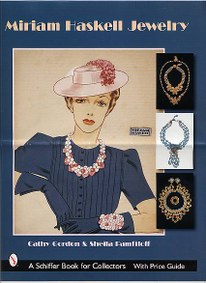
Miriam Haskell Jewelry (March 19, 2004)by Cathy Gordon and Sheila Pamfiloff
A Schiffer Book for Collectors with Price Guide
ISBN 0-7643-2070-X hardcover
Publication date: July 2004
$59.95 plus shipping
Book can be purchased directly from Schiffer or through venues such as Amazon, Barnes and Noble, etc. |
| 29111 Visits
1 Items
Gallery Album | |
|
 | 11.
Haskell-Unsigned Pieces (September 3, 2002)| Miriam Haskell opened her store in New York City in 1926 in the McAlpin Hotel. Until the late 1940s, her jewelry was not signed. This album provides examples of sets, necklaces, bracelets and earrings from her unsigned period. The pieces are approximately dated though this is extremely tricky as her materials were used over and over in different combinations and during different time periods. |
| 10753 Visits
229 Items
Gallery Album | |
|
 | 12.
Haskell--Unsigned Clips and Pins (January 6, 2002)| There is a fascinating variety of unsigned clips and pins created by Haskell from the late 1920s through post-WWII, and this album provides a detailed sampling of a number of examples. By spending time with these pieces, you will be able to identify these unsigned gems. Consult the album on clip and pin backs to round out your education. |
| 11457 Visits
188 Items
Gallery Album | |
|
 | 13.
Haskell-Signed pieces (September 3, 2002)In the late 1940s, Haskell started marking her jewelry with her signature. The earliest signed pieces went through a transition period where the mark was not applied consistently. I have sequenced these pieces, as best I can, in chronological order so that you can get a feel for the different designers.
Frank Hess: 1926-1960
Robert Clark: 1960-1967
Peter Raines: 1968-1970
Larry Vrba: 1970-1978
Camille (Millie) Petronzio: 1980-present |
| 95465 Visits
154 Items
Gallery Album | |
|
 | 14.
Haskell Clip and Pin Backs (October 22, 2002)With Haskell clips and pins, some of the best indicators of her pieces are the backs. The same styles are used over and over again. Learn these and you won't even have to see the front! There are also a couple of examples of signed pins to give you a view of the variety of pin backs. There are many Haskell-like designers (Robert, DeMario, Eugene, Jonne, and Morton) as well as loads of pieces that imitated Haskell from Japan and Germany.
A rule of thumb: if a pin or clip is unsigned, and has a filigree back, it is UNLIKELY to be a Haskell. |
| 26151 Visits
35 Items
Gallery Album | |
|
 | 15.
Haskell--Signatures, Findings, Beads (October 20, 2002)| The Haskell signature has varied over the years, but most important is to remember that dating pieces by the type of signature can be unreliable. The metal filigree back was adopted after WWII. Haskell had/has millions of beads and findings which were used over a number of years and collections. The signature plaques (horseshoe, oval, etc.) were pre-soldered to the filigrees, and the particular one used was dependent on the amount of room available for its application. When the jewelry was assembled, the filigree with signature would be selected based on the design of the piece. Hooks can have a flower, dove, turtle decoration or, in the mid 1970s, were plain. Hooks used in the early 1950s did not always have a signature. It is important to consider the entire picture--fronts, backs, beads, leaves, findings, design style--and these parts of the whole can lead to an estimate of time. This album also provides numerous examples of beads, findings, leaves, etc. so that you can get a small idea of the range of materials she used. |
| 60101 Visits
97 Items
Gallery Album | |
|
 | 16.
Haskell Necklace Clasps (October 22, 2002)| With unsigned Haskell, it is important to remember that the backs are as important as the fronts. This album shows a variety of examples of necklace clasps from her unsigned period to the present. An interesting item of note is that I have not been able to find a single unsigned necklace that uses a hook. Love to see any examples that others have found. |
| 30117 Visits
35 Items
Gallery Album | |
|
 | 17.
Haskell NYC (March 25, 2003)| Haskell's new location at 390 Fifth Ave. |
| 29659 Visits
12 Items
Shared Album | |
|
 | 18.
Haskell Basics (June 17, 2003)| Scans of photos from the Haskell basics pearl lines. |
| 14855 Visits
22 Items
Shared Album | |
|
 |
|
 | | 20.
New (March 19, 2004) | 24234 Visits
276 Items
Shared Album w/ Pass  | |
|
 | 21.
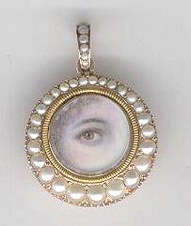
Georgian, Victorian, other (March 19, 2004)| Personal collection of (mostly) fine jewelry from a variety of periods. Includes my favorites: eye miniatures and other miniature portraits, Stuart Crystals, demantoid garnets, superb turquoise Victorian jewelry, memento mori and other mourning jewelry. |
| 24072 Visits
573 Items
Shared Album w/ Pass | |
|
 | 22.
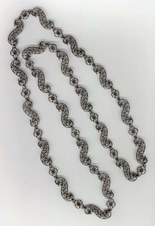
Berlin Iron and Silesian Wirework (March 2006)A collection of Berlin Iron and "Silesian" wirework jewelry.
Berlin Iron jewelry was popular throughout the late 18th and early 19th centuries. It was originally manufactured in Germany, but during the Napoleonic period (early 1800s), manufacturing moved to France. By 1813 or so, Germany was again creating this jewelry and by the 1830s it was available in London.
The intricate designs were fashioned from base metal finished in black lacquer; the resulting jewelry was called Berlin Iron, after the Prussian capital. During the Prussian War of Independence, 1813-15, women supported the war effort by exchanging their precious jewels and gold for delicate, ornate ironwork designs. Earlier examples were in the neo-classic style; later motifs were naturalistic, with a Gothic influence.
An excellent reference work on Berlin Iron is Cast Iron from Central Europe, 1800-1850 by Elisabeth Schmuttermeier, The Bard Center for Studies in the Decorative Arts, 1994.
Read more about Berlin Iron jewelry in Anne Clifford’s Cut Steel and Berlin Iron Jewellery and in Shirley Bury’s Jewellery 1789-1940 The International Era, Volume II.
Wirework jewelry's origins remain unknown, according to Christie Romero. It is traditionally known as "Silesian" wirework and originally thought to be manufactured in Silesia. Other possible manufacturing locations are France and England. Given the movement of Berlin Iron jewelry manufacture (Germany to France to London), it is possible Silesian wirework jewelry followed a similar path. |
| 45656 Visits
95 Items
Shared Album | |
|
 | 23.
Art Nouveau, Arts and Crafts (March 19, 2004)Art Nouveau
"The roots of Art Nouveau are as convoluted as the meandering line it worshiped. It was short-lived, in jewelry lasting only from about 1895 to 1910. In the last years of the nineteenth century critics were unanimous in attributing the start of the jewel revolution to the renewed study of plants and their application to decorative design from the middle of the century. Nature, and its associations of femininity and fertility, is the dominant theme of Art Nouveau jewelry, but it took on a very different image from its nineteenth-century garb of minute realism, changing from stiff imitation to vivid interpretation.
One of the chief principles of Art Nouveau proposed that the aim of art was to suggest reality – in Mallarmé’s words, ‘to suggest it, that’s the dream.’ It had to provide a ‘veiled essence of reality’ which, like Impressionism, became true to nature, more lifelike – or rather full of life – than any exact copy.”
From Art Nouveau Jewelry, Vivienne Becker, Thames and Hudson, 1985, p 9.
Arts and Crafts
Circa 1890-1920
"In essence, the Arts and Crafts movement was a protest against the results of industrialization: the dehumanization of the worker and the loss of pride in the product. The debate of man vs. machine had begun in England in the late 1820s when the side effects of the Industrial Revolution first became evident.
Three 19th century British writers and social theorists, Thomas Carlyle, John Ruskin, and William Morris, helped build the theoretical foundation of the Arts and Crafts Movement.
Morris spent the better part of his artistic career learning various craft techniques in order to better understand the potential and limitations of the natural materials with which he worked. His advocacy of the honest use of material, of simplicity of form, and of a return to the principles of organic beauty, captured the imagination of artists and craftsmen, and was formulated into the philosophy of the Arts and Crafts movement."
From Chicago Metalsmiths, by Sharon S. Darling, Chicago Historical Society, 1977, pgs.30-32 |
| 1638 Visits
202 Items
Shared Album | |
|
 | 24.
Art Deco (March 19, 2004)Art Deco, at least defined by some experts, covers the period between 1910 and 1939. The first major international manifestation of Art Deco was the Exposition Internationale des Arts Décoratifs et Industriels Modernes held in Paris in 1925.
The term "Art Deco" was not used as a style label until 1966 in an exhibition in Paris titled: "Art Déco/Bauhaus/Stijil/Ésprit Nouveau."
Two years later, the words Art Deco were explicitly used to identify a style, when Bevis Hillier published his book "Art Deco of the 20s and 30s."
He defined Art Deco as "an assertively modern style, developing in the 1920s and reaching its high point in the 1930s...a classical style in that, like neo-classicism but unlike Rococo or Art Nouveau, it ran to symmetry rather than asymmetry, and to the rectilinear rather than the curvilinear; it responded to the demands of the machine and of new materials...[and] the requirements of mass production."
Three years later, he refined the definition, identifying two main strands: "the feminine, somewhat conservative style of 1925, chic, elegant, depending on elegant craftmanship and harking back to the 18th century; and the masculine reaction to the thirties, with its machine-age symbolism and use of new materials like chrome and plastics in place of old beaux-arts materials such as ebony and ivory...." |
| 57409 Visits
141 Items
Shared Album | |
|
 | | 25.
Fahrner (March 19, 2004) | 58479 Visits
64 Items
Shared Album | |
|
 | 26.
Bengel | Deco jewelry by Jakob Bengel |
| 19508 Visits
38 Items
Shared Album | |
|
 | | 27.
German | 17110 Visits
46 Items
Shared Album | |
|
 | 28.
French Jewelry (June 30, 2002)French costume jewelry.
To see a very interesting collection of jewelry by Andrée Bazot, please go to http://bazot.osyto.com/ |
| 43789 Visits
89 Items
Shared Album | |
|
 |
|
 |
|
 | | 31.
Cats | 24798 Visits
26 Items
Shared Album | |
|
 | 32.
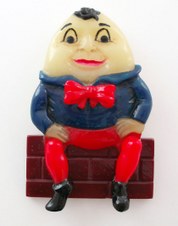
Haskell -- Damaged pieces | Examples of damage that can happen to Haskell jewelry starting with photo 5. The first 4 photos show construction, but are not damaged. |
| 19308 Visits
12 Items
Shared Album | |
|
 | | 33.
COW | 10268 Visits
17 Items
Shared Album | |
|
 |
|
 | | 35.
Babies | 23510 Visits
12 Items
Shared Album | |
|
 | | 36.
Hearts | 22210 Visits
17 Items
Shared Album | |
|
 | 37.
Native American | A variety of Native American jewelry |
| 20051 Visits
56 Items
Shared Album | |
|
 | 38.
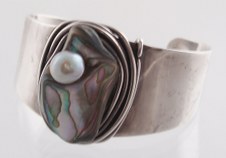
Gaylord Silvercraft The Gaylord Silvercraft workshop was part of the Gaylord Farm Sanatorium, Wallingford, CT, run by the New Haven County Anti-Tuberculosis Association.
The following information is taken from an annual report for Gaylord Farm Sanatorium for 1923.
The silver working was done as part of the vocational training and occupational therapy for the tuberculosis patients. After the Federal Board for Vocational Education ceased funding this work at Gaylord, the board feeling that the silverwork would pay for itself persuaded Mrs. W. W. Dodge, Jr. of Meriden to come on board at a nominal salary to develop this workshop.
Mr. W. W. Dodge was one of the U.S. servicemen who was at the sanitorium during WWI, assigned by the War Risk Insurance Bureau. He also, as well as his wife, gave great assistance to setting up the workshop, in fact giving many of the designs that were made into silver pieces by the workshop.
The workshop was founded in 1923 and ended in 1944. The hallmarks for Gaylord Silvercraft are "Sterling," a hammer with wings, "G.S." and "handwrought." |
| 21169 Visits
23 Items
Shared Album | |
|
 | | 39.
Rebajes | 33504 Visits
23 Items
Shared Album | |
|
 | | 40.
Dogs | 23499 Visits
24 Items
Shared Album | |
|
 | | 41.
Stickpins (January 2007) | 1446 Visits
15 Items
Shared Album | |
|
 |
|
 | | 43.
Scandinavian (March 19, 2004) | 16315 Visits
15 Items
Shared Album | |
|
 |
|
 | | 45.
Leaves (March 19, 2004) | 34855 Visits
15 Items
Shared Album | |
|
 | | 46.
Contemporary (March 19, 2004) | 17455 Visits
58 Items
Shared Album | |
|
 |
|
 | | 48.
Smokey Joe (March 19, 2004) | 15506 Visits
9 Items
Shared Album | |
|
 | | 49.
Bakelite | 28841 Visits
76 Items
Shared Album | |
|
 | | 50.
Moonstone | 24842 Visits
24 Items
Shared Album | |
|
 | | 51.
Kreisler | 17177 Visits
8 Items
Shared Album | |
|
 | | 52.
Boucher (July 2006) | 20750 Visits
19 Items
Shared Album | |
|
 | 53.
BLUBOI -- 1967 Corvette (July 16, 2006)BLUBOI has always been an autocross car, but in his stock state, we could never get enough tire under him to be competitive. So, after a lot of thought and discussion, we decided to add 2 inches on either side (both front and rear) in order to fit him with 10" wheels. Don was head designer -- his major operating parameter from me was "make him look stock."
In October 1995, he was sent to Bill White's Glassworks and the project started. By April, 1996, he was declared "good enough" and returned home in a primer coat. Our painter, Tony Williams Jr. wanted to do a "couple more weeks" on the body lines (as they were still a bit wavy). In late August, 2006, after gallons of bondo on, with most of it sanded off, he was ready for paint. Tony first applied a really good primer, which over the past 10 years has proven to provide excellent chip-resistance.
We used Diamont paint in Marina Blue (his stock color), then added a wide white stripe with a narrow red stripe finishing the edges. Then a couple of weeks to put everything back together; all of those boxes of screws, bolts etc, were tossed and we made numerous trips to Corvette Clinic to buy pristine new ones (ouch, often 25 cents each for the screws). We finished putting it together the day before Corvette Spectacular, then frantically cleaned. He made his debut and was a hit, earning a perfect 100 points and Best in Show. |
| 14887 Visits
46 Items
Gallery Album | |
|
 | | 54.
Fringe | 18518 Visits
13 Items
Shared Album | |
|
 | | 55.
COW -- A | 9255 Visits
10 Items
Shared Album | |
|
 | 56.
Coro Rockfish An open question -- did Coro make both a close-finned and open-finned version of its famous design -- the Rockfish?
We have assembled a series of pictures of several versions labeled (CG), (SK), and (JLE) in the hopes we can provide enough detail so that we can get some answers.
The final 3 pictures are courtesy of Bobye Syverson and are reproductions of the fish in both silver and gold colored metal. These repros were never intended to deceive a buyer looking for the real thing!
------------------------------
UPDATE: I received this reply to our questions from Gene and Ron Verri:
----------------------------
Dear Cathy,
My father and I have examined the Rockfish pictures on your website. First, I want to compliment you on your diligence and interest in ascertaining as much of the story as possible. My father's first recollection on the Rockfish was that Mr. Roy Marcher asked him to make a pin with an open mouth fish. The very first version is the one in which the stone holes have open backs. This treatment was used to reduce weight and save on cost. You might ask "Why were other styles developed?" Several reasons (1) When an item sold well there was always interest in making a low cost version. Note: that the rockfish with the closed fins has fewer stones. It would have sold at a lower retail price. (2) Sometimes a catalogue or store would ask for an item on an exclusive basis. A "kissing cousin" would be made to satisfy this need. We do not believe that any of the pictures you have shown represent counterfeit pieces. With regard to a pot metal or base metal version of the rockfish, after WW II ended and production shifted from back to base metal from sterling, it is likely that the rock fish was offered in base metal. I hope this has been helpful. Again, thank you for your interest.
Regards,
Ron Verri
Gem-Craft, Inc |
| 18029 Visits
22 Items
Shared Album | |
|
 | | 57.
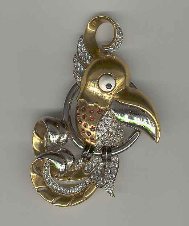
Birds | 22724 Visits
33 Items
Shared Album | |
|
 | | 58.
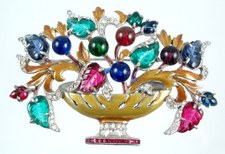
flowers (March 19, 2004) | 12282 Visits
15 Items
Shared Album | |
|
 | | 59.
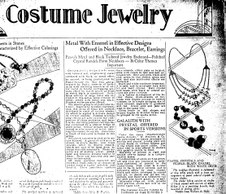
necklaces (March 19, 2004) | 28728 Visits
29 Items
Shared Album | |
|
 | 60.
Bubbles (May 2006)For many years, it has been an open question about the origin and dating of what are known as the "bubbles" jewelry. Found in many designs and colors, all pieces have a design of bubbles in enamel applied over sterling. One of the designs includes a Pierrot in the center.
Marks include an E in a square and STERLING, STERLING by itself or no mark.
In reviewing some of my photocopies of early Women's Wear Daily articles, Robin Deutsch discovered a picture and article (dated May 1, 1930) about the bubbles. The article and some pictures follow. |
| 14659 Visits
6 Items
Shared Album | |
|
 | 61.
Takahashi Birds (April 9, 2006)NOW AVAILABLE: The definitive book on Takahashi birds! Authors: Carol Takahashi and Julie C. Carroll For pre-orders go to Collector Books at http://www.collectorbooks.com/items/item_detail.php?item_num=8289
-----------------------------
Created by Yoneguma and Kiyoka Takahashi, these marvelous wood birds are miniature works of art. The Takahashi family were among many Japanese-Americans confined in Poston Camp, AZ after the bombing of Pearl Harbor.
While in the camp, they participated in a craft class where they learned to carve and paint small birds and after release (3 1/2 years later) they turned this craft into a family business that continued for 40 years.
Yoneguma carved the birds out of white holly wood, starting with a jig saw, then smoothing and sanding the bird. When done, Kiyoka painted the birds (using an Audubon bird book for reference) with watercolors using fine camel hair brushes. 10 coats of lacquer were then applied.
A good day's production was 10 birds. The birds were mostly sold via word of mouth, though a couple of department stores (such as Gump's) carried them. Production was mostly lapel pins, but earrings were also made. Price on the birds in the early days was $2, but in the 1980s, the birds sold for $40.
Initially more than 100 species were made, both male and female, but eventually about 25 different birds were offered regularly for sale.
Some birds created before the 1970s have the initials K.T.; after 1970, the initials K&Y.T. with the date appear. Some are dated without initials.
There were copies made in the 1970s; these can most easily be identified by the manner in which the pin was attached. The Takahashi birds use small push pins while the repro pin backs are screwed into the wood. |
| 57602 Visits
55 Items
Gallery Album | |
|
 |
|
 | | 63.
Feathers (March 19, 2004) | 30796 Visits
18 Items
Shared Album | |
|
 | | 64.
Eisenberg (March 19, 2004) | 17984 Visits
21 Items
Shared Album | |
|
 |
|
 | | 66.
langani (February 2006) | 19993 Visits
13 Items
Shared Album | |
|
 |
|
 | | 68.
catsdogs (December 19, 2005) | 21931 Visits
22 Items
Shared Album | |
|
 | | 69.
Accessories (November 22, 2005) | 21019 Visits
69 Items
Shared Album | |
|
 | | 70.
Coro (November 11, 2005) | 17360 Visits
41 Items
Shared Album | |
|
 | 71.
Roses (March 19, 2004)| A selection of roses from my newly planted garden, taken with my newly acquired camera. Not such great pictures.... |
| 19541 Visits
9 Items
Shared Album | |
|
 | 72.
Rose Necklace (March 19, 2004)| Necklace and bracelet created by John Catalano. |
| 8390 Visits
11 Items
Shared Album | |
|
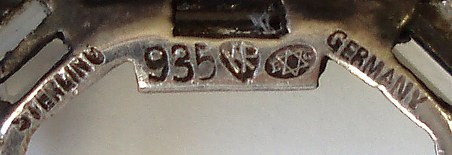 | | 73.
signatures (March 19, 2004) | 14208 Visits
50 Items
Shared Album | |
|
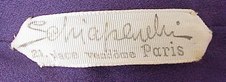 | | 74.
Labels (March 19, 2004) | 12743 Visits
4 Items
Shared Album | |
|
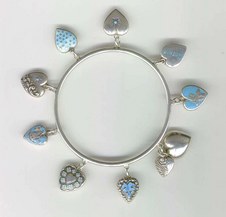 | | 75.
Charms (March 19, 2004) | 28985 Visits
100 Items
Shared Album | |
|
 | | 76.
Wood Jewelry (March 19, 2004) | 23902 Visits
34 Items
Shared Album | |
|
 | | 77.
Rosenstein (March 19, 2004) | 29403 Visits
12 Items
Shared Album | |
|
 | | 78.
People (March 19, 2004) | 32204 Visits
38 Items
Shared Album | |
|
 | | 79.
Holiday DOW (March 19, 2004) | 12200 Visits
19 Items
Shared Album | |
|
 | | 80.
favs (March 19, 2004) | 27509 Visits
120 Items
Shared Album | |
|
 | | 81.
bracelets (March 19, 2004) | 24317 Visits
53 Items
Shared Album | |
|
 | | 82.
Trifari (March 19, 2004) | 19261 Visits
7 Items
Shared Album | |
|
 |
|
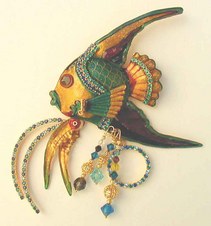 | 84.
LATR (March 19, 2004)| Lunch at the Ritz makes superb, dimensional jewelry--fabulous, brilliant enameled colors, rhinestones applied to fun themes. And, the company is wonderful to deal with! |
| 14773 Visits
8 Items
Shared Album | |
|
 | | 85.
Frankfurt (March 19, 2004) | 9096 Visits
17 Items
Shared Album | |
|
 | | 86.
Blackamoors (March 19, 2004) | 42228 Visits
40 Items
Shared Album | |
|
 | | 87.
Hagler (March 19, 2004) | 16793 Visits
11 Items
Shared Album | |
|
 | | 88.
Plastic (March 19, 2004) | 22018 Visits
172 Items
Shared Album | |
|
 | | 89.
Patriotic (March 19, 2004) | 14488 Visits
6 Items
Shared Album | |
|
 | | 90.
Copper (March 19, 2004) | 19027 Visits
20 Items
Shared Album | |
|
 | | 91.
Sandor (March 19, 2004) | 14608 Visits
7 Items
Shared Album | |
|
 |
|
 | | 93.
Czech (March 19, 2004) | 24917 Visits
15 Items
Shared Album | |
|
 | | 94.
Hollycraft (March 19, 2004) | 17734 Visits
20 Items
Shared Album | |
|
 | 95.
Pierson Robert McLean | My grandson, Pierson Robert McLean was born on Friday, March 5, 2004 at 12:34 PM. He was three weeks early, so weighed 5 pounds 12 ounces, but is in great health. |
| 12062 Visits
71 Items
Shared Album | |
|
 | 96.
Fruits and Veges (March 2, 2004)| A variety of fruit and vegetable pieces |
| 26306 Visits
25 Items
Shared Album | |
|
 |
|
 |
|
 | 99.
Tremblers and Mechanicals (May 27, 2003)| A few pieces that tremble on a spring or move mechanically. |
| 15875 Visits
10 Items
Shared Album | |
|
 | 100.
Leo Glass (December 22, 2002)Leo Glass & Company, Inc. was founded by Leo Glass in September, 1928 (according to Brunialti). He had worked in costume jewelry for Lisner for 10 years as a representative before starting his own company. The head office of Leo Glass was in NYC, the company went bankrupt in 1957 with all goods auctioned off on August 27, 1957.
At first, the company also imported as well as manufactured and the first collections in the Spring, 1929 were called "Season's Sensation" and Hawaian Lei Motif Jewelry."
From the start of production until 1941, the merchandise was of the highest quality, on sale in the best stores throughout the country. In 1941, Leo Glass announced the company was entering the popular price jewelry field (perhaps when the clear rhinestone jewelry line started). By the 2nd half of the 1940s, creativity and quality subsided to a medium-low standard.
Key designers: Leo Glass, Ann Glass, Beatrice Glass, and in 1941, David Mir, who also worked for Trifari.
Marks: Leo Glass in cursive within a polygonal plate; Leo Glass Sterling in an oval plate
From Brunialti, A Tribute to America, pg 34. |
| 32481 Visits
16 Items
Shared Album | |
|
 | 101.
DOW--Schreiner (September 17, 2002)Schreiner was founded by Henry Schreiner who emigrated to the US from Bavaria, Germany in 1923. He had been a blacksmith, but went to work for the Better show buckle company in 1926 or 1927. He started Schreiner in the 1930s and after his death in 1954, the company was operated under the leadership of his daughter Terry Schreiner and her husband Ambros Albert until the late 1970s.
Many Schreiner pieces were made for the fashion desingers, including Adele Simpson, Pauline Trigere, Norman Norelle, Teal Traina, and Christian Dior. The Schreiner name tag never went on jewelry made for the dress designers. Pieces for the stores used the Schreiner and Schreiner N.Y. tags interchangeably.
An extensive interview with Terry Schreiner can be found in Harrice Miller's book, Costume Jewelry 2nd edition pages 61-66. A number of excellent pictures of Schreiner jewelry can be found both in Harrice's book and in Rhinestones! by Nancy N. Schiffer. |
| 30357 Visits
45 Items
Shared Album | |
|
 | 102.
DOW-Mexican (September 2, 2002)| Pictures of Mexican jewelry. a foundation reference source is Mexican Silver by Penny Chittum Morrill and Carole A. Berk, Schiffer Publishing Ltd., 1998 (revised edition). |
| 33760 Visits
30 Items
Shared Album | |
|
 | 103.
DOW--Italian Jewelry (August 19, 2002)| Italian costume jewelry is some of the most splendid in the world! Represented in this album are 4 designers: Coppola e Toppo, Ornella, Ugo Correani, and Pellini. You can find detailed descriptions of these great Italian designers (and more) in two highly recommended reference books: European Designer Jewelry by Ginger Moro (modmoro@earthlink.net) and Jewels of Fantasy by Deanna Farnetti Cera. I am always interested in purchasing Italian CJ pieces. |
| 42317 Visits
43 Items
Shared Album | |
|
 | | 104.
Fur People (November 20, 2002) | 26411 Visits
64 Items
Shared Album | |
|
 | | 105.
Napier (August 8, 2002) | 2585 Visits
53 Items
Shared Album | |
|
 | 106.
CIS-Designs by Countess (June 25, 2002)| Born in Vienna, she started her career in jewelry in 1951 by hand-painting cufflinks and buttons. She was quickly taken up by Pierre Balmain and Jacques Fath and moved on to jewelry in the mid 1950s. She worked for Balenciaga for 14 years, creating jewelry for his couture collections. Her jewelry was also sold through Lord & Taylor (Cis of Paris) and Bonwit Teller (Countess Zoltowska). She is known for her signature "crackled" glass cabochons and stones marbled and sprayed with gold. Very few of her pieces are signed, but the signature is "CIS" stamped under a crown. (See Ginger Moro's book European Designer Jewelry, pgs 71-77 for more information.) |
| 7211 Visits
57 Items
Shared Album | |
|
 | 107.
Pictures of me (May 12, 2002)| A couple of pictures of what I look like. |
| 26002 Visits
53 Items
Shared Album | |
|
 | 108.
DOW--Schiaparelli (March 8, 2002)| Two old fur clips that have been attributed as designed for Elsa Schiaparelli. Schiaparelli vintage couture clothing and hats. |
| 26175 Visits
15 Items
Shared Album | |
|
 | 109.
Du Jay (January 14, 2002)| Du Jay was probably founded in 1934 by Jules Hirsch and Jacques H. Leff as a division of Hirsch & Leff, a company that made precious jewelry. It operated from 1934 to 1972, but the pieces in these pictures are probably from the 30s and 40s. These are "attributed" to Du Jay, as very few of their pieces are signed. There is a familiar set of subject matter, wonderful enameling, tiny pave rhinestones, jewel-tone glass beads, and other characteristics that those familiar with this designer can spot right away. All pieces attributed to Ira Scheck were owned by him at the time this album was created, but could have been sold subsequent to this date. |
| 47525 Visits
65 Items
Shared Album | |
|
 | 110.
Reja Solomon Finkelstein, founder of Reja, started his first retail jewelry company in NYC in 1939, called Deja Costume Jewelry, Inc. Du Jay, Inc. took Deja to court over tradename similarity and won in October, 1940 (Deja banned from using the name after April 1, 1941). As of January 1941, the company name change to Reja was announced, prompted (as stated in Brunialti, A Tribute to America, pg 38) that it was easy to change the "D" to an "R" on the stamped signature. Reja operated from 1941 through December 1953, when the company declared bankruptcy.
Deja jewelry is characterized by enamel figurals, usually over potmetal. Marks used by Deja include Deja, Deja Original and Deja Reg.
Reja jewelry is extremely high quality, and the company released a number of collections, among which are the Africana series and the Gardenesque series. Both included wonderful figurals of enamel on sterling, offset by colorful rhinestones, moonstones and pave clears. There was an entire series of enamel fruits, nuts and vegetables, some on potmetal and others on sterling. Reja had a number of pieces with pale blue or rose pink moonstone cabs. Marks used by Reja include Reja Reg., Reja, and finally Reja Inc. Some pieces are also marked Sterling. |
| 4241 Visits
59 Items
Shared Album | |
|
 | 111.
Jewelcollect Jewelry Sites & Auctions (Updated: May 2004)
This album is my contribution to JC members who have willingly shared their knowledge and special friendships. Enjoy! Thank you all. Jan Gaughan.
Visit JC Members Web Sites & Auctions For Jewelry...
Antique, Vintage, Estate, Collectible Contemporary, Artisans, Supplies & Repairs.
In this album you can view some of our Jewelcollect members
"personal photos". A gallery
with easy access to their web sites and auctions!
Jewelcollect - On the Web since 1995!
Founder & Administrator Liz Bryman
Some members use the letters JC at the end of their auction titles to identify them as a Jewelcollect Member. DISCLAIMER: Not ALL titles with letters JC are Jewelcollect Members.
Click Here to learn about: Jewelcollect
IMPORTANT NOTE TO ALL MEMBERS: As of 7/31/03 - If you have not linked back to this album your picture will remain but all of your links will be removed.
|
| 57543 Visits
143 Items
Linked Album
eclecticvintage | |
|
