Jewelry with circa dates prior to (or around) 1700.
Album by Cathy Gordon. 1 - 129 of 129 Total. 93028 Visits.
1 Portrait miniature of Charles II Circa 1660s
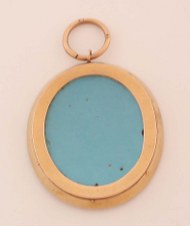
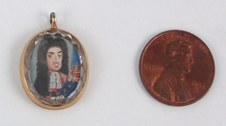
Portrait miniature pendant of Charles II, enamel painted on copper, with blue enamel back, set in 18K gold.
2 Back of pendant showing blue enamel.
3 Portrait miniature of King Charles II Circa 1660-?
Charles II (29 May 1630 OS – 6 February 1685) became king of England, Scotland and Wales in what is known as The Restoration.
His father, Charles I, was executed at Whitehall on 30 January 1649, at the climax of the English Civil War. He was succeeded by Oliver Cromwell and England entered the period known as the English Commonwealth. Charles II, following his defeat at the Battle of Worcester in 1651, fled England for to the Continent, spending the next 9 years in exile.
A political crisis following the death of Cromwell in 1658 resulted in Charles being invited to return and assume the thrones. Charles II arrived on English soil on 25 May 1660 and entered London on his 30th birthday, 29 May 1660. After 1660, all legal documents were dated as if Charles had succeeded his father in 1649. Charles was crowned King of England and Ireland at Westminster Abbey on 23 April 1661.
This faceted rock c...
4
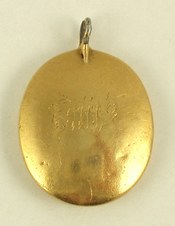
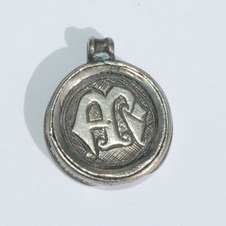
5 Back of pendant with engraved initials. Cannot tell what the letters are....
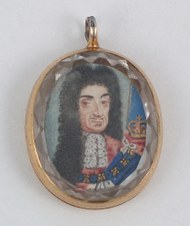
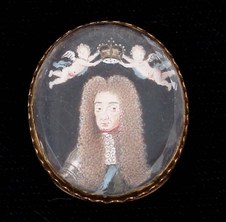
6 Stuart Crystal -- James II Coronation Slide Ruled: 1685-1688 (deposed) Circa 1685
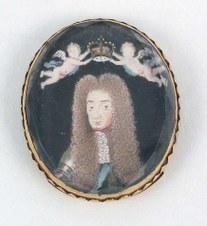
Rare Stuart crystal slide to commemorate the coronation of King James II of England [also James VII of Scotland] on 6th February 1685. James was the last Catholic monarch to reign over the Kingdoms of England, Scotland and Ireland. James's belief in absolute monarchy and the divine right of kings, along with his religious policies, made him unpopular and he was deposed in the Glorious Revolution in 1688. James fled to France where he spent the remainder of his life under the protection of his cousin and Catholic ally, Louis XIV. This watercolor on ivory portrait of the monarch, depicts him in full wig, armor and lace jabot, wearing the blue sash of the Order of the Garter. Two cherubs hover above holding aloft a crown. The iconography suggests that the divine right of kings was indeed divine, granted by God. The portrait is set under faceted rock crystal and to a gold slide. It measures o...
7
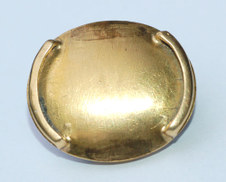
8 Back of James II Stuart Crystal slide
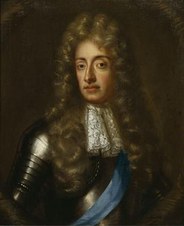
9 Portrait of James II
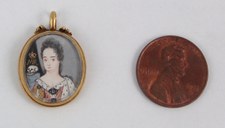
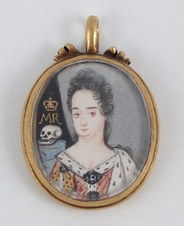
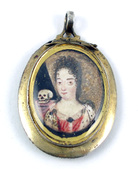
10 Memorial portrait of Queen Mary II Circa post 1694 Ruled: 1689-1694
Queen Mary II co-ruled with her husband King William III (Prince William of Orange. She died of smallpox in 1694.
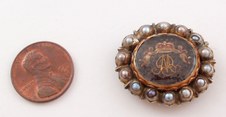
Pendant with portrait of Queen Mary, on left side against black field is a crown, the initials MR and a skull.
3/4" x 1/2" without bale.
11 Another view of the portrait.
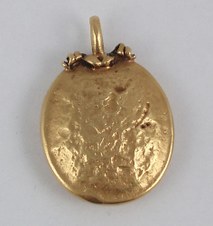
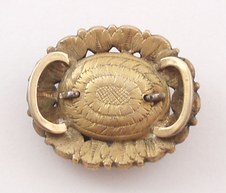
12 Back of the pendant. Appears to be hammered gold, not wear.
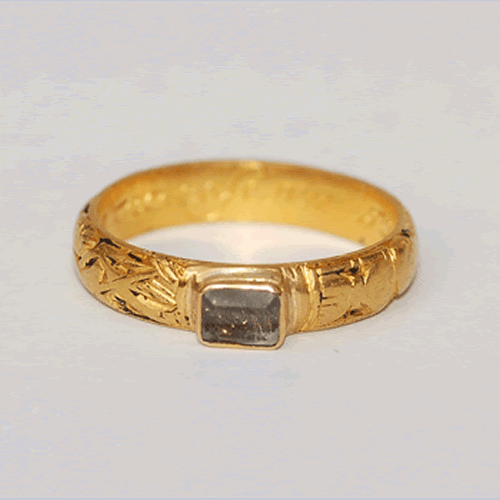
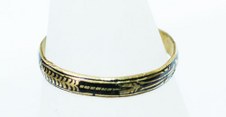
13 18th Century Skeleton / Posy Ring C. 1700
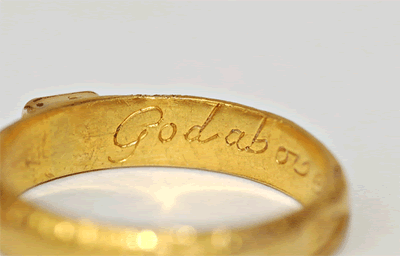
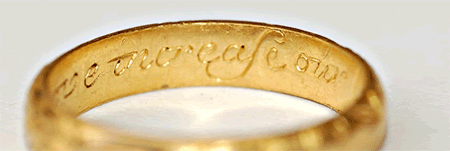
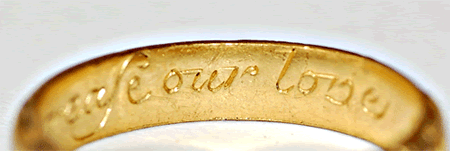
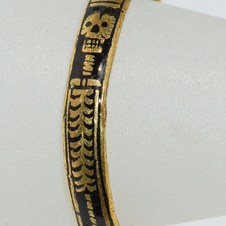
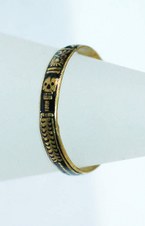
A rare combination on this mourning ring, circa 1700, of a skeleton and symbols of mortality to exterior and a posy, a motto of love, to interior. This type of ring is known as a skeletal as the whole length of the skeleton is employed around the band, together with other symbols of mortality, a winged hourglass and gravedigger's pick and shovel, The ornamentation echoes that used on black borders printed on the title pages of funeral sermons. The center is set with a colorless crystal. To interior, a touching posy is inscribed in Italic script : God above increase our love [with archaic f for the letter s] and London goldsmith's mark wf, dating it to the first part of the 18th century. The posy is cited in Evans English Posies And Posy Rings.The ring is size M [US 6]. There is a chip on the crystal and traces of the original black enamel remain but this is a rare combination.
14
15
16
17
18
19
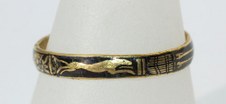
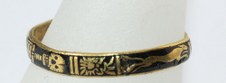
20 Skeleton Memento Mori Band Circa 1720
Rare Memento Mori ring, circa 1720, know as a skeletal, as the whole length of the skeleton is employed on the outside of the hoop, together with other emblems. The earliest noted example is dated 1659. The skeleton on this band is accompanied by a running hound and floral motif. The ring is size L and 1/2 [US 5 and 7/8] and in almost pristine condition.
21
22
23
24
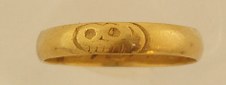
25 Memento Mori ring Dated 1710
Simple gold band inscribed with skull. Marked C.J. ob. 24 Apr 1710
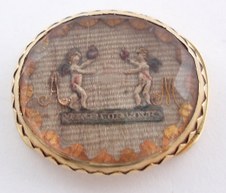
26 Stuart Crystal slide Circa 1690s
Two cherubs (putti) facing each other, adorned with red sashes and small green and red wings. Each cherub holds aloft in one hand the heraldic symbol of ardent affection — the flaming heart — offering one to the other as they rest upon a bannered motto “Mine for Yours”. Both the saying and the putti are rendered in enamel metal. There are gilt cyphers A and M, all resting on finely woven hair. There is a gilt edging under the crystal and a sawtoth edge on the outside. Crystal has rub in center.
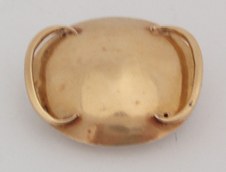
27 Back of the slide.
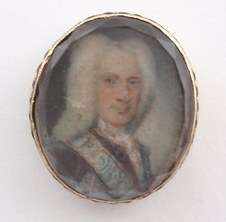
28 Stuart Crystal slide Circa 1690s
Aristocratic gentleman painted on vellum, gold over silver, chip on crystal
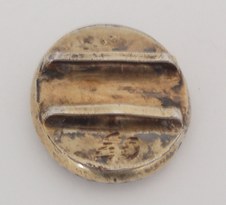
29 Back of slide.
30 Stuart Crystal Portrait Pendant circa 1690s
Stuart crystals were first popularized in 1649, when Charles I, the martyred King of England, was executed under Cromwellian rule. Royalists wishing to show their sympathy for the fallen monarch would wear small slides set with the King's portrait underneath a faceted crystal, or a swatch of hair with the King's initials beneath worked in fine gold wire.
These earliest of "memento mori" jewels created a fashion among the aristocracy for memorial crystals of their own. These crystals were usually fashioned as slides to be strung through a ribbon, but were also made as pendants and earrings. Most Stuart crystals which survive today are of the slide variety.
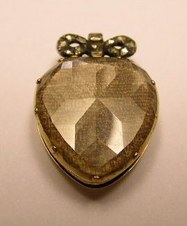
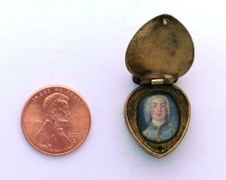
This 300+ year old heart shaped Stuart Crystal Portrait Pendant has everything.
The front of the gold heart shaped pendant is topped by a rose diamond bow, which is set in silver, and covered by a multi-faceted rock crystal that reflects light b...
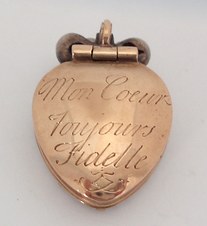
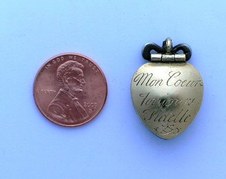
31 Back of pendant, "Mon Coeurs Toujours Fidelle" (My Heart is Always Faithful)
32 The back of the heart is convex and engraved "Mon Coeur Toujours Fidelle"- roughly translated - "My Heart Always Faithful".
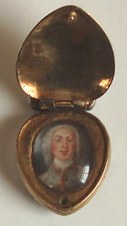
33 The best part is when you lift the heart shaped back and see the hand painted portrait miniature under convex crystal. It appears to be a young man, 25 to 30, wearing a wig and dressed in finery.
34 Another picture of the portrait.
35 Amuletic Stuart Crystal -- Lord's Prayer English Dated 1692
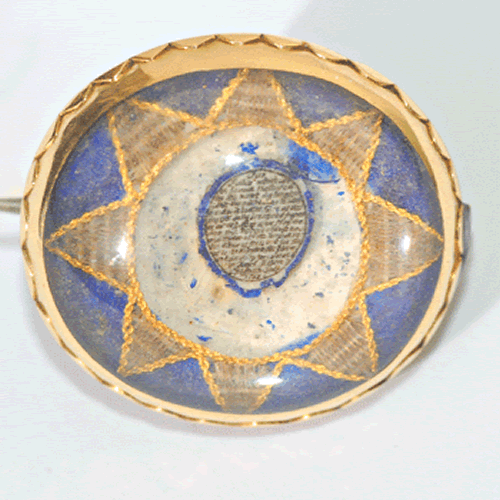
Stuart Crystal slide, dated 1692, with a ground of royal blue enamel, gold wire and plaited hair, overlaid with a miniature version of the Lord's Prayer, written by hand on a tiny disc of paper less than one centimeter in diameter, all set beneath a cabochon rock crystal.
This slide measures 3/4" x 3/4". There is some loss to the blue enamel and there is a 19th brooch fitting to the back with the original slide fittings removed.
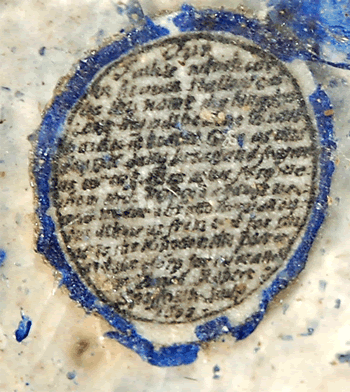
36 Detail of the Lord's Prayer
Designed to demonstrate the astonishing skill of the calligrapher, the writing is barely decipherable without the aid of magnification.
Miniature writing samples of this type showed the characteristic 17th century interest in scientific experiment and technical virtuosity. Masters in the art trained for seven years to develop their calligraphy skills in miniature. Such pieces held more than curiosity value, as religious inscriptions were often held to protect the owner against misfortune.
A similar example, in a ring, is in Case 20, Religion and Ritual, in the Enlightenment Gallery of the British Museum. Evidently considered a remarkable piece early in its history, it was acquired by Sir Hans Sloane, whose collections became the foundation of the British Museum in 1753. It is the only example of this work in the museum.
[Text written by Michele Rowan, rowanandrowan.com]
37 Stuart Crystal slide -- Queen Mary of England Circa 1690s
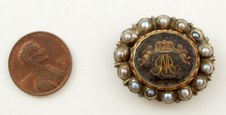
Large gold slide of Queen Mary of England set with her cypher and with a gold crown held by cherubs. The crystal is surrounded by Scottish pearls.
38 Another picture of the Queen Mary crystal.
39 Back of the Queen Mary slide -- the Tudor rose in gold.
40 Stuart Crystal -- Memento Mori of a Skeleton Circa 1688?
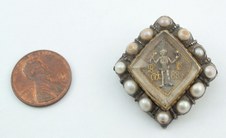
Large Stuart Crystal brooch set on the diagonal. A full skeleton is painted in enamel on tightly woven hair. It holds an hourglass and a bone. The gold wire cypher appears to be the initials B W and below them it appears to say Oct (or At?) 88. The crystal is surrounded by Scottish pearls set in gold.
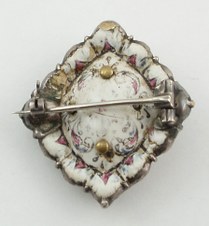
41 Unusual back to the skeleton crystal, painted in white enamel with pink and black paisleys, perhaps some initials, though considerably damaged. This is a style created by Gilles Légaré, a French jeweler and enameler in the 17th century. Pin stem is a later addition.
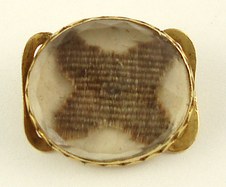
42 Stuart Crystal slide. Marked 90 (1690)
Woven hair with gold sawtooth bezel under faceted rock crystal.
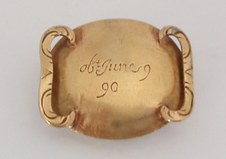
43 Back of slide marked "ob June 9 90"
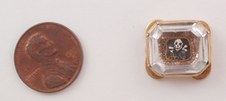
44 Stuart Crystal Memento Mori skull Circa 1680
English Memento Mori ( Remember you too will die) memorial jewelry slide. High carat gold containing woven hair on pink silk, an enamel skull and bones, gold wire border and cypher 'A C' set beneath faceted rock crystal.
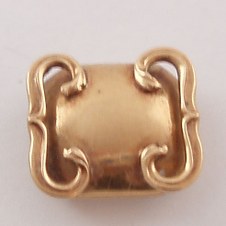
45 Back of skull slide
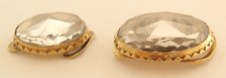
46 Side view of two Stuart Crystal slides showing faceted crystals and sawtooth bezels.
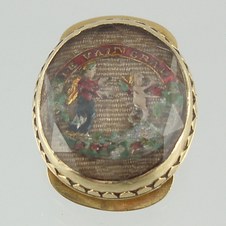
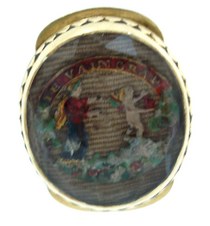
47 Stuart Crystal Amatory Slide Circa 1680s
Rose cut faceted rock crystal enclosing a compartment with a basket-weave panel of hair. High carat gold with saw-tooth bezel.
The tableau is of Venus, with long golden hair wearing a green wreathed crown and clothed in red and blue, pursuing a golden haired cupid with wings tipped in red and green. The cupid holds a red enamel heart that he has just stolen from Venus.
The border enamel is green foliage with red hearts.
The red enamel title read Le Vaincrau - the Vanquished.
48 Stuart Crystal Amatory Slide Circa 1680s
49 Stuart Crystal Betrothal Slide Circa 1680
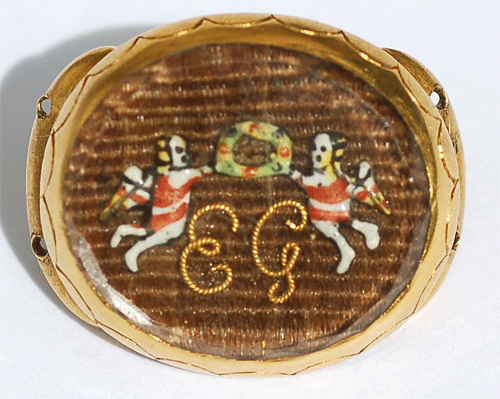
Stuart crystal slide, a compartment of faceted rock crystal containing a ground of woven hair, overlaid with two brightly colored cherubs holding aloft a garland of flowers and gold cipher initials EG. The slide is gold with scalloped edges and the typical 17th century saw-toothed setting. The devices on these pretty ornaments symbolized various events in people's lives - in this case the cherubs and garland of flowers denote a betrothal or wedding. The slide measures 2.5 cm by 2 cm [ one inch by 3/4 of an inch]. It is in pristine and amazingly bright condition for its age.
50
51 Stuart Crystal slide bracelet Circa late 1600s
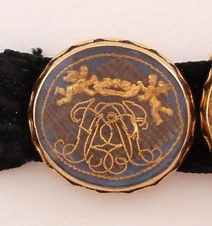
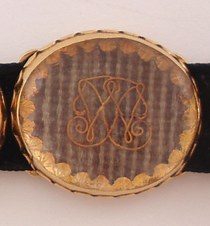
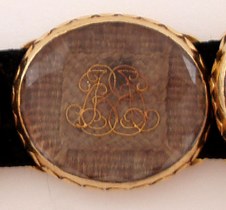
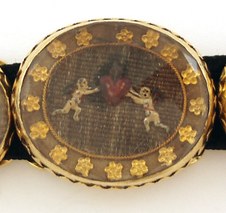
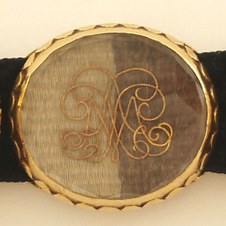
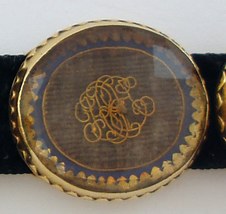
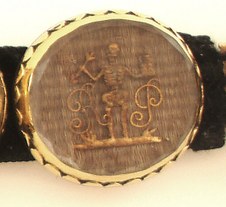
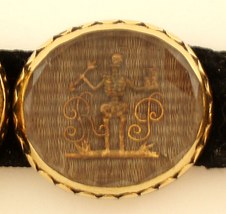
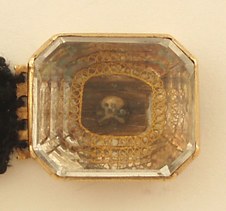
An historically important late 17th century piece of jewelry, a bracelet of Stuart crystal slides recording a family history of betrothals and deaths. The seven gold slides, by the same hand, are gold, decorated with various ciphers and devices under rock crystal, threaded onto black ribbon and set to a gold clasp with skull device. It is rare for a bracelet of this type to have survived intact - most slide bracelets have been separated over the course of centuries.
52 Stuart Crystal slide with 2 cupids holding a crown with an elaborate gold cipher, set on woven hair.
Cipher: HB HB
53 Stuart Crystal slide with a gilt cipher set on woven hair in two colors.
Cipher: TW TW
54 Stuart Crystal slide with gold thread ciphers set on woven hair in an intricate pattern.
Cipher: TB TB
55 Center slide on the bracelet -- 2 cupids holding a heart set on woven hair and surrounded by gold flowers.
56 Stuart Crystal slide with gold thread ciphers set on woven hair in two colors.
Cipher: WM
57 Stuart Crystal slide with elaborate gold thread ciphers set on woven hair and surrounded by blue enamel and gold-toothed inner fitting.
Cipher: HB HB
58 Stuart Crystal slide with an enameled skeleton holding an hourglass and arrow (?).
Cipher: RP
59
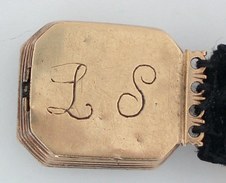
60 Stuart Crystal clasp with an enameled skull and looped gold thread surround. the back of the clasp is engraved with the initials LS.
61 Back of Stuart Crystal clasp.
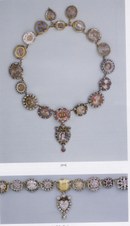
62 Stuart Crystal necklace from the Phyllis Phillips Collection auction held by Christie's December 13, 1989. pg 46-47 of catalogue.
Astonishing necklace! Sure wish this was mine!
Short description: A fine collection of 19 gold-mounted memorial and love jewels mounted as a necklace, each with a rock cover, ten with jeweled borders, ten with pink, black and white enamel backs, 15 with slide attachments.
Note the central pendant: an unusual locket with two winged angels holding a Royal Crownabove "Aeta s 32' on hair panel; an unusual heart shaped locket with miniature of Mary II, the rose-cut diamond border with emerald and ruby cresting and cabochon drop.
63 Stuart Crystal slide Circa 1670 -1680
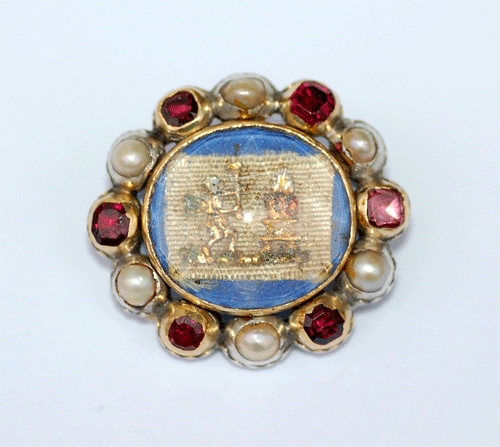
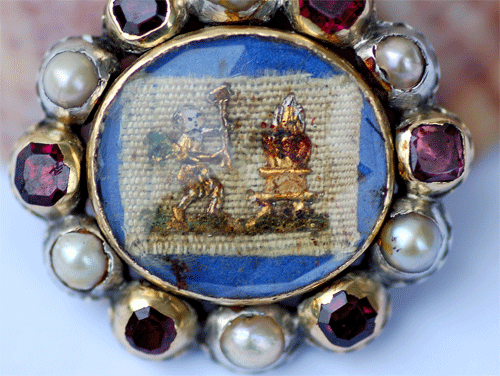
Stuart crystal gold slide - ground of blue enamel, overlaid with plaited hair. A gold cherub wearing an black and white enamel skull mask, carries a skull on a stick towards a burning pyre. The surround is set with garnets and Oriental pearls, the reverse with black, pink and white botanical enameling. The slide measures one inch by just under one inch. The blue enamel ground is fine and there is only slight loss of color to the enamel figures, botanical enameling is practically perfect. This subject has not been covered in any reference book as far as we can tell.
64
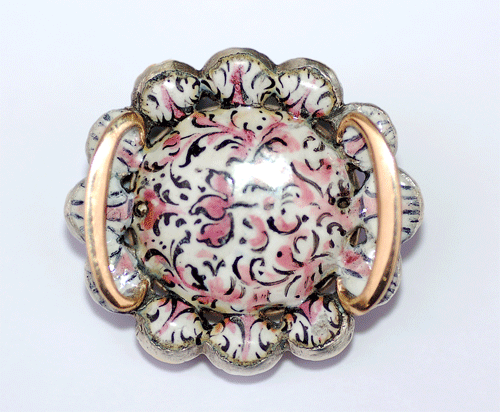
65 Back of slide with botanical enameling in the style of Gilles Légaré.
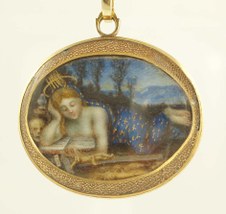
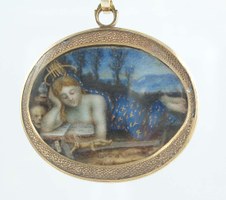
66 Stella Maris Memento Mori
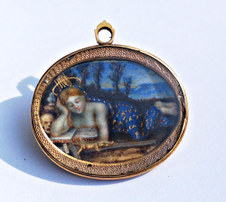
Unusual memento mori pendant for lives lost at sea - a watercolor miniature on parchment, under crystal and set to a gold pendant, circa 1720. The miniature is of Stella Maris, protectress of mariners and seafarers. She is portrayed in her lapis blue robe covered in golden stars and wearing a golden starburst crown. The skull, urn and crucifix in the scene symbolize souls lost at sea. The pendant measures 3 cm by 3.8 cm [ 1 and 1/4 inches by 1 and 1/3 inches] and is in excellent condition. A finely executed and unusual mourning miniature.
Stella Maris is an aspect of the Christian Virgin Mary as spiritual guide. She is called Mary, Star of the Sea, and protects those who make their living on the oceans such as mariners and seafarers. She is shown on a lunar crescent wearing a starry crown, Her typical iconography, which likely references Revelations 12:1 of the Bible, which describes "a woman... with the moon under her feet, and on her head a gar...
67
68
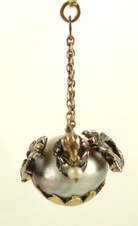
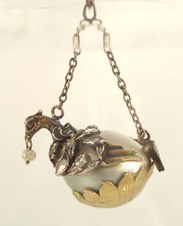
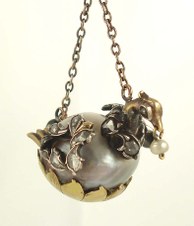
69 Bird pendant, pearl and diamonds Circa 1700
Wonderful bird pendant composed of a large (19mm) natural pearl with gold base and silver and gold wings, head. Wings are set with rose-cut diamonds.
70 Side of bird pendant.
71 Side of bird pendant.
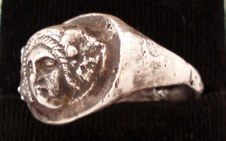
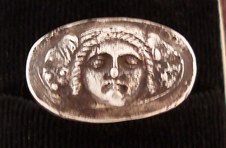
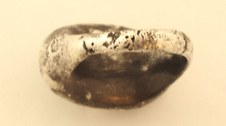
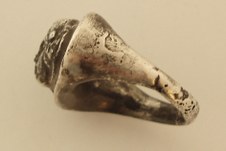
72 Roman silver ring Circa 400 AD
73
74
75
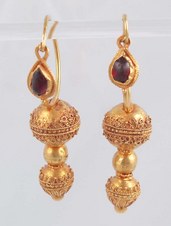
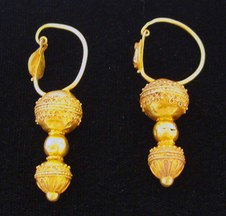
76 Gold earrings with garnets Greco-Roman Circa 400-300 B.C.
77 Terrible side picture -- gold is too shiny!
You can see the ear wire -- they are twisted shut so once these were in the ear, they weren't easy to remove....
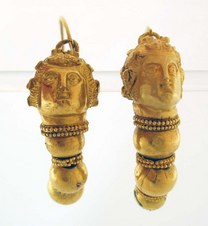
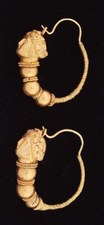
78 Gold Maenad head earrings Greek Circa 400-300 B.C.
Splendid, large gold earrings with three ascending hollow gold beads separated by double-rows of tiny gold granules terminating in conical collar with granular decoration from which emerges the hollow gold head of a maenad wearing double ivy wreath in her finely detailed hair which is centrally parted and drawn into a chignon at the back, with two long curls framing her face. The earring hoops are a combination of twisted wire leading to smooth wire with the end of the hoop passing into a loop at the back of the maenad's head.
79
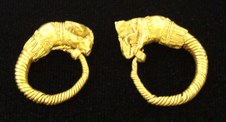
80 Gold bull's head earrings Greek Circa 400-300 B.C.
Greek gold bull's-head earrings, each with a hoop of tapering twisted wire that hooks through a loop on the underside of the head, the heads emerging from ornamented collars with fine detailing. The heads are rather smooshed....
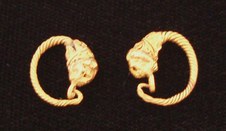
81 Tiny gold lion-head earrings Greco-Roman Circa 400-300 B.C.
Each with a tapering hoop of spiral-twisted plain wires which hook through a loop in the lion's mouth, terminating at a lion head, the eyes and mouth open through to the interior. These are approximately 1/2" in diameter, perhaps made for a child.
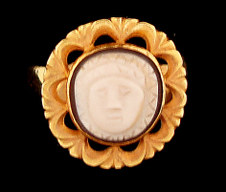
82 Agate ring --cameo of Medusa Ancient, probably Byzantine mounting. Ring shank is new.
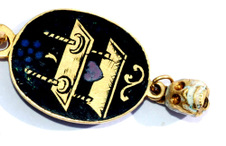
83 Memento Mori Pendant Circa 1680
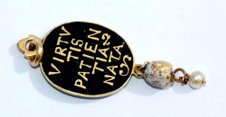
Rare Memento Mori pendant circa 1680, depicting on the obverse a heart being pressed by a vice and a forget-me-not and inscribed to reverse Virtutis patentia nata [patience is born of courage]. Attached to the base of the pendant is an enamelled skull and natural pearl drop. The pendant measures 1 and 1/3 inches by half an inch. A most symbolic memento mori piece.
84 Rare Memento Mori pendant circa 1680, inscribed to reverse Virtutis patentia nata [patience is born of courage].
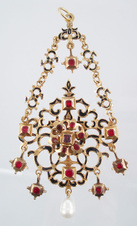
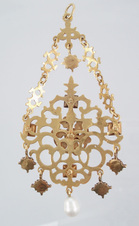
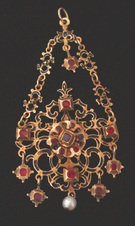
85 Gold, enamel and ruby pendant Spanish Circa 1650
86
87 Showing correct pearl dangle
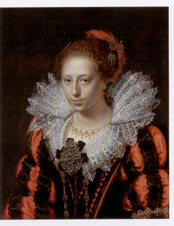
88 Portrait of a Young Lady Paulus Moreelse (Dutch, 1571-1638) Circa 1620
Oil on canvas, The Art Institute of Chicago, Max and Leola Epstein Collection
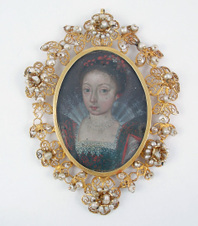
89 Portrait miniature of young noblewoman European (Spanish?) Circa 1560
Early portrait of young noblewoman, potentially either a betrothal portrait or a "shopping" portrait. Rare oil on silver with a later gold backing. Set in later period gold frame (mid-1600s) inset with pearls.
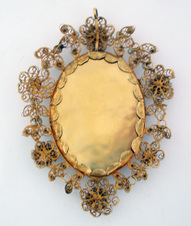
90 Back of pendant showing later gold backing.
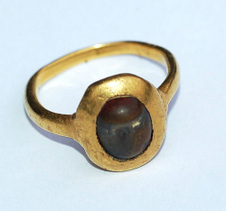
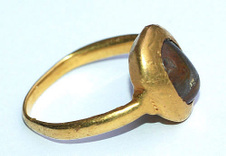
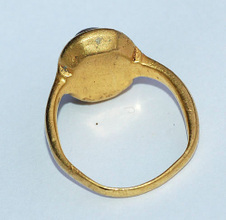
91 Amuletic "Toadstone" Ring 15th Century
A 15th century high-carat gold amuletic ring set with a fossilized 'toadstone'.
From the 14th century rings were set with 'toadstones' for their magical and protective qualities. According to folklore the toadstone had to be taken from an old toad that was still alive. This could be done by placing the toad on a piece of red cloth that would cause it to cast out its stone.
There are a number of examples of toadstone rings in the British Musem, some contain fossilized ray-finned fish teeth and some contain fossilized agates, this example is most probably an agate.
The ring is size M [US 6] and the front measures 1/2 an inch by 1/3 of an inch. A rare 15th century amuletic ring in amazingly fine condition.
92 Side view of the toadstone ring
For the toadstones made from fossilized fish teeth, they are called Bufonite.
BUFONITE, literally, toad-stone; a name given to the fossil teeth and palatal bones of fishes belonging to the family of Pycnodonts (thick teeth), whose remains occur abundantly in the Oolitic and Chalk formations.
The term bufonite, like those of serpents' eyes, batrachites and crapaudines, by which they are also known, refers to the vulgar notion that those organisms were originally formed in the heads of serpents, frogs and toads.
93 Back view of the toadstone ring.
94 Eomesodon trigonus Tooth Jurassic UK
This gorgeous yet unusual pychnodont tooth looks like a shiney pearl. It has wonderful shiney enamel with wonderful jet black colouration, being 8mm across. It is Middle Jurassic age circa 164 million years old and comes from the Great Oolite, Bathonian Stage of Oxfordshire, UK.
95 Eomesodon trigonus Tooth Cretaceous UK
This gorgeous large tooth is from a pychnodont fish. It measures 9mm across, has wonderful shiny enamel with wonderful dark tan colouration. It is Cretaceous age circa 100 million years old and comes from the Lower Greensand, Albian Stage of Hardwick, Oxfordshire, UK.
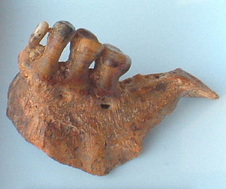
96 Hadrodus headetti Pycnodont Jaw Cretaceous U.S.
This very rare large lower right jaw is from an extinct mesozoic pycnodont fish. It is quite lovely and of museum quality. It has great detail with super enamelled teeth, being 37mm in length. It is Upper Cretaceous age circa 80 million years old and comes from the Mooreville Chalk of Green County, Alabama, USA.
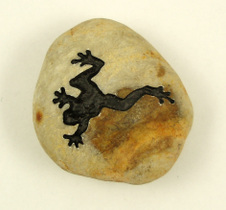
97 A "toadstone"
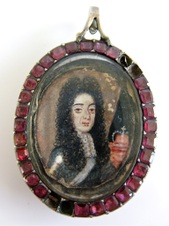
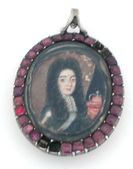
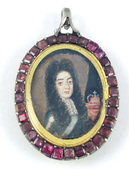
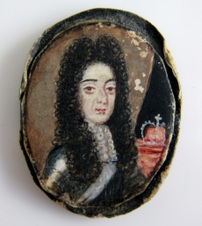
98 Double-sided portrait locket English Circa 1694-early 1700s
A double-sided locket with portrait miniatures of William III (1650-1702) and Mary II (1662-1694). William, wearing a suit of armor, blue sash, white lace cravat, long black wig, his crown on a red cushion to the right. Mary wearing a red dress, ermine mantle, her dark hair curled, with a skull on a covered table to the left (indicating death). Portrait are watercolor on vellum, set in a gilt metal locket with garnet border. Locket is too large for the portraits, but is an early piece.
99
100 Restored by Carol Aiken
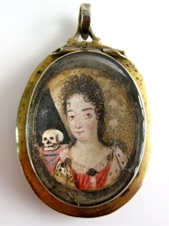
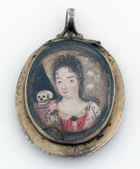
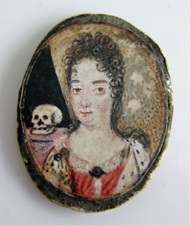
101 Double-sided portrait locket English Circa 1694-early 1700s
A double-sided locket with portrait miniatures of William III (1650-1702) and Mary II (1662-1694). Mary wearing a red dress, ermine mantle, her dark hair curled, with a skull on a covered table to the left (indicating death).
102
103 Restored by Carol Aiken
104 Unrestored - out of frame
105 Unrestored - out of frame
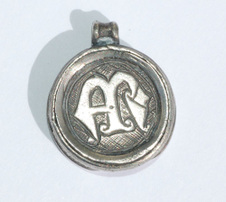
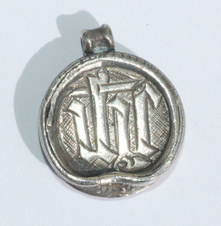
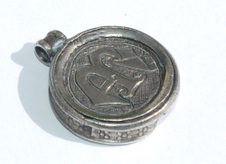
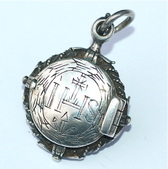
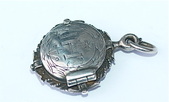
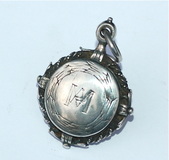
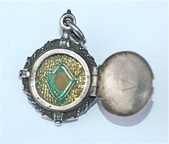
106 Silver Pilgrim Badge English Circa 15th century
These were purchased at sites of pilgrimage such as Canterbury and worn on a hat. This can be worn as a pendant. On one side is the IHS inscription for Jesus and on the other M for Mary. The edges are beaded. Most pilgrim badges were base metal, this was for a better class of pilgrim! It is a bit squished on one side but that's fine as most survivors are often fragments. It is 2/3 of an inch long and just over 1/2 an inch wide. There are similar on the British Museum site.
107
108
109
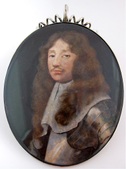
110 Portrait miniature of gentleman in armor Circa 1700s?
Portrait miniature on vellum of a gentleman in armor set in silver frame. From the school of Samuel Cooper.
111 Pilgrim Badge Pendant English Circa 15th Century
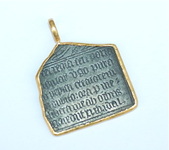
A silver fragment from a late 15th century pilgrim badge, later set to a high carat gold pendant mount. Medieval society was religious to an extent that is difficult for many of us to comprehend today and its depth of religious belief was manifested in the cult of the pilgrimage. Pilgrims travelled across the known world to visit the shrines of saints, seeking absolution of sin or miraculous cures for illnesses. To the medieval mind, the miraculous power of a shrine or relic could be transferred to anything that came into contact with it, giving rise the the first mass produced tourist souvenir, the pilgrim badge. Badges varied greatly in quality, some were crudely made while others were finely crafted.
This badge is of superior quality, silver rather than base metal and beautifully inscribed with a fragment of a Latin antiphon and prayer based on the doctrine of the Immaculate Conception which translates in full as:...
112 Pilgrim Badge Pendant English Circa 15th Century
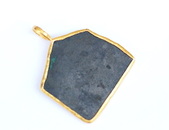
Back side of fragment.
113 Charles 1st Gold Touch-piece (obverse) English Circa 1625-1649
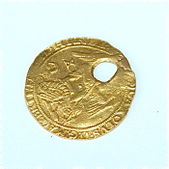
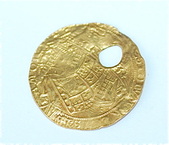
Persons of royal blood were believed to have God-given powers of healing by touch, and the sovereigns of England, from the reign of Edward the Confessor to that of Queen Anne, used their 'powers' to cure sufferers of scrofula or Swine evil, a form of tuberculosis commonly known as 'King's Evil'. Gold 'Angel' coins were officially pierced to be used as touch pieces and were hung from ribbon or silk string. Charles 1st issued Angels almost exclusively as touch pieces, making intact specimens rare. The cure involved the laying on of hands by the monarch and the Angel coin was given to sufferers a receipt or talisman of the monarch's healing power. This particular coin was favoured as its obverse depicts St Michael slaying the devil, represented as a dragon.
The royalist John Evelyn described a 'touching' ceremony in a diary entry in 1660: His Majesty began first to to...
114 Charles 1st Gold Touch-piece (reverse) English Circa 1625-1649
115 Silver reliquary pendant English Circa 1650
An opening reliquary with the sacred monogram IHS and a cross on the front and AM for Ave Maria or Hail Mary on the reverse. It opens to reveal a compartment with a [purported] golden fragment of Mary's gown.
This pendant measures 1.5 inches in length including suspension loop, 1 inch in length excluding loop and it's 3/4 of an inch wide.
116 Silver reliquary pendant English Circa 1650
117 Silver reliquary pendant English Circa 1650
An opening reliquary with AM for Ave Maria or Hail Mary on the reverse.
118 Silver reliquary pendant English Circa 1650
The compartment with a [purported] golden fragment of Mary's gown.
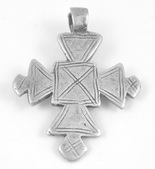
119 Ethiopian silver cross Early
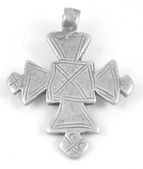
All of these crosses and pendants are made from Maria Theresa "trade dollars" from Austria called thalers. They were first made in 1471. Starting in 1480 they were struck for trade and continued over many years, to still have that same date on them. They have a silver content of .833. They have been very popular in Africa, often melted down to make various items, but sometimes cut into crosses or made into pendants by adding a hanging loop.
120 Ethiopian silver cross Early
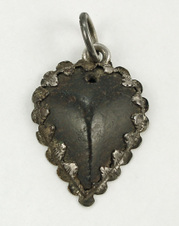
121 Amuletic heart of carved wood 17th century Southern Europe
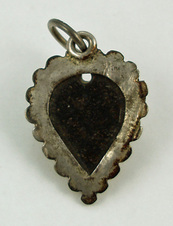
A 17th century silver amuletic heart set with a piece of carved wood, most likely struck by lightning. Circa 1680, Southern European (probably either Italy or Iberian). Wood was talismanic because of the Cross, and people were especially keen on carving wood from trees that had been struck by lightning. It measures 1.5 by one inches.
122 Amuletic heart of carved wood 17th century Southern Europe
Back of heart
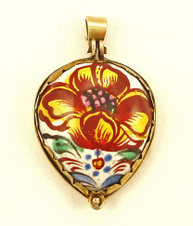
123 Enameled heart pendant Circa 17th century
Floral enameled heart pendant in high carat gold with enameled inside compartment for holding fragrances.
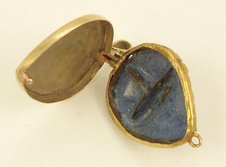
124 Enameled heart pendant Circa 17th century
Enameled inside compartment.
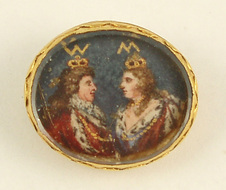
125 Stuart crystal slide - William and Mary Coronation English Circa 1689
Set in high carat gold, a beautiful and detailed portrait miniature of King William III and Queen Mary at their coronation in February 1689. They are facing each other, clad in royal robes and regalia with gold initials over their heads. The portrait is under polished and faceted rocky crystal set in a saw-tooth setting.
The phrase William and Mary usually refers to the coregency over the Kingdoms of England, Scotland and Ireland, of spouses (and first-cousins) King William III & II and Queen Mary II. Their joint reign began in February 1689 after they were offered the throne by the Parliament of England following William's successful invasion of England in 1688, the so-called Glorious Revolution. They replaced James II & VII, Mary's father and William's uncle/father-in-law, who was "deemed to have fled" the country. Parliament offered William and Mary co-regency at the cou...
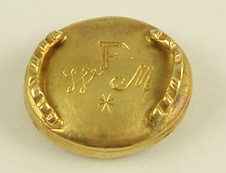
126 Stuart crystal slide - William and Mary Coronation English Circa 1689
Back of the slide with initials W F M
127 Stuart Crystal pendant - Queen Anne English Circa late 17th c
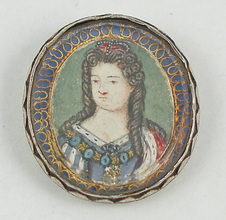
High carat gold slide with portrait miniature of Queen Anne in royal dress. The portrait is set into a blue background with fine gold wire lopps on the edge. Set under a beveled rock crystal with saw tooth edges.
Anne (6 February 1665 – 1 August 1714)[1] became Queen of England, Scotland and Ireland on 8 March 1702. On 1 May 1707, under the Acts of Union, two of her realms, the kingdoms of England and Scotland, united as a single sovereign state, the Kingdom of Great Britain. She continued to reign as Queen of Great Britain and Ireland until her death.
She succeeded William III, her sister Mary's husband. Despite seventeen pregnancies by her husband, Prince George of Denmark, she died without any surviving children and was the last monarch of the House of Stuart. Under the terms of the Act of Settlement 1701, she was succeeded by her second cousin George I of the House of Hano...
128 Silver wirework pomander Circa 17th century
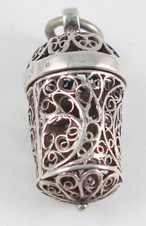
A 17th century silver filigree wirework pomander, designed to hold a ball of ambergris or musk as a protection against disease in times of pestilence, or merely as a useful article to mask unpleasant odors. Pomanders were hung from a neck chain or belt or attached to the girdle.
This two section pomander is decoratively pierced and has its original suspension loop. It is 1 and 3/4 inches long including suspension loop, 1 and 1/4 inches long excluding loop and 2/3 of an inch wide across the front. For similar, see Victoria and Albert Museum collection.