 Olmec Head Olmec Head
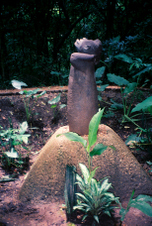
Villahermosa is home to one of Mexico's most famous archeological parks - Parque Museo La Venta. La Venta was one of three major Olmec cities during the pre-classic period (2000 B.C. to 300 A.D.).
|  La Venta La Venta
The ruins of La Venta were discovered in 1938 - 84 miles west of Villahermosa.
|  La Venta La Venta
All the gigantic heads were moved from that site to this park.
|  La Venta La Venta
One of the three largest heads in the park is 6 1/2 feet tall and weighs around 40 tons. It is estimated to have been carved around 1000 B.C.
|
 Sweaty in La Venta Sweaty in La Venta
The basalt rock for these heads was transported 70 miles - probably by raft - to La Venta. (Warning: Mosquitos thrive on tourists in this park. Don't worry - conveniently placed mosquito repellent salespersons appear throughout the park when needed.)
|  Palenque Palenque
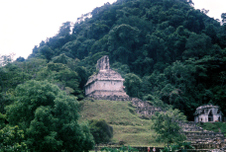
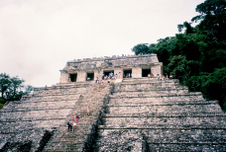
The ancient Maya city of Palenque was a ceremonial center for high priests during the Classic Period (300 - 900 A.D.).
|  Palenque Palenque
|  Palenque Palenque
Temple of the Inscriptions - named for the great stone hieroglyphic panels found inside.
|
 Palenque Palenque
|  Tour outside San Cristobal de las Casas Tour outside San Cristobal de las Casas
Mercedes Hernandez Gomez (at the center of the photograph holding an umbrella) leads tours of the villages outlying San Cristobal de las Casas.
|  Chamula Chamula
One of the villages outside San Cristobal.
|  Chamula Chamula
|
 Chamula Chamula
|  El Sumidero El Sumidero
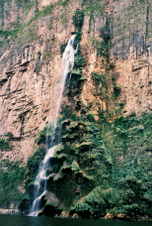
The canyon of El Sumidero lies 10 miles northeast of Tuxtla Gutierrez.
|  Christmas Tree Waterfall Christmas Tree Waterfall
A boat ride down the canyon gives visitors spectacular views of the gorge's scenery. .
|  Oaxaca Oaxaca
Santo Domingo Church in the heart of colonial Oaxaca. It was started by Dominican friars in the 1550's and completed a century later.
|
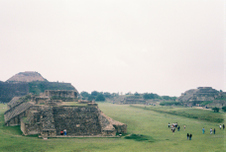 Great Plaza of Monte Alban Great Plaza of Monte Alban
First inhabited by the Olmecs, the ancient city of Monte Alban looms over the city of Oaxaca. But the Zapotecs began building the city in 500 B.C.
| 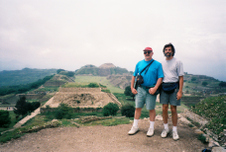 Monte Alban Monte Alban
The city was occupied for nearly 3,000 years - roughly from 1500 B.C. to 1400 A.D.
|  Wood sculptures Wood sculptures
The small wood sculptures from villages surrounding Oaxaca are among the many crafts that are produced in the area.
| 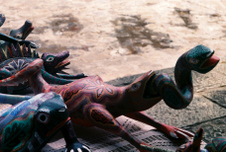 Wood sculptures Wood sculptures
|
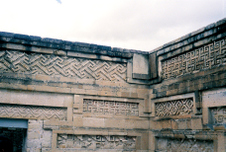 Mitla Mitla
Mitla was settled by the Zapotecs around 800 B.C. and later inhabited by the Mixtecs in the late 10th century. The city was still flourishing at the time of the Spanish conquest.
| 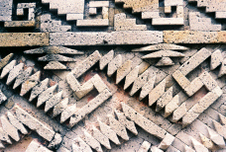 Mitla wall detail Mitla wall detail
The most common motif - the zigzag pattern - can also be found in the blankets/rugs that are handwoven in the Oaxaca area. Human or animal images are rare in Mixtec art.
| 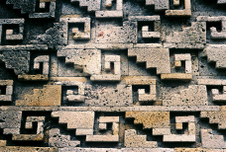 Mitla wall detail Mitla wall detail
| 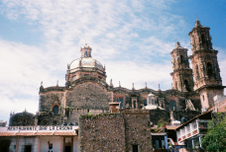 Taxco Taxco
Taxco (pronouced Tahs-ko) - a city of about 87,000 and noted for its silver production - is situated at a refreshingly pleasant altitude of 5,850 feet.
|
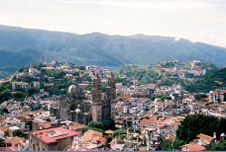 Taxco city view Taxco city view
Over 180 silver shops line Taxco's streets.
| 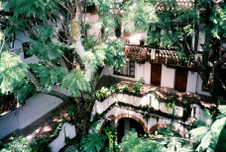 Hotel courtyard in Taxco Hotel courtyard in Taxco
Hotel Santa Prisca
| 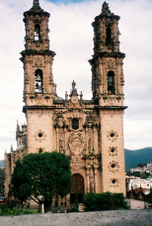 Santa Prisca Church Santa Prisca Church
Completed in 1758 after eight years of labor, Santa Prisca Church is one of Mexico's most impressive baroque churches.
| 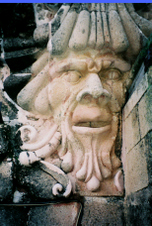 Sculpture in Santa Prisca Sculpture in Santa Prisca
|
