 Antigua Antigua
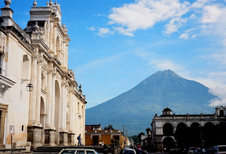
After landing in the capital - Guatemala City - most travelers head directly to one of the oldest and most beautiful colonial cities in the Americas - Antigua.
|  Antigua Antigua
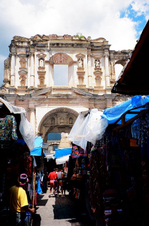
Founded in 1542, Antigua is ringed by three volcanoes - Agua, Fuego and Acatenango. Despite withstanding at least 16 damaging earthquakes, the city's numerous colonial buildings are still intact.
|  Antigua Antigua
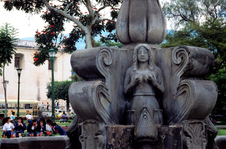
Central square in Antigua.
|  Antigua Antigua
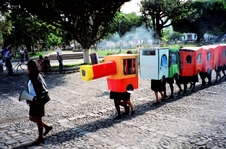
A parade of school children celebrating a Guatemalan version of Earth Day.
|
 Antigua Antigua
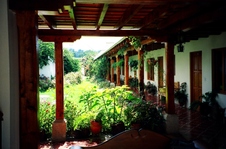
A view of the courtyard at Hotel San Jorge.
|  Copan Copan
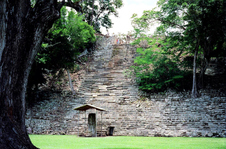
The ancient city of Copan in Honduras is located less than 10 miles from the Guatemalan border. This is a view of the Great Plaza.
|  Copan Hieroglyphic Stairway Copan Hieroglyphic Stairway
Copan peaked during the Classic Mayan Period from 250 to 900 AD. By the year 1200 the royal city of Copan had already been reclaimed by the jungle.
|  Copan Copan
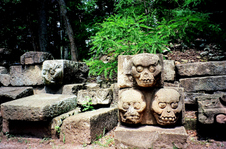
Copan was brought to the world's attention by John Stephens in 1841.
|
 Copan Copan
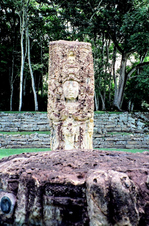
Intricately carved "stalae" are scattered throughout the site. They stunningly carved "portraits" of former rulers of Copan.
| 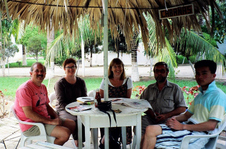 Group trip to Copan Group trip to Copan
| 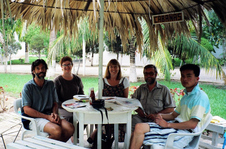 Group trip to Copan, Version 2 Group trip to Copan, Version 2
| 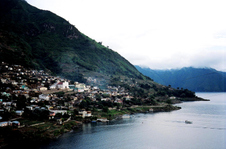 Lake Atitlan Lake Atitlan
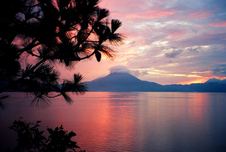
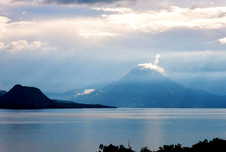
One of the world's most picturesque lakes, Lake Atitlan is actually a caldera - a collapsed volcanic cone. In some areas the lake is more than 1,000 feet deep.
|
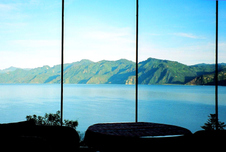 Lake Atitlan Lake Atitlan
The view from our room at the Hotel Bella Vista.
|  Lake Atitlan Lake Atitlan
Sunset from our hotel.
|  Lake Atitlan Lake Atitlan
After an evening storm.
|  Santa Catarina, Lake Atitlan Santa Catarina, Lake Atitlan
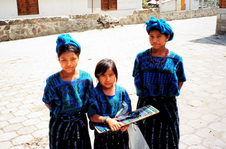
Girls dressed in the traditional and distinctive blue clothing of the village of Santa Catarina.
|
 Lake Atitlan Lake Atitlan
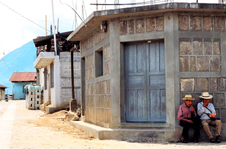
Street scene at one of the traditional villages along the shores of Lake Atitlan.
|  Chichicastenango Chichicastenango
Carrots for sale. The vegetables sold in this market seemed larger and healthier-looking than any similar vegetables in the States. Why was that?
|  Chichicastenango Chichicastenango
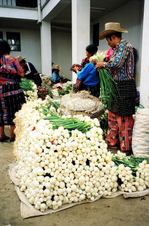
A scallion (cebollita) farmer selling his crop at the Chichicastenango market.
|  Mask for sale at Chichicastenango Mask for sale at Chichicastenango
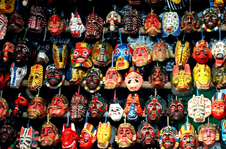
The Chichicastenango market is held twice weekly - on Sundays and Thursdays. The market has been held for hundreds if not thousands of years. It is buying source for both locals and tourists.
|
 Chichicastenango Chichicastenango
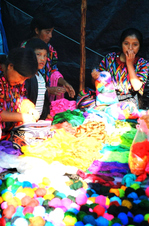
Yarn sellers - surprised - at the market.
|  Outside Santo Tomas Church Outside Santo Tomas Church
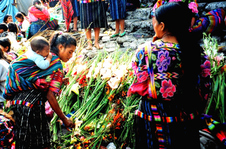
Santo Tomas Church in Chichicastenago was built in 1540 on the site of a Mayan altar. For the local people, the entire site is alive with souls. Before entering the church it is customary to make offerings at the base of the steps.
| 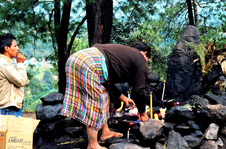 Pascual Abaj, Chichicastenango Pascual Abaj, Chichicastenango
A ceremony takes place at the shrine of Pascual Abaj on a hillside outside Chichicastenago. Offerings of flowers, alcohol and even sacrificed chickens are made to the stern pre-Columbian statue of Pascual Abaj.
| 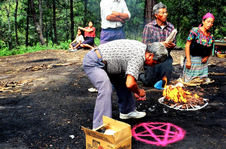 Pascual Abaj Pascual Abaj
The ceremony is usually overseen by a type of traditional shaman.
|
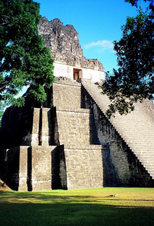 Tikal Tikal
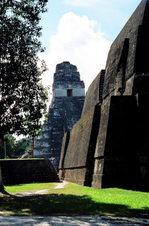
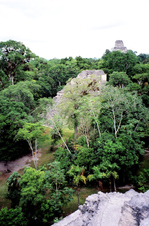
Tikal is the most impressive ancient Mayan complex in the Americas. Many of its structures -like this 145 foot temple - pierce the dense jungle canopy.
| 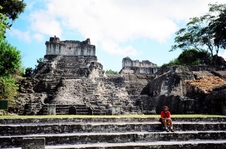 Tikal Tikal
First inhabited around 700 BC, the city of Tikal thrived for over 1000 years. Around 900 AD, when many of the other Mayan cities also declined, Tikal was abandoned.
|  Tikal Tikal
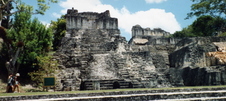
The site was rediscovered in 1848 by a government expedition. Until 1951 Tikal could only be reached by horseback. Now, jet planes make the short filght from Guatemala City to Flores several times a day.
|  Tikal Tikal
|
 Tikal Tikal
|  Tikal Tikal
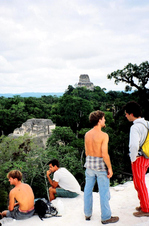
Visitors were allowed to ascend almost any structure in the park. Sunrise and sunsets drew the largest crowds to the tops of the temples.
|  Tikal Tikal
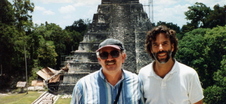
Some of the structures around the main plaza were undergoing restoration (as can be seen with the scaffolding in the background) at the time we visited the park.
|  Tikal Tikal
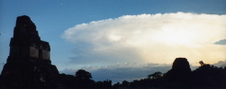
An approaching thunderstorm over the jungle surrounding Tikal.
|
