 St.Stephanos, Meteora St.Stephanos, Meteora
The area of Meteora in northern Greece takes its name from the adjective "meteoros" which means suspended in the air. The monasteries are literally suspended in the air atop these mesa-like rock formations.
| 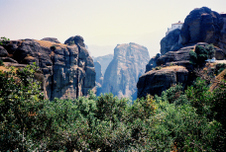 Meteora Meteora
| 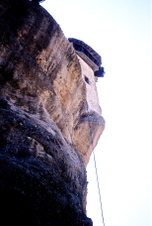 Agios Triados Agios Triados
During the turbulent 14th century, the monasteries were often only accessible by a rope pulley (attached to a large basket) or a rope-strung ladder.
| 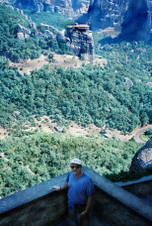 Meteora Meteora
|
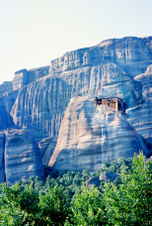 Meteora Meteora
| 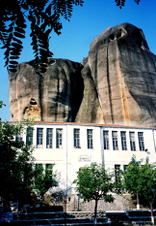 Kastraki Kastraki
| 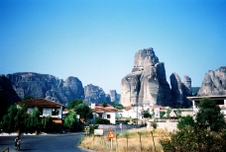 Kastraki Kastraki
| 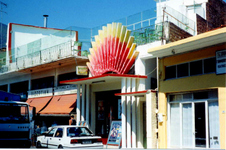 Outdoor Rooftop Movie Theater in Diakofto Outdoor Rooftop Movie Theater in Diakofto
On summer evenings, store rooftops are turned into outdoor movies theaters. The white movie screen can be glimpsed to the left of the photo.
|
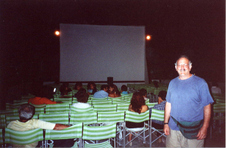 Outdoor Movie Theater in Diakofto Outdoor Movie Theater in Diakofto
This photo was taken during an intermission of an evening movie showing. As can be seen by Ross' shirt, there is no air conditioning. The air is still mercilessly hot. Not even a warm breeze could be felt. Ah, Greece in the summer.
| 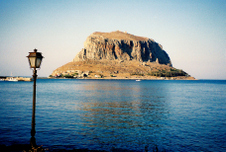 Monemvasia (view from the mainland) Monemvasia (view from the mainland)
Monemvasia - often referred to as the "Gibraltar of Greece" - is accessed via a causeway from the mainland town of Gefyra.
| 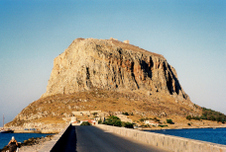 Monemvasia Monemvasia
The island was originally part of the mainland until is was separated by an earthquake in the 4th century.
| 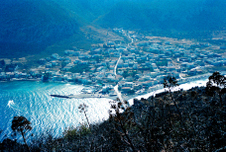 Causeway entrance to Monemvasia Causeway entrance to Monemvasia
During the 6th century, recurrent barbarian invasions forced area residents to retreat to this natural stone fortress.
|
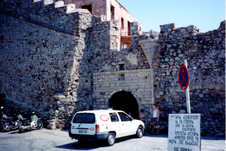 Monemvasia entrance Monemvasia entrance
This is the only entrance to the town. No cars beyond this point! You enter the town through an l-shaped tunnel. The town is revealed only at the very end of the tunnel.
| 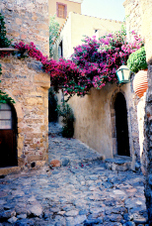 Monemvasia street scene Monemvasia street scene
The best place to stay is the Malvasia Hotel - spread out throughout the town in restored buildings.
| 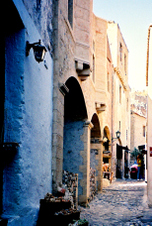 Monemvasia street scene Monemvasia street scene
The streets - thankfully car-less - are lined with shops and restaurants. At the end of the day, the day-trippers leave and the town is blissfully peaceful - even in the height of the summer tourist season.
| 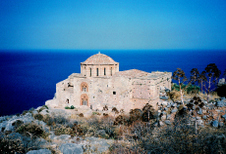 Atop Monemvasia Atop Monemvasia
Monemvasia is truly one of the most beautiful spots along the Pelopennesian coast. This is a view of Agis Sofia - a 13th century church that overlooks the town.
|
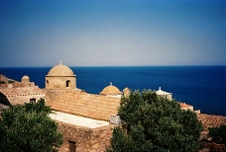 View from Hotel Malvasia, Monemvasia View from Hotel Malvasia, Monemvasia
| 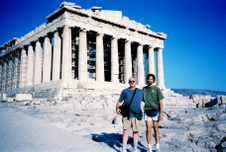 Parthenon Parthenon
| 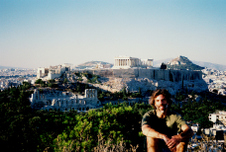 View of the Parthenon from Filapappan Hill View of the Parthenon from Filapappan Hill
| 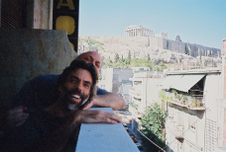 View of the Parthenon from our hotel balcony View of the Parthenon from our hotel balcony
Hotel Acropolis View
|
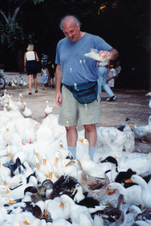 Feeding ducks in the National Gardens, Athens Feeding ducks in the National Gardens, Athens
| 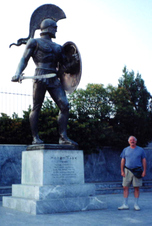 Statue of Leonidas, Sparta Statue of Leonidas, Sparta
During a battle in the second Persian War, Leonidas refused to surrender even though his army was hopelessly outnumbered (8,000 to 30,000 Persians). For two days, he held off the Persians before his entire troop was slaughtered.
| 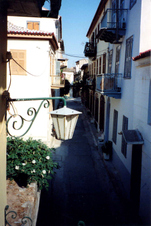 Naplion street Naplion street
| 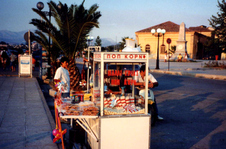 Naplion popcorn vendor Naplion popcorn vendor
|
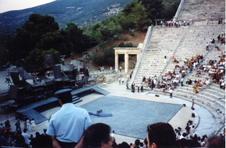 Epidauros Epidauros
Waiting for the performance of "Orestes" (in Greek) to begin. This amphitheater - built in the 4th century BC - seats over 14,000. It hosts Greece's premiere outdoor summer theater festival.
| 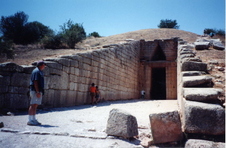 Mycenae Mycenae
The tomb of Clytemnestra
| 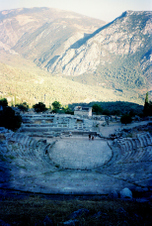 Delphi Delphi
| 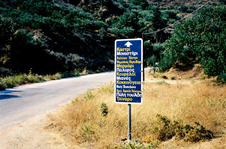 "Like this sign helps..." "Like this sign helps..."
|
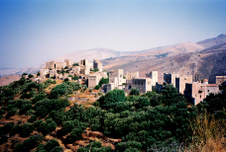 Stone towers of Vathia Stone towers of Vathia
The stone towers of Vathia were built as the result of fueds between families. Rocks were catapulted from each tower to the roofs of their enemies.
| 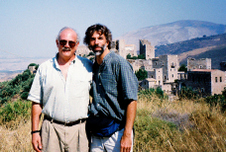 Vathia Vathia
The object of the battle was to destroy the enemy's tower house as well as the entire male population. Feuds ended with the complete destruction of a family or its surrender.
| 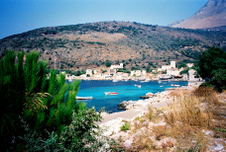 Bay of Limeni Bay of Limeni
| 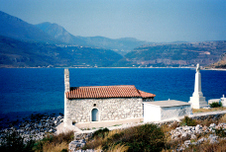 Cemetery at the bay of Limeni Cemetery at the bay of Limeni
|
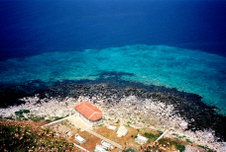 Cemetery (from above) at Limeni Cemetery (from above) at Limeni
| 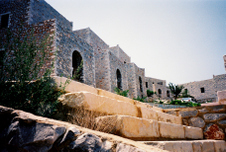 Hotel at Limeni Hotel at Limeni
| 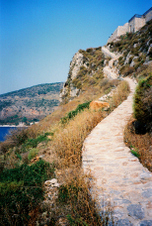 Stone path from hotel to the beach Stone path from hotel to the beach
| 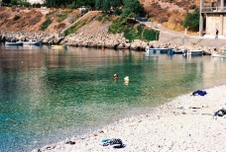 Two women (with hats) in the water, Bay of Gerolimenas Two women (with hats) in the water, Bay of Gerolimenas
|
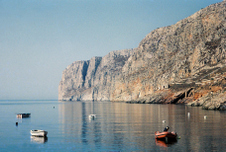 Bay of Gerolimenas Bay of Gerolimenas
| 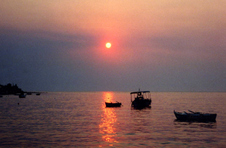 Limeni Bay at sunset Limeni Bay at sunset
| |
