How solar cooking with a solar box cooker led to the opportunity to bring world-class water testing to communities, leading to an understanding of the relationship between fecal contamination of drinking water sources and waterborne disease.
Date(s): 1987-2024. Album by Bob Metcalf. Photos by Bob Metcalf. 1 - 142 of 142 Total. 2960 Visits.
1 The presence of the bacterium Escherichia coli indicates recent fecal contamination of water.
2
3 First step: gas from lactose broth at 35°C.
4 2nd step: 2nd lactose broth incubated at 44.5°C +/- 0.2°C. Gas produced by 'thermotolerant coliforms'
5 Most strains of E. coli produce gas at 44.5°C
6 But so do environmental coliform bacteria like this Klebsiella sp. The thermotolerant coliform test is not specific for E. coli.
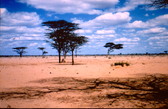
7 The burden of collecting and using firewood to cook food for ~2.5 billion people in developing countries, here in Tanzania
8 Tree cutting leads to deforestation and land degradation
9 Barbara Kerr and Sherry Cole developed a practical solar box cooker in 1976.
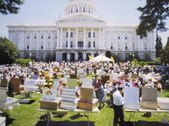
10 Regular solar cooking in Sacramento since 1978.
11 Solar cooking in Sacramento, California, June, 1991
12 Bolivia, 1987, teaching how to build and use a solar box cooker. No simple water test available.
13 Solar baked potatoes after 2 hours of sunshine in Bolivia
14 Guatemala, January, 1988.
15 Built solar box cookers in Plan International project, but no simple water test available.
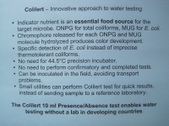
16 In 1988, a new approach to test for E. coli is announced. Colilert, a defined substrate test
17 Colilert contains ONPG that all coliforms metabolize to produce a yellow color. It also contains MUG, which only E. coli with its beta-glucuronidase enzyme cleaves to cause fluorescence with UV light.
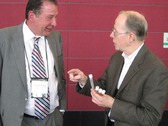
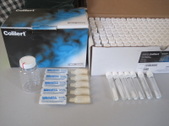
18 Stephen Edberg (left), clinical microbiologist at Yale, developed Colilert test, a game-changer for water testing.
19 Colilert was available as a dry powder in glass tubes to test 10 ml of water. Made by Access Medical Systems, CT.
20 I First used Colilert in Djibouti on UN Food and Agriculture Organization solar box cooker project, October 1988
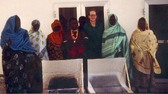
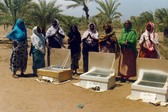
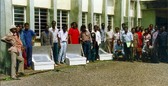
21 Djibouti demonstration on World Food Day, October, 1988
22 January, 1989, Sierra Leone. With Colilert, water testing could be included with building solar box cookers.
23 First solar box cooker made in Sierra Leone
24 Solar Box Cookers made at workshop
25 Cake baked in solar box cooker for 2 hours
26 Fish soup & rice solar cooked
27 First Water Pasteurization Indicator made by Fred Barret, USDA
28 Distribution of Colilert tubes to 41 workshop participants to sample home water source.
29 Tubes can be incubated next to one's body to obtain next day results.
30 Women can incubate Colilert tubes 'close to the heart.'
31 Next day results in Sierra Leone
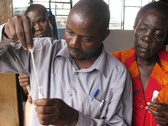
32 Clear = no coliform bacteria. Yellow (ONPG+) = coliform bacteria present, possibly E. coli
33 Shine a long-wavelenth UV light on tubes. Blue fluorescence = MUG (+), E. coli is present (right tube). MUG (-), E. coli not present.
34 39 of 41 Sierra Leone tubes were ONPG + (yellow), coliform bacteria present, perhaps E. coli.
35 26 of 41 samples were MUG (+), indicating the presence of E. coli. Not a low disease risk, as >10 E.coli/100 ml = >1 E. coli/10 ml Colilert tube
37 Noukchott, Mauritania, 1991. 24 urban water samples were inoculated into Colilert tubes
38 Solar box cooker made at workshop.
39 Of 24 urban samples, 20 were ONPG (+), 12 were MUG (+), indicating not a low disease risk.
40 Nepal, 1993. Colilert results from this source were ONPG (+), MUG (-), low disease risk
41 IDEXX took over production of Colilert from ACCESS in 1993.
42 Solar box cookers in Nepal, 1993. With Trickle Up Program.
43 Solar Box Cooker made during Trickle Up workshop
44 Colilert results, Nepal, urban and rural water sources tested
45 22 total sources tested. 21 ONPG (+), 9 MUG (+)demonstration that these 9 sources were not low disease risk.
46 PML materials for 200 tests sent to Nepal NGO in 2010
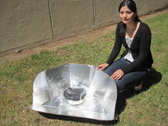
47 In 1995, Solar Cookers International developed the simple Cookit solar cooker. The Cookit could be scaled
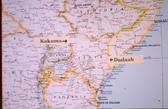
48 SCI introduces Cookit to refugees at Kakama Refugee Camp, Northwest Kenya, February, 1995
49 Dadaab Refugee Camp in Kenya near Somali border. Cookits introduced here, September, 1995.
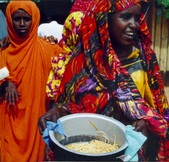
50 Dadaab - refugees receive small amounts of food - but how to cook it?
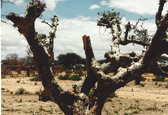
51 Rare tree hacked for firewood
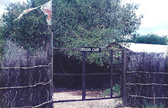
52 Cholera isolation area
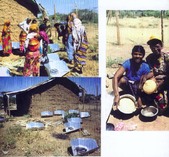
53 Somali women returning from 8 hour journey to collect wood, Dadaab refugee camp, Kenya, 1995
54 Refugee children returning with sticks after a long journey.
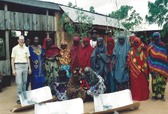
55 Bob and Gladys introducing Cookit to Somali women in Dadaab Refugee Camp
56 Introduction of the Cookit solar cooker. Foods cooked inside clear plastic bags.
57 Solar cooking works!
58 Cookit among refugee dwellings.
59 Refugee family with Cookit.
60 Dadaab Refugee Camp, Kenya, 1995.Testing borehole water with Colilert. ONPG (+), MUG (-)Low disease risk
61 In 1994, 3M introduced E. coli Count Petrifilm to test 1 ml, as is done in the food industry.
62 To use Petrifilm, label sample source and time
63 Add 1 ml of water sample to nutrient circle
64 Use flat side of plastic spreader to gently distribute 1 ml over entire circle
65 Petriflms covered with firm cardboard enables incubation on one's body. Invisible bacteria to develop into visible colonies in 12-16 hours.
66 Results usually in 12-18 hr. E. coli = blue colonies with gas. Coliforms from environment = red with gas.
67 First use of E. coli Count Petrifilm on raw camel milk in Dadaab refugee camp, 1995
68 Inoculated Petrifilms with 1 ml. Incubated on body between cardboard pieces to obtain overnight results.
69 Next day results. > 200 E. coli/ml before pasteurization, very high disease risk.
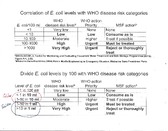
70 Colilert and Petrifilm tests correlate with WHO disease risk categories. E. coli level listed as lowest common denominator instead of per 100 ml.
71 Colilert and Petrifilm results also correlate with MSF treatment guidelines in emergencies.
72 Students at California State University, Sacramento, who contributed to water pasteurization work
73 Heating water to 65°C will pasteurize water and make it safe to drink.
74
75 Water Pasteurization Indicator (WAPI). When water reaches 65°C (149°F), wax melts and falls to the bottom. Water is pasteurized.
76
77 Article on Cookit and WAPI to pasteurize water, 1999
78 WAPI used by Dadaab refugees, 1995. They received Cookit to cook food and WAPI to pasteurize water and camel milk.
79 Fuelwood problems in Meatu District, Tanzania, 2000
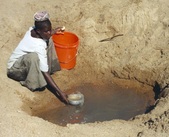
80 Water source, Meatu District, Tanzania
81 Sampling water source, Meatu District
82 Removing water sample for Colilert and Petrifilm tests, Meatu District
83 Water source, Meatu District
84 Water seller collecting water in Meatu District
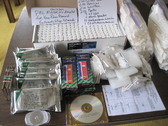
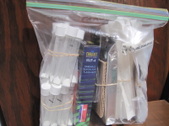
85 Components of the Portable Microbiology Laboratory to test water in Meatu District
86 Materials for 25 water tests in gallon-sized plastic bag to make a Portable Microbiology Laboratory.
87
88 UN-Habitat Booklet on Water Testing, 2010
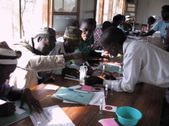
89 Any table becomes a laboratory to test village water sources
90 Testing numerous water sources in Meatu District, 2000
91 Results from one village. 1 ml Colilert MUG+, correlates with E. coli colonies on Petrifilms.
92 Results of Meatu water tests.
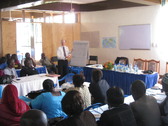
93 Village chiefs and village health workers in 3 day workshop, 2001.
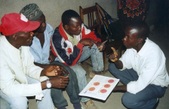
94 Demystifying microbiology, teaching community about bacteria and water testing
95 Topics covered include bacteria size, growth, E. coli as indicator, Colilert & Petrifilm tests, WHO disease risk guidelines
96 Next day results. All local water sources from dry riverbed were high/very high risk.
97 Village chief knows that MUG+ Colilert means that E. coli was in the town's river water source, unsafe water
98 Health worker finds >10 E. coli on Petrifilm, a very high risk of disease
99 Water testing workshop for Saka Saka village, 2002. Boniphace translates into Kiswahili.
100 Two water sources in Saka Saka. From a pump (green bucket) and an open stream (yellow bucket).
101 Adults will sample either pump or stream water
102 Mixing inoculated Colilert tubes, to incubate overnight
103 Inoculating Petrifilms
104 Inoculating Petrifilms
105 Next morning demonstration of solar cooking, solar water pasteurization
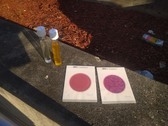
106 Read results: Pump water yellow, MUG -, no E. coli. Stream yellow and MUG+, E. coli present.
107 Examining Petrifilms
108 Compare overnight Petrifilm results
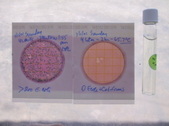
109 Stream water (front) with ~100 E. coli colonies on each Petrifilm, very high disease risk. Pump water (back) with environmental coliforms,no E. coli, low disease risk.
110 All villagers see results of grossly contaminated stream water, no E. coli contamination of pump water.
111 Solar cooked rice in 2 hr
112 Boniphace shows wax melted in Water Pasteurization Indicator (WAPI), water safe to drink
113 Providing a year's supply of water testing materials to Saka Saka health workers to monitor pump water
114 After only an afternoon and a morning session, Saka Saka village understands the microbiology of water testing.
115 Competence in water microbiology is established in the village.
116 Guest House (hotel) in Meatu District
117 River water provided for guests
118 After testing river water, collect for solar pasteurization
119 Heating river water in Cookit to pasteurize
120 Temperature >60°C in 2 hours
121 WAPI wax melted, water is pasteurized
122 Evidence-based microbiology that contaminated water has been pasteurized.
123
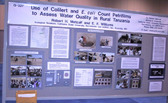
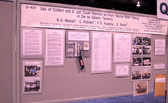
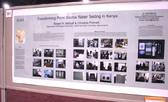
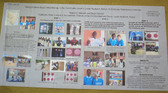
124 Poster at 2001 American Society for Microbiology Annual Meeting
125 Poster at 2003 American Society for Microbiology Annual Meeting
126 Poster at 2005 American Society for Microbiology Annual Meeting
127 UN-Habitat Water testing workshop for community in Bondo, Kenya, 2008
128 Inoculating Colilert at Bondo workshop
129 Colilert and Petrifilm next day results in Bondo
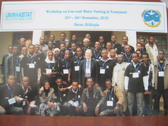
130 UN-Habitat Water Testing Workshop in Harar,Ethiopia, 2010
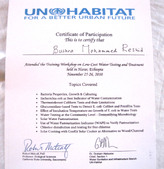
131 Topics covered in Harar Workshop
132
133 Participants USAID water testing workshop in DRC, 2012
134 2nd day results, DRC
135 Water testing results in 2016 Nepal workshop led by Katherine Parker
136 Poster ASM 2015 Meeting
137 Poster ASM 2016 Meeting
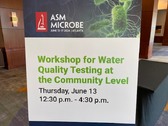
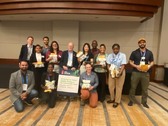
138 Workshop for ASM International Country Ambassadors, 2024
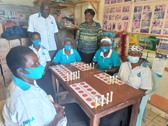
139 Portable Microbiology Laboratories, flash drives with teaching materials to International microbiologists from 13 countries
140 Next day workshop results
141 Friends of the Old (FOTO) microbiologists ready to test water sources in Lower Nyakach, Kenya, 2021
142 Colilert and Petrifilm cover four WHO disease risk categories. Petrifilm identifies high and very high disease risk sources overnight.