 Entering Yellagonga Regional Park Entering Yellagonga Regional Park
|  Pathway through the Bushland Pathway through the Bushland
|  A glimpse of Lake Joondalup ahead A glimpse of Lake Joondalup ahead
|  Grasstrees (Xanthorrhoea preissii) Grasstrees (Xanthorrhoea preissii)
|
 Majestic Old Grasstree Majestic Old Grasstree
Xanthorrhoea preissi
|  Lake Joondalup with Neil Hawkins Park in foreground Lake Joondalup with Neil Hawkins Park in foreground
|  Statue of Bibbulmun Woman and Dingo Statue of Bibbulmun Woman and Dingo
The woman is a Bibbulmun Yorga. The Bibbulmun tribe gets the name from the fact that they came from the hills country that follows the coastline. These hills have many features that resemble women's breasts or bibbys and also the fact that it is an area ruled by matrilineal moiety.
|  Statue of Bibbulmun Woman and Dingo Statue of Bibbulmun Woman and Dingo
The woman is wearing a kangaroo skin cloak called a buka (pronounced boo-ka). On her head she is wearing a yaggardi. She is holding a wooden dish called a yandi (East Coast Coolamon). The dish carries water, fire wood, food, babies. She is holding a wanna (digging stick).
|
 Statue of Bibbulmun Woman and Dingo Statue of Bibbulmun Woman and Dingo
The dog is called dwerda and is the clan totem for Wanneroo, Yanchep, Moora areas. Borunga means totem and Borongorup is the birthplace of all Bibulmun just like the Garden of Eden to Christians. Wanneroo is a songline for a country. Wanneroo is derived from Bibbulmun sacra word which denotes the country of vegetable foods, yams, yanget and tuart roots. How coincidental the Southern Europeans set up market gardens in this area.
|  Walking towards the Lake Walking towards the Lake
| 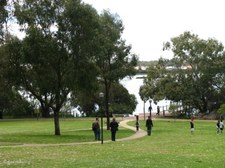 Closer to the Lake Closer to the Lake
|  People Feeding the Birds People Feeding the Birds
|
 Let Nature Feed Itself! Let Nature Feed Itself!
Feeding the birds, fish and tortoises that you see living in Lake Joondalup can be harmful to their health. Artificial foods can cause sicknes and in some cases lead to their death.
|  Feeding the Birds Feeding the Birds
Note the Sign at left!
|  Birds eating the Seed Birds eating the Seed
|  Lake Joondalup looking South Lake Joondalup looking South
|
 Reeds along the edge of Lake Reeds along the edge of Lake
|  Islands in Lake Joondalup Islands in Lake Joondalup
|  Black Swans and Ducks Black Swans and Ducks
|  Duck and Ducklings Duck and Ducklings
Pacific Black Duck (Anas superciliosa)
|
 Duck and Ducklings Duck and Ducklings
Pacific Black Duck (Anas superciliosa)
|  Ducks and Black Swan Ducks and Black Swan
Note Cygnet near post
|  Black Swan (Cygnus atratus) Black Swan (Cygnus atratus)
|  Black Swan with Cygnet Black Swan with Cygnet
Cygnus atratus
|
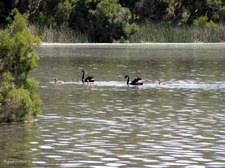 Black Swans with Cygnets Black Swans with Cygnets
Cygnus atratus
| 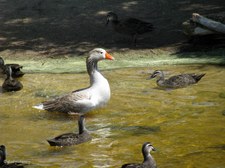 Goose and Ducks in shallows Goose and Ducks in shallows
|  Ducks in the Shade Ducks in the Shade
|  Reflections Reflections
Paperparks on the shoreline
|
 Upper branches of Paperbark (Melaleuca) Upper branches of Paperbark (Melaleuca)
|  Flowers of Paperbark (Melaleuca) Flowers of Paperbark (Melaleuca)
|  Fallen Bark from Paperbark (Melaleuca) Fallen Bark from Paperbark (Melaleuca)
|  Banksia sessilis Banksia sessilis
|
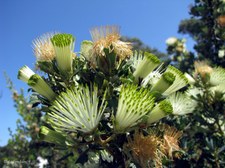 Banksia sessilis Banksia sessilis
|  Milkmaids (Burchardia umbellata) Milkmaids (Burchardia umbellata)
|  Cutleaf Hibbertia (Hibbertia cuneiformis) Cutleaf Hibbertia (Hibbertia cuneiformis)
|  Milkmaids (Burchardia umbellata) Milkmaids (Burchardia umbellata)
|
 King Spider Orchid (Caladenia pectinata) King Spider Orchid (Caladenia pectinata)
|  King Spider Orchid (Caladenia pectinata) King Spider Orchid (Caladenia pectinata)
|  Bull Banksia (Banksia grandis) Bull Banksia (Banksia grandis)
|  Cottonheads (Conostylis) Cottonheads (Conostylis)
|
