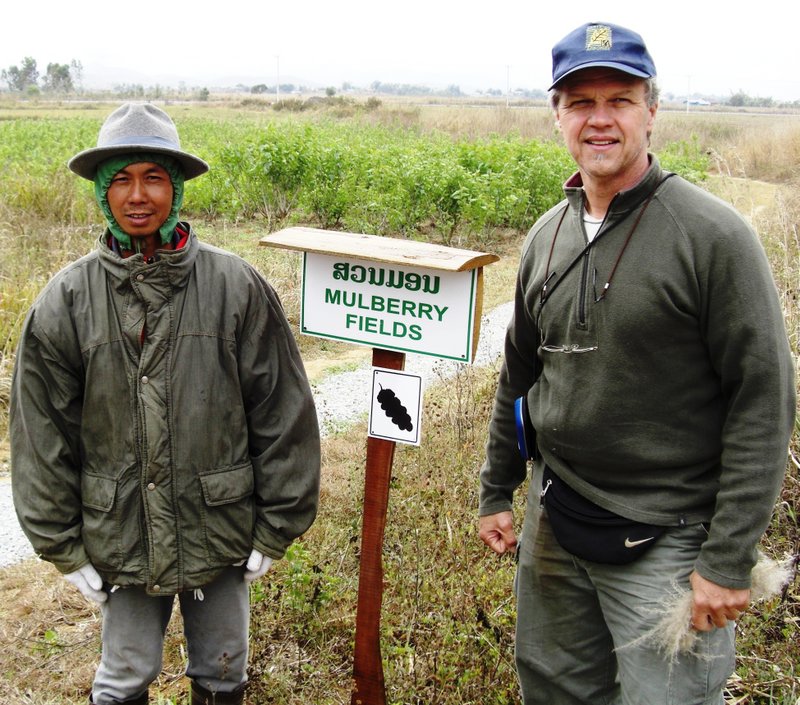
 enlarge 150KB, 800x705 enlarge 150KB, 800x705
Don with the man responsible for the Mulberry trees in the fields. (LAOS, THE MOST HEAVILY BOMBED COUNTRY ON EARTH!)
|  enlarge 119KB, 800x600 enlarge 119KB, 800x600
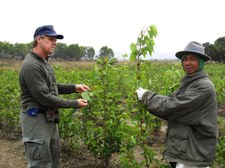
Consulting began with a discussion of what the goals were for each section of the fields of trees. (translation was provided)
|  enlarge 100KB, 800x592 enlarge 100KB, 800x592
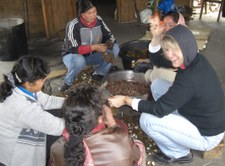
Lynne gathered with the ladies preparing the dyes from various natural plants etc.
|  enlarge 147KB, 800x798 enlarge 147KB, 800x798
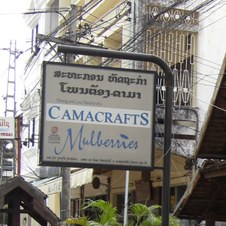
www.mulberries.org will provide the full story of "silk for support" the practices of Silveculture (store front in Vientiene capital of Laos)
|
 enlarge 110KB, 800x600 enlarge 110KB, 800x600
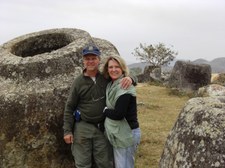
The Mulberry growing fields are located in "war-torn" central northern Laos, Xieng Khuong district
|  enlarge 145KB, 800x600 enlarge 145KB, 800x600
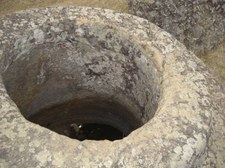
This is the historic area of the "Plain of Jars"
|  enlarge 127KB, 800x600 enlarge 127KB, 800x600
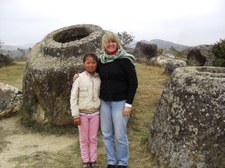
A region inhabited by the poor like the Mien and Hmong Minorites.
|  enlarge 145KB, 800x600 enlarge 145KB, 800x600
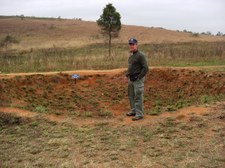
Where the US dropped hundreds of thousands of bombs 1964-1974
|
 enlarge 94KB, 800x600 enlarge 94KB, 800x600
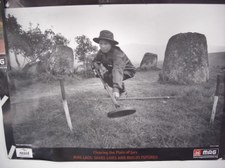
For years the local people have continued to suffer the results of unexploded ordinances.
|  enlarge 99KB, 800x600 enlarge 99KB, 800x600
The bombers tried to destroy every living thing during the war when the US was supposedly not in Laos!
|  enlarge 88KB, 800x671 enlarge 88KB, 800x671
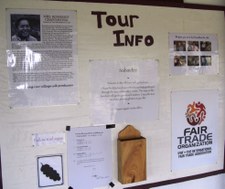
Tourists can take a tour of Mulberries while in the area.
|  enlarge 145KB, 800x600 enlarge 145KB, 800x600
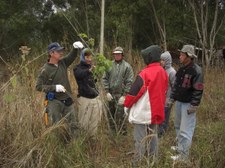
Don Picker of ATP was able to demonstrate proper pruning practices for the field workers.
www.asiatreepreservation.com
|
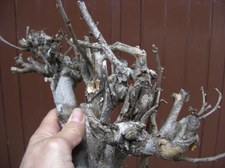 enlarge 85KB, 800x600 enlarge 85KB, 800x600
Many of the plants have become aged and have much damage and decay over 10-15 years of coppicing (cutting back near ground level to regrow a plant)
| 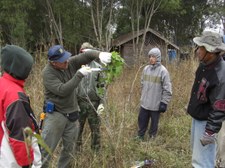 enlarge 147KB, 800x600 enlarge 147KB, 800x600
Some trees are grown for the fruit to make tea, jam or dye for the silk.
| 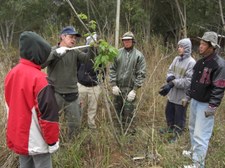 enlarge 149KB, 800x600 enlarge 149KB, 800x600
Pruning to the lateral bud or node to reduce die-back.
| 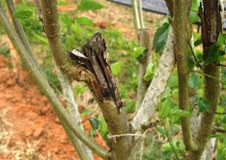 enlarge 98KB, 800x568 enlarge 98KB, 800x568
The inferior tools have split and damaged the plants.
|
 enlarge 179KB, 800x634 enlarge 179KB, 800x634
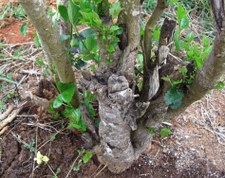
Much inter-nodal decay is evident and fungus introduction has been a problem in the history of growing the Mulberry trees.
|  enlarge 155KB, 800x602 enlarge 155KB, 800x602
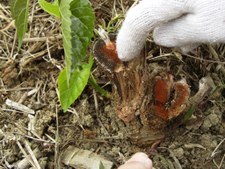
Split caused by poor saws weakens plant stability.
|  enlarge 123KB, 800x600 enlarge 123KB, 800x600
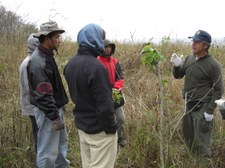
Rather than random cuts that result in many dead stubs.
|  enlarge 136KB, 800x600 enlarge 136KB, 800x600
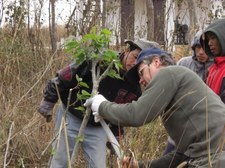
Picker explained the difference of inter-nodal cuts (heading/topping) and crown reduction.
|
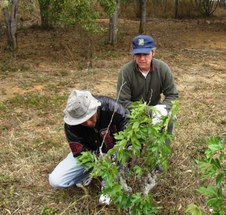 enlarge 202KB, 800x762 enlarge 202KB, 800x762
Previously a Buddhist Monk one of the field workers practices the methods.
| 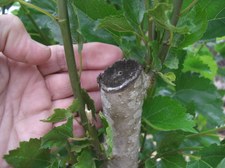 enlarge 90KB, 800x600 enlarge 90KB, 800x600
Some plants have been cut more correctly.
| 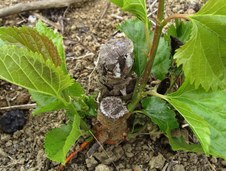 enlarge 139KB, 800x606 enlarge 139KB, 800x606
More nodal cutting.
| 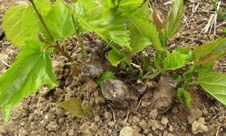 enlarge 145KB, 800x483 enlarge 145KB, 800x483
A rejuvenated plant by cutting to ground correctly.
|
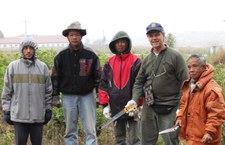 enlarge 82KB, 800x516 enlarge 82KB, 800x516
On behalf of Asia Tree Preservation Picker donates superior Silky saws for the pruning.
www.asiatreepreservation.com
| 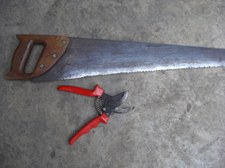 enlarge 89KB, 800x600 enlarge 89KB, 800x600
These are the normal tools which often result in breaking branches and splitting the plant limbs.
| 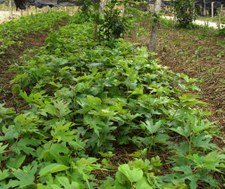 enlarge 202KB, 800x673 enlarge 202KB, 800x673
The new leaves are valued for the 1-2 week old worms as they provide a different nutrient requirement than the older leaf. (Read the details at: http://www.mulberries.org/storyofsilk.htm)
| 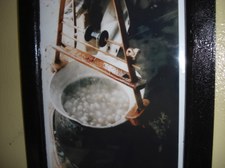 enlarge 72KB, 800x600 enlarge 72KB, 800x600
Silk worm cocoons are boiled with 40-60 strands gathered to form one thread.
|
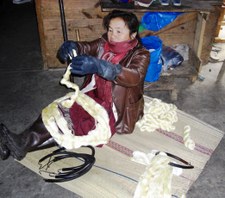 enlarge 133KB, 800x703 enlarge 133KB, 800x703
The silk threads are spun and twisted to prepare for the looms.
| 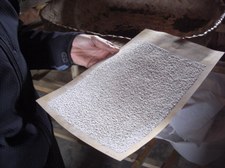 enlarge 109KB, 800x600 enlarge 109KB, 800x600
Silk worm eggs are purchased in sheets of thousands.
| 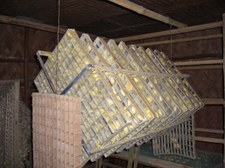 enlarge 106KB, 800x600 enlarge 106KB, 800x600
Each worm must find its own square in the wooden frame to form each separate cocoon.
| 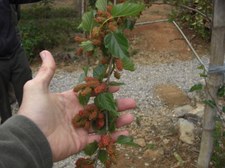 enlarge 91KB, 800x600 enlarge 91KB, 800x600
Some plants are grown for the mulberries as jam and dye colours.
|
 enlarge 81KB, 800x587 enlarge 81KB, 800x587
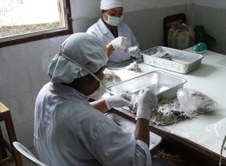
In a separate operation ladies bag the dried mulberry leaves to make Red and Green Tea.
|  enlarge 84KB, 800x600 enlarge 84KB, 800x600
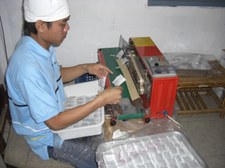
Young man sealing the tea bags.
|  enlarge 100KB, 800x600 enlarge 100KB, 800x600
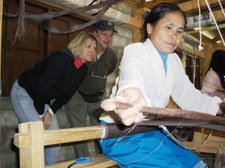
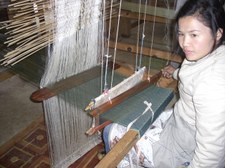
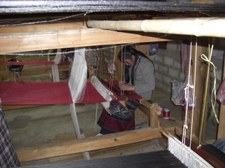
The ladies each have a loom available in one of two weaving houses.
|  enlarge 103KB, 800x600 enlarge 103KB, 800x600
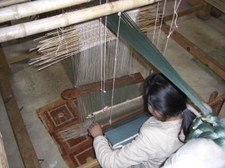
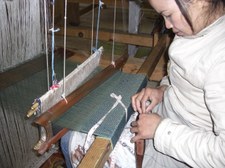
Each person has their own weaving tools and has had the knowledge passed to them by others.
|
 enlarge 120KB, 800x600 enlarge 120KB, 800x600
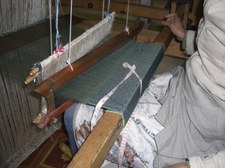
The weaving practice is a delicate and detailed procedure.
|  enlarge 113KB, 800x600 enlarge 113KB, 800x600
Don bought this very piece for Lynne's 50th birthday while at the farm!
|  enlarge 108KB, 800x600 enlarge 108KB, 800x600
This design is one of hundreds called "Lock & Key" (Indigo coloured)
|  enlarge 96KB, 800x600 enlarge 96KB, 800x600
The loom weaving house provides a communal atmosphere for the work.
|