 Tasmania #08 Collage Tasmania #08 Collage
| 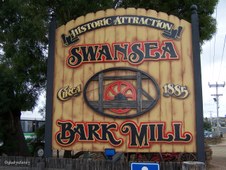 Swansea Bark Mill Swansea Bark Mill
Swansea is a classified historic town and contains many reminders of its early settlement dating from the 1820's.
|  Wagon Load of Bark Wagon Load of Bark
This is Australia's only restored Black Wattle Bark Mill and gives an insight into the ancient art of using Bark in the process of Tanning Leather.
| 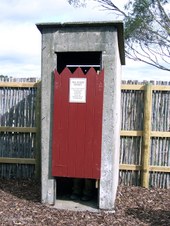 Aussie Dunny Aussie Dunny
A modernised version of the Aussie Dunny at the Swansea Bark Mill.
|
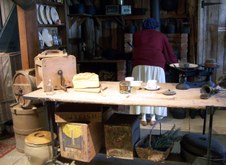 Kitchen Scene Kitchen Scene
The Kitchen scene of an early era is depicted in the Museum of the Swansea Bark Mill.
|  Items from yesteryear Items from yesteryear
|  Model of a Blacksmith Model of a Blacksmith
| 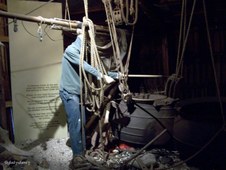 Extracting Whale Oil Extracting Whale Oil
Whale Blubber was heated in a pot over the fire to extract the Whale Oil.
|
 Ocellated (Spotted) Starfish Ocellated (Spotted) Starfish
|  Rabbit Traps and Skins Rabbit Traps and Skins
Rabbit Traps and Rabbit Skins stretched out to dry at Swansea Bark Mill.
|  Brief description of the Tanning Process Brief description of the Tanning Process
|  Peg Drum Thresher Peg Drum Thresher
This Peg Drum Thresher was used to separate the grain from the sheaf.
|
 Car Engine Car Engine
Car Engine, Year 1910, HP 12.. Make: German Stoewer, converted to Stationary Engine. On display at Swansea Bark Mill.
|  Young Wattle Trees Young Wattle Trees
Bark from wattle trees was ground for use in tanning leathers. Some of the buildings at this mill were being constructed in 1885 and the last bark was ground in 1960. Now the mill is restored as a working museum with much of the old machinery still on site.
| 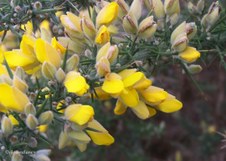 Prickly Gorse Prickly Gorse
Yellow Flowers of the introduced species Prickly Gorse at Swansea.
|  Rural Swansea Rural Swansea
|
 Sheep in Paddock Sheep in Paddock
|  Shady Trees Shady Trees
|  Thistles, an introduced pest Thistles, an introduced pest
Introduced Thistles have spread throughout the rural areas of Tasmania.
| 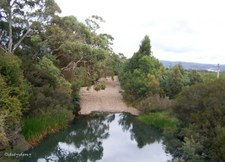 Roadside Pool Roadside Pool
|
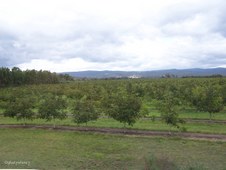 Walnut Orchard Walnut Orchard
|  Grazing Sheep Grazing Sheep
Cloudy skies over this rural scene.
| 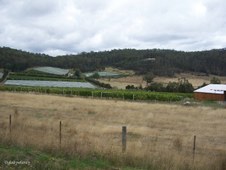 Orchard and Vineyards Orchard and Vineyards
Vineyards under netting cover and irrigated Orchard beyond dry grass of summer.
| 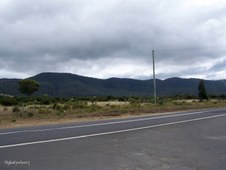 Eastern Tiers rise in the distance Eastern Tiers rise in the distance
|
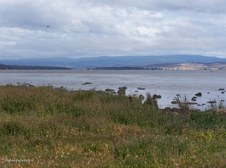 Moulting Lagoon Moulting Lagoon
Moulting Lagoon is a wetland of international importance due to the numbers and species of birds that frequent the area. It is home for local wetland species and migratory waders from Russia, China and other locations from around the world.
| 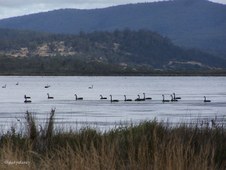 Black Swans on Moulting Lagoon Black Swans on Moulting Lagoon
|  Black Swans on Moulting Lagoon Black Swans on Moulting Lagoon
|  Samphire at Moulting Lagoon Samphire at Moulting Lagoon
|
 Farm Scene Farm Scene
|  Dried Seed Heads Dried Seed Heads
|  Stark Tree Trunk Stark Tree Trunk
| 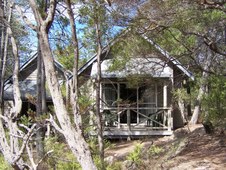 Wilderness Cabin Wilderness Cabin
The Wilderness Timber Cabins at Freycinet Lodge blend in with the natural vegetation of Freycinet National Park. These Cabins are a Nature Retreat without the intrusion of Television or Telephones.
|
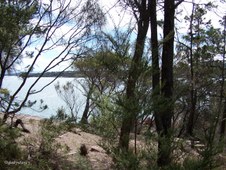 Cabin View Cabin View
Coles Bay viewed from Wilderness Cabin at Freycinet Lodge
|  Bennetts Wallaby Bennetts Wallaby
Bennetts Wallaby (Macropus rufogriseus) is also known as the Red-necked Wallaby on mainland Australia.
| 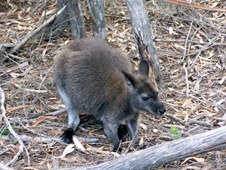 Bennetts Wallaby Bennetts Wallaby
Bennetts Wallabies are found throughout Tasmania, including the Bass Strait islands. The species is largely solitary, allthough loose groups, known as mobs, often share common feeding areas. They feed at afternoon and dusk, generally grazing on grass and herbs. There is a distinct breeding season, with births occuring late summer to early autumn. This is in contrast to mainland populations of the same species, where births occur year round. The gesatation period is 30 days. Pouch life is about 280 days and weaning occurs at 12-17 months.
| 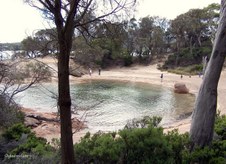 Honeymoon Bay Honeymoon Bay
Honeymoon Bay in Freycinet National Park.
|
 The Hazards The Hazards
The Hazards with Mt Amos on the right, contain rugged red and pink granite outcrops on peaks that fall down to the sea.
|  Mt Amos (454 m) Mt Amos (454 m)
|  Mt Amos (454 m) Mt Amos (454 m)
Zoomed in on Mt Amos (454 m) from Honeymoon Bay.
| 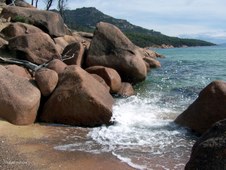 Mt Mayson (415 m) Mt Mayson (415 m)
Mt Mayson (415 m) beyond the Rocks, Freycinet National Park.
|
