 Welcome to Perth Zoo Welcome to Perth Zoo
|  Kangaroos Kangaroos
|  Feeding Time for Kangaroos Feeding Time for Kangaroos
| 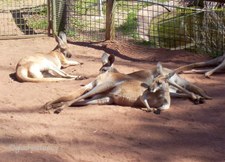 Kangaroos Kangaroos
|
 Australian Dingo Australian Dingo
Australian Native Dog.
|  Southern Hairy-nosed Wombat Southern Hairy-nosed Wombat
|  Koala Koala
|  Bush Thick-knee Bush Thick-knee
Burhinus grallarius
|
 Black-necked Stork Black-necked Stork
Ephippiorhynchus asiaticus. Often known as Jabiru and grows to 130 cm.
|  Eurasian Coot with Chick Eurasian Coot with Chick
Fulica atra
| 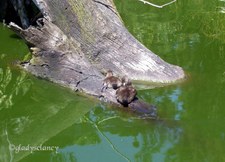 Ducks sunbaking on Log Ducks sunbaking on Log
|  White Egret White Egret
|
 Vervet (African Monkey) Vervet (African Monkey)
| 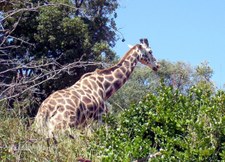 Rothschild's Giraffe Rothschild's Giraffe
The Savannah's tallest animal.
|  Rothschild's Giraffes Rothschild's Giraffes
|  Grant's Zebra Grant's Zebra
|
 Cheetah in the Grass Cheetah in the Grass
The name cheetah comes from an Indian word meaning 'spotted one'.
|  Sumatran Tiger Sumatran Tiger
|  Slender-tailed Meerkats Slender-tailed Meerkats
| 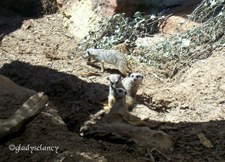 Slender-tailed Meerkats Slender-tailed Meerkats
|
 Australian Native Frangipani Australian Native Frangipani
(Hymenosporum Flavum). Many colourful species of plants can be seen in the well-maintained gardens at Perth Zoo.
|  Orange Clivia Orange Clivia
|  Wedding Bush (Ricinocarpos pinifolius) Wedding Bush (Ricinocarpos pinifolius)
|  Clivia Clivia
|
 Little Penguins Little Penguins
Eudyptula minor novaehollandiae
|  Little Penguins swimming in Pool Little Penguins swimming in Pool
|  Black Swans and other Waterbirds Black Swans and other Waterbirds
|  Brolga and other Waterbirds Brolga and other Waterbirds
|
 Brolga and Waterbirds Brolga and Waterbirds
|  Brolga Reflections Brolga Reflections
Grus rubicundus
|  Waterbirds Waterbirds
|  Australian Pelicans Australian Pelicans
|
 Motorbike Frog Motorbike Frog
Litoria moorei
| 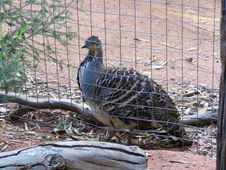 Malleefowl Malleefowl
Leipoa ocellata
|  Numbat (Myrmecobius fasciatus) Numbat (Myrmecobius fasciatus)
Numbats (also known as Walpurti) are small marsupials, which feed almost solely on termites and consume about 20,000 per day. Because of this, they are also known as the Banded Anteater. When fully grown, they reach about 40 cms from nose to tail.
| 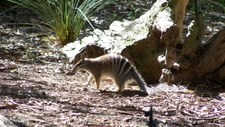 Numbat (Myrmecobius fasciatus) (Walpurti) Numbat (Myrmecobius fasciatus) (Walpurti)
They inhabit woodlands in Western Australia which is the only state where they are found in the wild. To improve numbat numbers, they are bred in captivity at the Perth Zoo and released into selected locations.
|
 Rock Wallaby Rock Wallaby
|  Dingo resting on the Rock Dingo resting on the Rock
|  Dingo on the Rock Dingo on the Rock
|  Australian Boab Tree Australian Boab Tree
Adansonia gregorii
|
