 Welcome to Naragebup Welcome to Naragebup
Rockingham Regional Environment Centre.
| 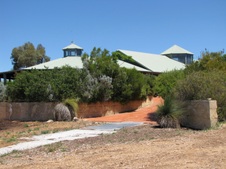 Entrance to Naragebup Entrance to Naragebup
Founded in 1996, Naragebup was the first purpose-built environment centre in Western Australia. A not-for-profit organisation run by the community, for the community, Naragebup’s mission is ‘To provide constructive, integrated and educational programmes which promote the benefits of managing the environment to sustain quality of life.’
|  Organic Gardens Organic Gardens
Sustainable methods of permaculture, organic gardening, worm farms, composting and water-saving methods are demonstrated.
|  Garden by Green Corps Garden by Green Corps
|
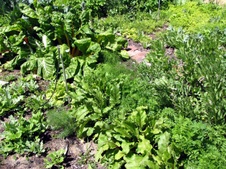 Healthy Vegetable Patch Healthy Vegetable Patch
Beetroot, Carrots, Silver Beet, Broad Beans, etc.
| 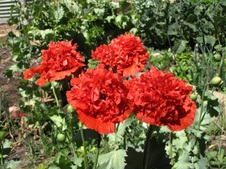 Bright Red Poppies add colour Bright Red Poppies add colour
|  Organic Vegetable Patch Organic Vegetable Patch
Onions, Beetroot, Sweet Corn, Lettuce to name a few..
|  Chickens Chickens
The "Chicken Tractors" eat the leftover crop, turn over the soil, eat any pests, and fertilise the soil. With supplementary feeding the chickens provide healthy free-range tasty organic eggs.
|
 Red Hen comes to say Hello Red Hen comes to say Hello
| 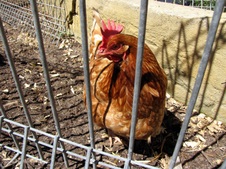 Red Hen behind Bars Red Hen behind Bars
| 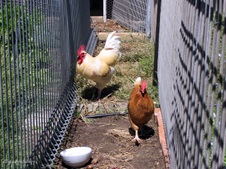 Hen and Rooster coming down the run Hen and Rooster coming down the run
|  Majestic Rooster Majestic Rooster
|
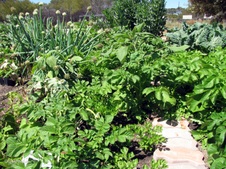 Mixed Garden Bed Mixed Garden Bed
Onions, Sunflowers, Potatoes, Celery, etc..
|  Colourful Red Poppy Colourful Red Poppy
| 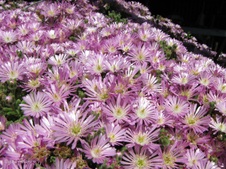 Mesembryanthemum Display Mesembryanthemum Display
Low-water garden.
| 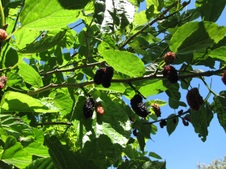 Large Delicious Mulberries! Large Delicious Mulberries!
Growing in permaculture swales.
|
 Big Black Juicy Mulberry! Big Black Juicy Mulberry!
|  Poppy Bud bursting open Poppy Bud bursting open
| 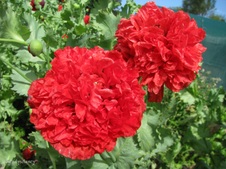 Twin Poppies Twin Poppies
|  Turn Left for Bush Tucker Walk Turn Left for Bush Tucker Walk
|
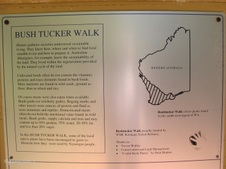 Bush Tucker Walk Bush Tucker Walk
In this Bush Tucker Walk, some of the local native plants have been encouraged to grow to illustrate how they were used by Nyoongar people.
| 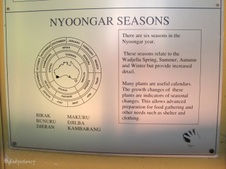 Nyoongar Seasons Nyoongar Seasons
There are six seasons in the Nyoongar year.
|  Mia Mia is a Nyoongar Shelter Mia Mia is a Nyoongar Shelter
| 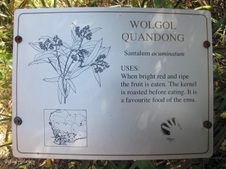 Quandong (Santalum acuminatum) Quandong (Santalum acuminatum)
Nyoongar name is Wolgol. Uses: When bright red and ripe the fruit is eaten. The kernel is roasted before eating. It is a favourite food of the emu.
|
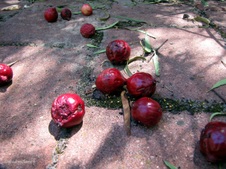 Fallen Quandong Fruit Fallen Quandong Fruit
Bright red flesh can be eaten raw, or cooked in Quandong Pies or Quandong Jam.
|  Lone Fruit on Quandong Tree Lone Fruit on Quandong Tree
|  Quandong Flesh and Kernel Quandong Flesh and Kernel
The Kernel can be roated before eating.
|  Grasstree (Xanthorrhoea preissii) Grasstree (Xanthorrhoea preissii)
Nyoongar name is Balga.
|
 Grasstree (Xanthorrhoea preissii) Grasstree (Xanthorrhoea preissii)
Uses: The gum is a glue for making knives and other tools. The nectar from the flower sweetens cakes. The dead flower heads make a useful fire torch. Bardi grubs are found inside the trunk.
| 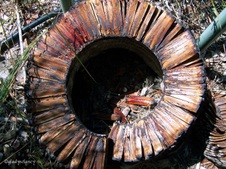 Cross-section of fallen Grasstree Cross-section of fallen Grasstree
When the grasstree dies, the trunk rots and eventually the core disintegrates, leaving a cylinder of leaf-bases. This 'shell' makes an excellent home for snakes and lizards.
| 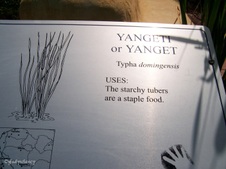 Bulrush (Typha domingensis) Bulrush (Typha domingensis)
Nyoongar name is Yangeti or Yanget.
|  Bulrush (Typha domingensis) Bulrush (Typha domingensis)
Uses: The starchy tubers are a staple food.
|
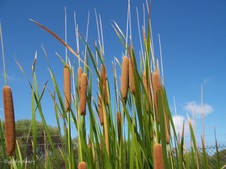 Bulrush (Typha domingensis) Bulrush (Typha domingensis)
| 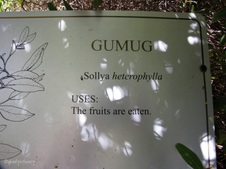 Australian Bluebell (Sollya heterophylla) Australian Bluebell (Sollya heterophylla)
Nyoongar name is Gumug. Uses: The fruits are eaten.
|  Australian Bluebell (Sollya heterophylla) Australian Bluebell (Sollya heterophylla)
|  Australian Bluebell (Sollya heterophylla) Australian Bluebell (Sollya heterophylla)
An attractive climbing shrub – berries are eaten raw.
|
 Zamia (Macrozamia riedlei) Zamia (Macrozamia riedlei)
Nyoongar name is Booyo or Jeeriji. Uses: The toxins are removed from the big orange fruit by leaching or other methods before cooking. After roasting in hot coals the kernel is also eaten.
|  Zamia (Macrozamia riedlei) Zamia (Macrozamia riedlei)
Nyoongar name is Booyo or Jeeriji.
| 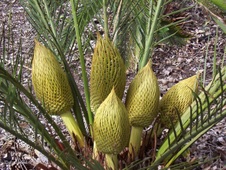 Zamia (Macrozamia riedlei) Zamia (Macrozamia riedlei)
Uses: The toxins are removed from the big orange fruit by leaching or other methods before cooking. After roasting in hot coals the kernel is also eaten.
|  West Australian Christmas Tree (Nuytsia floribunda) West Australian Christmas Tree (Nuytsia floribunda)
Nyoongar name is Mudja. Uses: Young roots are peeled and eaten.
|
