 Kwinana Grain Terminal Kwinana Grain Terminal
Viewed from Rockingham Beach, this terminal was opened in 1976 and receives grain from nearly 120 country receival points throughout the Kwinana zones.
|  Kwinana Grain Jetty Kwinana Grain Jetty
Grain is discharged from storage via 4 shipping conveyors to the grain jetty. The 4 ship loaders can discharge grain onto an awaiting ship at a combined rate of 5,000 tonnes per hour (tph).
| 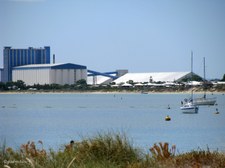 Kwinana Grain Terminal and Storage Kwinana Grain Terminal and Storage
Grain is transported mainly by rail to the terminal at Kwinana which has a current storage capacity of more than one million tonnes. The terminal can receive grain at 4,000 tonnes per hour (tph) from rail.
| 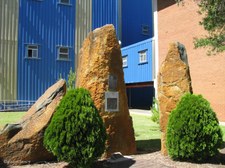 Entrance to Administration, Offices and Control Room Entrance to Administration, Offices and Control Room
|
 Main Workhouse (74 metres) Main Workhouse (74 metres)
We are going up to the Lookout Platform above the 12th Floor.
|  Stepping out onto Lookout Platform Stepping out onto Lookout Platform
Inland view towards Kwinana, from Lookout Platform above 12th floor.
| 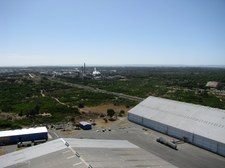 Kwinana Industrial Area Kwinana Industrial Area
Moving anti-clockwise around the Lookout.
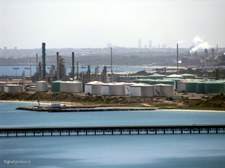
|  Kwinana Industrial Strip along Cockburn Sound Kwinana Industrial Strip along Cockburn Sound
|
 Kwinana Industrial Strip along Cockburn Sound Kwinana Industrial Strip along Cockburn Sound
Note Grain Truck turning into the Grain Terminal entrance.
| 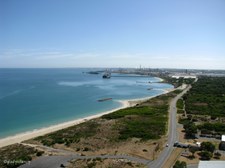 Kwinana Industrial Strip along Cockburn Sound Kwinana Industrial Strip along Cockburn Sound
|  Kwinana Industrial Strip along Cockburn Sound Kwinana Industrial Strip along Cockburn Sound
A closer view showing Kwinana Jetty (foreground) and Wells Park.
|  Shipping in Cockburn Sound Shipping in Cockburn Sound
|
 Closer view of the Industrial area Closer view of the Industrial area
|  Closer view of the Industrial Smog Closer view of the Industrial Smog
|  Car and Horse Float in Carpark below Car and Horse Float in Carpark below
| 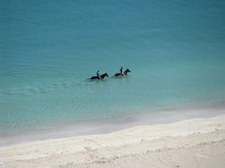 Horse Beach Horse Beach
Horse owners use this beautiful beach to train and exercise their horses.
|
 Kwinana Grain Jetty Kwinana Grain Jetty
Length of Shipping Transfer Gallery 752 m. Length of Kwinana Grain Jetty 291 m.
| 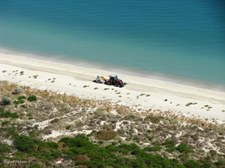 Council Tractor and Beach Cleaning Machine Council Tractor and Beach Cleaning Machine
| 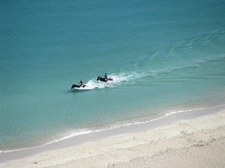 The two Horses returning along the Beach The two Horses returning along the Beach
| 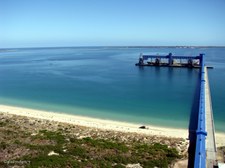 Mussel Farm beside the Kwinana Grain Jetty Mussel Farm beside the Kwinana Grain Jetty
|
 Closer view of the Mussel Farm Closer view of the Mussel Farm
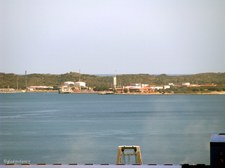
The grain dust from the ship loading operations provides nutrients for the mussels.
|  Kwinana Grain Jetty with Garden Island beyond Kwinana Grain Jetty with Garden Island beyond
First Shipment was 5 July 1977 on Mexican Gulf", 44,985 t. Largest Cargo was 22 November 1979 on "MV Bjorgholm", 78,507 t.
|  Ship loading at Kwinana Grain Jetty Ship loading at Kwinana Grain Jetty
|  Zoomed above the Grain Jetty to Garden Island Zoomed above the Grain Jetty to Garden Island
|
 Shipping in Cockburn Sound Shipping in Cockburn Sound
|  Kwinana Jetty and Wells Park Kwinana Jetty and Wells Park
The cut-down and filled hull of the wrecked 'SS Kwinana' can be clearly seen above. See photos 80-83 for a ground-level view.
|  Kwinana Industrial Strip with Perth Skyline on Horizon Kwinana Industrial Strip with Perth Skyline on Horizon
|  View West to Point Peron and Garden Island Causeway View West to Point Peron and Garden Island Causeway
|
 Palm Beach at Rockingham Palm Beach at Rockingham
Note construction of replacement Palm Beach Jetty at left. Indian Ocean on the horizon.
|  Rockingham High-rise Buildings and foreshore Rockingham High-rise Buildings and foreshore
|  The Rooftops of Rockingham The Rooftops of Rockingham
|  City of Rockingham Council Offices and Belltower City of Rockingham Council Offices and Belltower
Note new Cinema under construction behind the orange roof of Council Offices.
|
 Overlooking Cooloongup Overlooking Cooloongup
New Rockingham Train Station is the white roof just above the fence. Cooloongup Supa IGA is just behind it.
|  Rockingham Light Industrial Area through the Fence Rockingham Light Industrial Area through the Fence
|  Light Industrial Area through Fence, new Housing beyond Light Industrial Area through Fence, new Housing beyond
|  The Granary Museum The Granary Museum
A very informative and interesting display of equipment and methods used in the storage and shipment of grain.
|
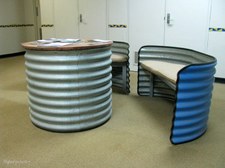 Reception Area Reception Area
Seating and tables made from corrugated iron which was the main material used for grain storage facilities.
|  Scales on Display Scales on Display
|  Bags of Grain Bags of Grain
Prior to the introduction of Bulk Handling, all grain was transported in Hessian Bags.
|  Replica of Ship on the Dock Replica of Ship on the Dock
|
