 Hotham River Picnic Area Hotham River Picnic Area
First stop of the day at Boddington on the banks of the picturesque Hotham River.
|  Tranquil Hotham River Tranquil Hotham River
The picturesque Hotham River is surrounded by undulating hills, majestic forest and rolling farm land.
|  Picnic Area Picnic Area
Hotham River at Boddington.
|  Federation Rotunda Federation Rotunda
This project was funded by the WA2001 Centenary of Federation Program and the Boddington Lions Club. Officially opened on Australia Day, 26 January 2001.
|
 Hotham River looking upstream Hotham River looking upstream
|  Zoomed to Railway Bridge upstream Zoomed to Railway Bridge upstream
|  Hotham River looking downstream Hotham River looking downstream
|  BBQ Facilities and Picnic Area BBQ Facilities and Picnic Area
|
 Signs for Dogs Signs for Dogs
Hope they can read!
|  Dog exercise area to the right Dog exercise area to the right
|  Hotham River from Carpark Hotham River from Carpark
|  Railway Sculpture Railway Sculpture
This sculpture depicts how railway gangers performed the work in the early 1900's.
|
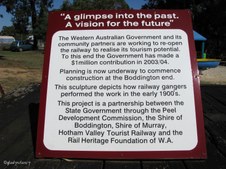 A Glimpse into the Past, a Vision for the Future A Glimpse into the Past, a Vision for the Future
The Western Australian Government and its community partners are working to re-open the railway to realise its tourism potential. To this end the Government has made a $1 million contribution in 2003/4. Planning is now underway to commence construction at the Boddington end.
|  Wall of Moasics Wall of Moasics
Moasics depicting the Shire Map, Annual Rodeo, St Alban's Church, Swamp Tortoise, Tullis Bridge, Leschenaultia, Pioneers' Wagon, Marradong Roads Board Office, Emu Chick, Log Carting, and the Tannin Extracts Factory.
| 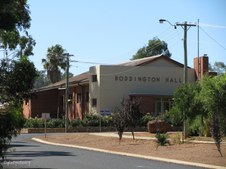 Boddington Hall Boddington Hall
Boddington was originally gazetted in 1912. The name Boddington comes from Henry Boddington a shepherd who grazed his sheep on the banks of the Hotham River in the late 1800's.
|  Arrival at Kodja Place, Kojonup Arrival at Kodja Place, Kojonup
The Kodja Place is the result of the district’s cultures working in harmony with a single goal. An architecturally designed, purpose-built rammed earth building houses a multifaceted display of artefacts, stories, interactive displays, exhibits, pictures, and entertaining hands-on devices adjacent to a spectacular Rose Maze.
|
 Kodja Place Kodja Place
Experience the Real Australia Story. It tells in a vital, vivid, human and sometimes confronting manner the Kojonup story and the influences, cultural, economic and geographic, that formed the Kojonup of today.
|  Stunning Noongar Mural Stunning Noongar Mural
A huge and dramatic Noongar mural near entrance of Kodja Place, tells the story of the six traditional seasons, and tells how the rivers and waterholes were created.
|  The Kodja, an authentic Noongar Stone Axe The Kodja, an authentic Noongar Stone Axe
The pivotal exhibit, the Kodja, an authentic Noongar stone axe, is central to the linear gallery as the source of the district’s name: Kodja - 'stone axe'; up - place of water: Kojonup.
|  Noongar Seasons - Mural Noongar Seasons - Mural
The story is about the Mardjit (Snake) who in local mythology created the waterholes, the streams and creek beds. The waterholes show the changes during the different seasons.
|
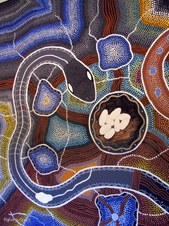 The Mardjit (Snake) The Mardjit (Snake)
The eggs of the Mardjit represent new life. The six Noongar seasons are:- Birak (Summer, Dec/Feb), Bunuru (Autumn, Feb/Apr), Djeran (Windy, Apr/Jun), Makuru (Winter, Jun/Aug), Djilba (Windy, Aug/Oct), and Kambarang (Spring, Oct/Dec).
|  Mural painted by Craig McVee Mural painted by Craig McVee
On the outer edges of the mural the colours are of the skies and the inner sections are of the land during the different seasons. The larger dots are the links where the Wadjelas (Europeans) began to make an impact in Kojonup.
|  The Story Place The Story Place
Creative and interpretive displays in the Story Place vividly illustrate Kojonup’s history, immersing the viewer in the culture of Kojonup, and powerfully showing the harsh realities of life for both Noongar and Wadjela people living and working together during the last century.
|  Yongar (Kangaroo) Floor Mural Yongar (Kangaroo) Floor Mural
Representing the way Noongar people lived in harmony with the flora and fauna of the land.
|
 Waitch (Emu) Floor Mural Waitch (Emu) Floor Mural
From the inception of the project the Noongar community requested that their stories be told alongside those of the Wadjela (non-indigenous) community.
|  Powder Blue 1966 HR Holden Ute Powder Blue 1966 HR Holden Ute
This Powder Blue Farm Ute forms one of the many displays created by the community to tell the story of its past and present.
| 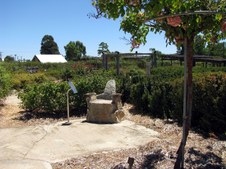 Australia Rose Maze Australia Rose Maze
The Australian Rose Maze at Kodja Place pays tribute to the women of twentieth century Australia. With its paths, roses, pergolas and stories, the Australian Rose Maze is a growing thing representing how the lives of women have changed throughout the twentieth century.
|  Australian-bred Rose Bushes Australian-bred Rose Bushes
Representing a 'journey through life' the Rose Maze weaves stories of three women's lives together through pathways, pergolas and almost 1,000 Australian-bred rose bushes.
|
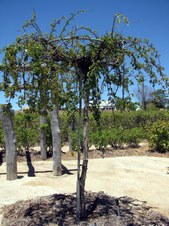 Standard Rose adds height to the display Standard Rose adds height to the display
|  Woven through the Maze are Stories Woven through the Maze are Stories
Stories have been written to be placed throughout the maze. They follow the lives of three fictional women throughout the twentieth century. One is Aboriginal – a Noongar woman since named “Yoondi” by our local community. Another arrived from Italy early in the century ( many Kojonup families come from the Valtellina region of Northern Italy ) The third was of English origin. As in real life in country WA their stories intertwined over the century so that by the end of the maze the women’s stories begin to converge. In Kojonup we are finding new ways to celebrate and respect each others cultures.
|  Part of Yoondi's Story Part of Yoondi's Story
No one took my kids away from me. Bit lucky I guess. They said it was best thing for the kids, growing up the wadjela way. I think to myself, best for who? Two of my sister's kids were taken away. She tried to hide them. She never knew where they taken them. That was the end of the world for my sister Elly.
|  Mosaic representing Yoondi's story Mosaic representing Yoondi's story
Long time ago, before the wadjela (white man) came, all this land here belong my people, the Noongar people. Thousands of years we lived here and looked after the land. The land give us bush tucker, animals for food and bush medicine when we were sick. The land gave us our names, our sacred places, our spirit our soul.
|
 Yoondi's story continued Yoondi's story continued
When wadjela come, not so long time ago, our people showed them the water holes and bush tucker and animals that were good to eat. Then the wadjela brought new animals and pulled down the trees where koomal (possums) lived. He built fences over the land where yonger (kangaroo) grazed. He brought sickness bush medicines could not make better and our people began to die. Soon the old ways disappeared. Noongars had to work for the wadjela to keep alive. Sugar, tea, flour and blankets they gave us. Blankets don't keep rain out like yonger skins.
|  Rose Bushes, Pathways and Pergolas Rose Bushes, Pathways and Pergolas
The timeline of the twentieth century is reflected in the rose planting and placement of structures in the maze processional.
| 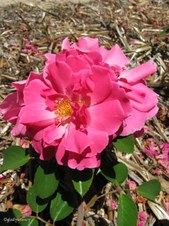 Pink Rose in bloom Pink Rose in bloom
| 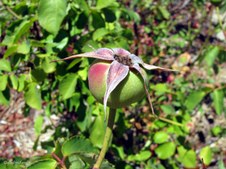 Rose Hip Rose Hip
Unfortunately very few roses were in bloom today, but this is evidence that they did flower.
|
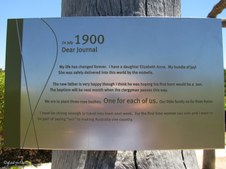 English Settler's Journal 1900 English Settler's Journal 1900
My life has changed forever. I have a daughter Elizabeth Anne. My bundle of joy! She was safely delivered into this world by the midwife. The new father is very happy though I think he was hoping his first born would be a son. The baptism will be next month when the clergyman passes this way. We are to plant three rose bushes. One for each of us. Our little family so far from home. I must be strong enough to travel into town next week. For the first time women can vote and I want to be part of saying "yes" to making Australia one country.
|  English Settler's Journal 1922 English Settler's Journal 1922
Lizzie's wedding day. A memorable occasion. Her brother gave the bride away. A simple church ceremony followed by a luncheon at the hotel here in Perth. I am delighted with Lizzie's choice of husband. We have known David from his school days. He has been Lizzie's constant partner at dances and tennis matches ever since. Tomorrow we return to the farm as it is a busy time. David has much to complete on the new mudbrick house. He will help manage the farm until the boys are older. Last week I started knitting baby clothes. It is best to be prepared. How proud Donald would have been of his daughter. How much I miss him, even after seven long years.
|  English Settler's Journal 1923 English Settler's Journal 1923
Today I was blessed with a grand-daughter, Edith, named after Edith Cowan who Lizzie admires so much. I think I shall call her Edie. Both are doing well and why shouldn't they be! Edie was one of the first babies born in our new local hospital. It was a comfort knowing there was a doctor close by. This wonderful event calls for a celebratory dinner. In preparation the new father has killed a chicken which I will roast in the wood stove and serve with fresh picked vegies, and jelly and custard for sweets. I just hope the Coolgardie Safe can keep the jelly set in this heat. I have planted another rose bush to welcome the new member into the family. We must be more careful with our water. The levels in the rainwater tanks are low.
| 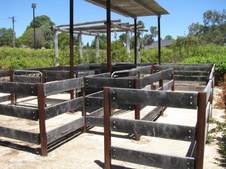 The Sheepyard Maze The Sheepyard Maze
|
