Australia is the home to more than 860 species of Birds as well as being the chosen destination of many migratory species who fly vast distances to visit our shores. This album contains photos of various birds including Parrots, Cockatoos, Emu, Raptors, and waterbirds such as Black Swans, Scared Ibis, Great Egret, Coots and various Ducks.
Showing 1-40 of 1175544 visitsAlbum by gladysclancyPhotos by Gladys
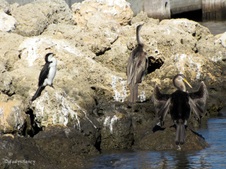
Two is company!12 June 2011. Pied Cormorant (Phalacrocorax varius) and Darter (Anhinga melanogaster) on the Swan River.
Sunbaking on the Rocks12 June 2011.
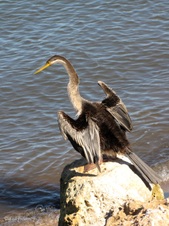
Darter looking to the Left12 June 2011. Darter drying feathers in the Sun.
Darter looking to the Right12 June 2011.
Darter looking into the Water12 June 2011.
Pied Cormorant with two Darters12 Jnue 2011.
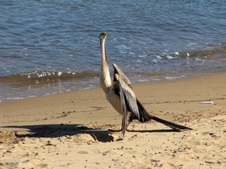
Darter on river bank12 June 2011.
Magpie-lark (Grallina cyanoleuca) searches for food12 June 2011.
Crow holding a crust of bread12 June 2011. It put the bread in its mouth and flew off.
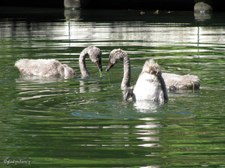
The whole Family!29 May 2011. Pair of Black Swans (Cygnus atratus) with five cygnets at Queens Gardens, Perth.
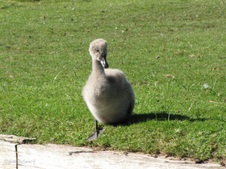
That's my Baby!29 May 2011. Black Swan with cygnet.
Cygnet about to go swimming29 May 2011. Queens Gardens, Perth.
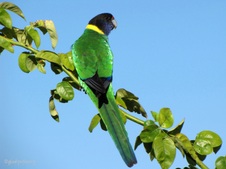
Ringneck Parrot on my Rose Bush21 March 2011. (Barnardius zonarius). It is lovely to have them in my garden, but they bite off the new shoots and drop them on the ground!
Parrot is wary of the Camera21 March 2011.
Ringneck Parrot close-up21 March 2011. Barnardius zonarius. In Western Australia, these parrots are known as 'Twenty Eights' from their contact call, a whistled 'twen-ty-eight' in the forests of the south-west.
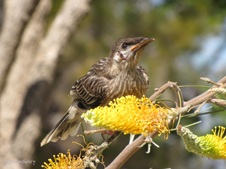
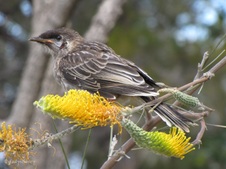
Red Wattlebird (Anthochaera carunculata)14 September 2010. Wattlebirds gather nectar from the Flame Grevillea (Grevillea excelsior).
Wattlebird shouts a Warning
Wattlebird eyeing the Camera
Wattlebird glaring at the Camera
Wattlebird deciding to stay
Grevillea Nectar is tempting the Wattlebird
Wattlebird enjoying the Nectar
Juvenile Wattlebird thinks it is hidden
Galah at The PinnaclesNambung National Park.
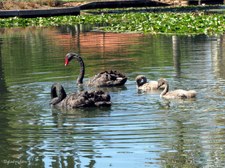
Family of Black SwansCygnus atratus at Queens Gardens, Perth.
Black Swan with Three CygnetsCygnus atratus at Queens Gardens, Perth.
Three large CygnetsCygnus atratus at Queens Gardens, Perth.
Dusky Moorhen (Gallinula tenebrosa)05 February 2009. Nature walk at Karrinyup Waters Resort Caravan Park.
Pacific Black Duck(Anas superciliosa)
Eurasian Coot(Fulica atra)
Eurasian Coot(Fulica atra)
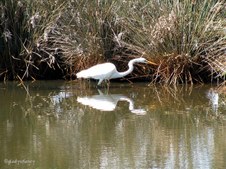
Great Egret(Ardea alba)
Great Egret(Ardea alba)
Three Sacred Ibis(Threskiornis aethiopica)
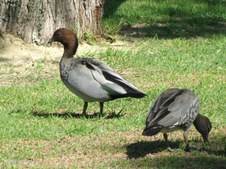
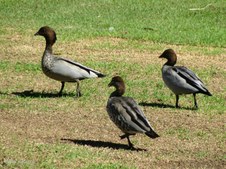
Maned (Wood) Duck(Chenonetta jubata)
Maned (Wood) Duck(Chenonetta jubata)
Australian Magpie-lark(Grallina cyanoleuca)
Emus at Rest (Dromaius novaehollandiae)Two Emus resting at East Coast Natureworld. The Emu is Australia's largest bird and although flightless, the powerful legs can give them speeds up to 50 kph.
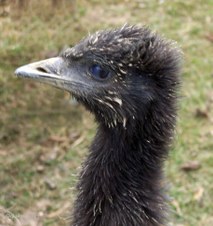
Young EmuThis young Emu with mud on his head was eyeing off my camera.
Young EmuEast Coast Natureworld operates as an animal rescue centre. Injured and orphaned animals, birds and reptiles are rehabilitated for return to the wild. If this is not possible then a safe and happy home is provided for the rest of their lives in as natural a setting as possible.