 Esperance viewed from Taylor St Jetty Esperance viewed from Taylor St Jetty
Esperance is a busy port and tourist town located on the southern coast of Western Australia, 721km from Perth.
|  Moorings at Taylor St Jetty Moorings at Taylor St Jetty
| 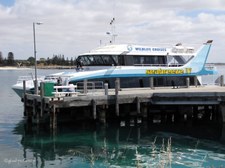 MV Seabreeze II MV Seabreeze II
Ready to board MV Seabreeze II to cruise amongst the islands of the Recherche Archipelago in search of wildlife, before landing at Woody Island for a bushwalk.
| 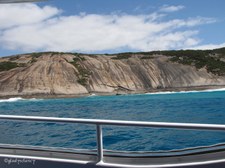 Esperance Coastline Esperance Coastline
|
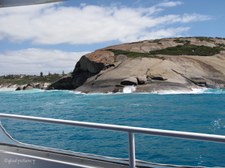 Rocky Coastline Rocky Coastline
|  Southern Ocean splashes on the Rocks Southern Ocean splashes on the Rocks
| 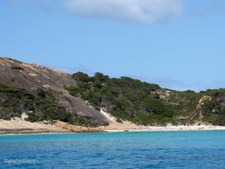 Boardwalk access to West Beach Boardwalk access to West Beach
|  Ocean Views for the Houses on the Hill Ocean Views for the Houses on the Hill
West Beach, Esperance.
|
 Waves wash the Rocks Waves wash the Rocks
| 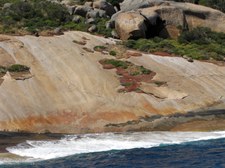 Coloured Rocks of Charlie Island Coloured Rocks of Charlie Island
Archipelago of the Recherche.
|  Charlie Island Charlie Island
The Archipelago of the Recherche, or the Bay of Isles can be seen from vantage points around Esperance. There are over 100 islands covering 4000 square kilometres, all of which are A-class nature reserves.
| 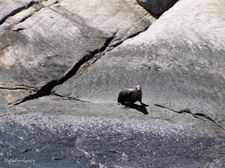 Australian Sea Lion Australian Sea Lion
The Australian sea lion (Neophoca cinerea) lives only in Western Australia and South Australia and nowhere else in the world.
|
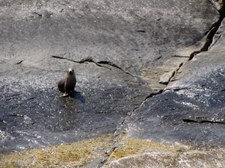 Australian Sea Lion Australian Sea Lion
The total population of these animals is only about 10,000 to 12,000, which makes the Australia sea lion one of the rarest sea lion species in the world. They can live for up to 20 years of age.
|  Islands of Recherche Archipelago Islands of Recherche Archipelago
| 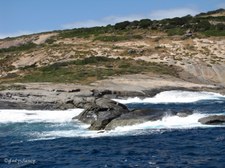 Cruizing in Recherche Archipelago Cruizing in Recherche Archipelago
| 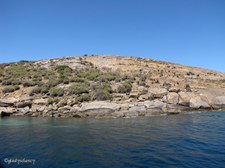 Cull Island Cull Island
Recherche Archipelago.
|
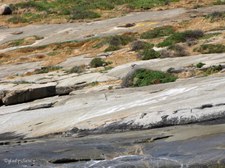 Four Cape Barren Geese on the Island Four Cape Barren Geese on the Island
Cereopsis novaehollandiae.
|  Island Vegetation and Cape Barren Geese Island Vegetation and Cape Barren Geese
|  Landing place for Sheep Landing place for Sheep
Pastoralists used this spot to unload sheep which thrived on the nutrient rich vegetation. All sheep have now been removed from the A-class Nature Reserve.
|  Cape Barren Geese in their Island Home Cape Barren Geese in their Island Home
A total of 631 Cape Barren Geese Cereopsis novaehollandiae were counted during a survey in southwestern Australia in April 1993. The population was centred on the Archipelago of the Recherche, where 612 geese occurred on 79 of the 232 islands and rocks surveyed.
|
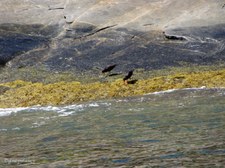 Sooty Oystercatchers searching for food Sooty Oystercatchers searching for food
Haematopus fuliginosus.
| 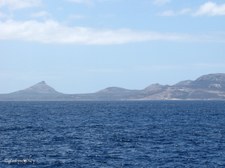 View to the Mainland View to the Mainland
Frenchman's Peak on the left is in Cape Le Grand National Park.
|  Sea Lion sunbaking on the Rocks Sea Lion sunbaking on the Rocks
Sea lions have a blunt dog-like snout and can be recognised as 'eared' seals by their ear flaps. The males (called bulls) may reach about 2.5 metres long and weigh up to 300 kilograms. They have chocolate brown fur, with a creamy crown and neck. Females (called cows) are silvery grey above and creamy yellow below, growing up to 1.8 metres long and weighing up to 105 kilograms. Pups are born with chocolate brown fur, which is lost after the first moulting phase.
|  Australian Sea Lions Australian Sea Lions
Australian sea lions head out to sea to hunt for squid, octopus, cuttlefish, fish, small sharks, rock lobsters and even birds. They hunt close to the seafloor and can feed in depths of up to 300 metres!
|
 Australian Sea Lions Australian Sea Lions
Australian sea lions are quite agile on land, where they use their front flippers to prop themselves up. They use their back flippers rather like a leg on land, and as a rudder in the water. They have a second layer of fur under the top fur layer, and this helps them to keep warm in the cold water, together with a thick layer of fat. They are very social animals, and gather in groups of 10 to 15. They spend time sunbaking on sandy beaches and rocks.
| 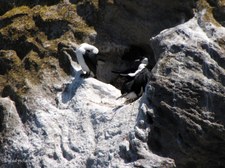 Two Black-faced Shags Two Black-faced Shags
Leucocarbo fuscescens drying feathers on guano covered rocks.
|  Black-faced Shag in rock hollow Black-faced Shag in rock hollow
| 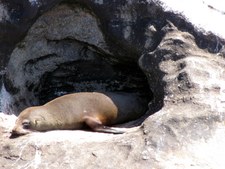 New Zealand Fur Seal New Zealand Fur Seal
The New Zealand fur seal (Arctocephalus forsteri) is an ‘eared’ seal, as can be seen by its ear flaps. It differs from earless or ‘true’ seals such as leopard seals, which have no external ear flaps and cannot use their hind legs when on land – they have to wriggle instead.
|
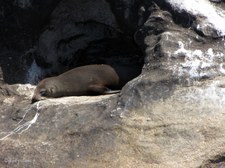 New Zealand Fur Seal New Zealand Fur Seal
New Zealand fur seal has a more pointed snout than the Australian sea lion and is a darker grey to brown colour. The bulls have mane can weigh 120-180 kilograms and reach up to 2.5 metres in length and are much larger than the cows, which are only 35 to 50 kilograms and only one to 1.5 metres long.
|  Twiggy's Landing on Woody Island Twiggy's Landing on Woody Island
Named after Twiggy the Dog who fell overboard during very rough weather about 4kms from Woody Island in 1976. It was a big feat for her to reach the island, and more difficult for her to land on an island with no beaches when the rocks were pounded with heavy surf. Twiggy was stranded for 3.5 months, surviving on lizards and surface water, before being re-united with her owner.
| 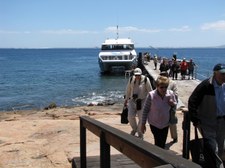 Coming ashore on Woody Island Coming ashore on Woody Island
| 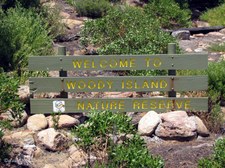 Woody Island Nature Reserve Woody Island Nature Reserve
Woody Island is an A-class nature reserve which has been set aside for the primary purpose of conservation.
|
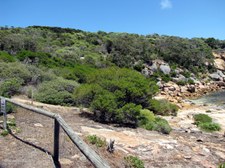 Woody Island Vegetation Woody Island Vegetation
The island is managed by DEC to maintain and restore the natural environment, and to protect, care for and promote the study of indigenous flora and fauna.
| 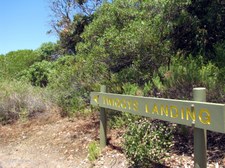 Commencing the Bushwalk Commencing the Bushwalk
| 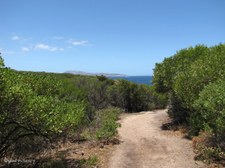 Bushwalk on Woody Island Bushwalk on Woody Island
| 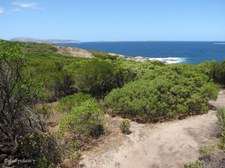 Ocean View from Woody Island Ocean View from Woody Island
|
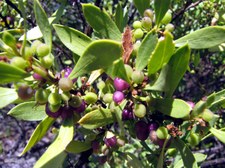 Saltbush species Saltbush species
|  Rose Banjine (Pimelea rosea) Rose Banjine (Pimelea rosea)
| 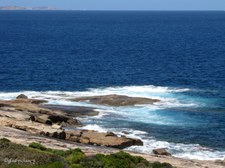 The Southern Ocean The Southern Ocean
|  Orange Lichen on Rock Orange Lichen on Rock
|
