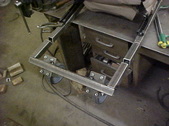
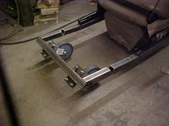
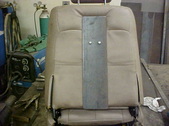
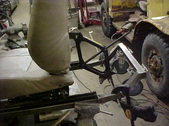
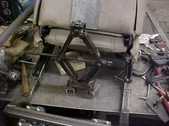
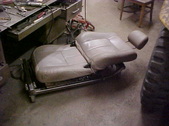
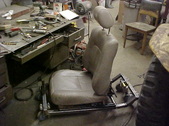
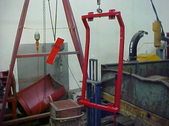
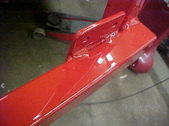
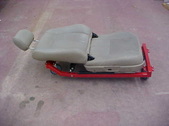
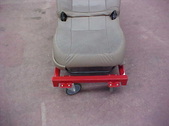
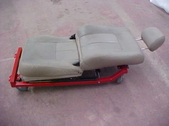
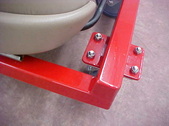
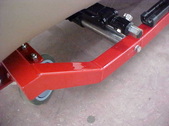
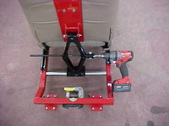
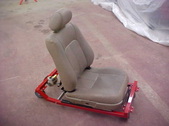
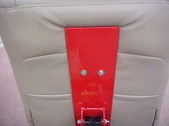
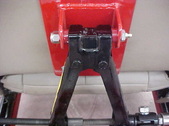
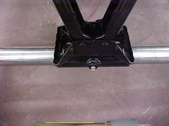
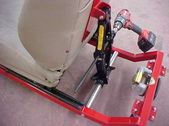
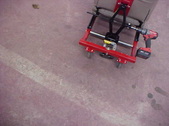
Decided to make a heavy duty creeper that would actually be comfortable to work from. Wanted the back to be adjustable, meaning, when you are working from underneath you would have to do a sit up while your arms are extended. I'll loose some low clearance with my idea but it is for mainly working on higher sitting things like my Truck. For lower stuff I'll use a standard creeper. Will try to keep it low budget but won't sacrifice strength to do so. Lets see what we can come up with.
Album by Kevin Foust. 1 - 128 of 128 Total. 38203 Visits.
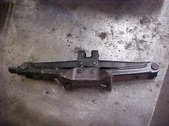
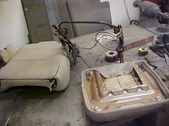
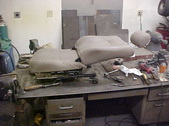
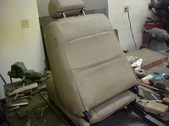
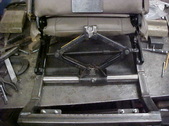
1 My Buddy Ed scraps cars all the time so I ask him to let me know when he had one with bucket seats. I needed a scissor jack as well for what I have planned. This one came out of a Toyota.
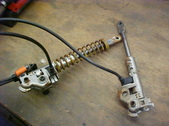
2 The jack came from the same car and I'll save it for later till I get the framework done. I'll have to keep in mind a design plan for where to mount it.
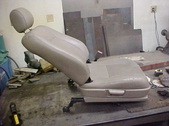
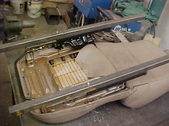
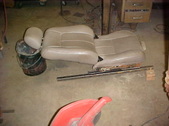
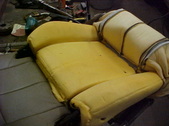
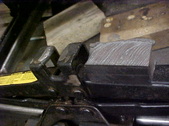
3 First problem is that the seat doesn't lay all the way down. If you want to make something similar, look for one that does as it will save you some work. This is as far down as it will go from the factory.
4 Took off the side trim for now and won't need the position locks so we need to get that limiting factor gone.
5 Pretty easy to get all that out but the frame itself hits so the metal will have to be trimmed up.
6 You can make it easier by taking the cushions off.
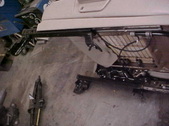
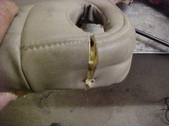
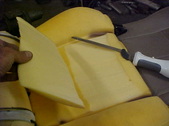
7 The seat base will need this hole cut through. I cut the fabric and foam to get to the metal.
8 Push it to the sides and cut the metal out. I used a angle grinder but a recipricating saw would do it as well.
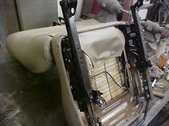
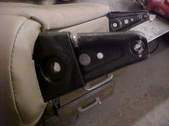
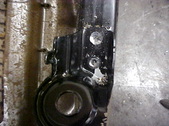
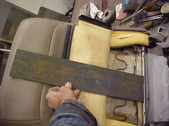
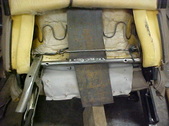
9 These are the back locks and spring that are not needed.
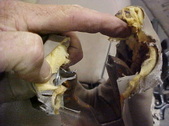
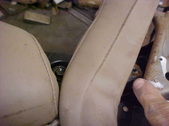
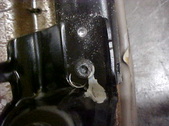
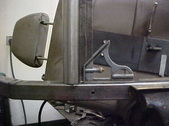
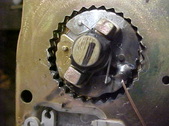
10 My thumb is pointing to the metal on the upright that needs to be trimmed off. This is where the limiter/lock attached to.
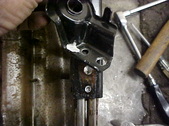
11 Starting to cut these off here. Won't hurt anything as the strength is still in the seat back.
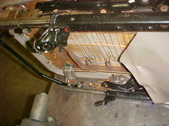
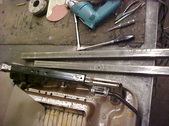
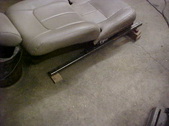
12 Now it lays enough back. Any more and it is uncomfortable. I'll now take the track mounts off the rails so I have a flat surface to work from.
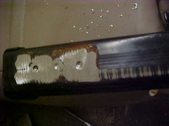
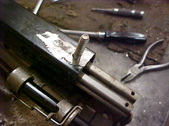
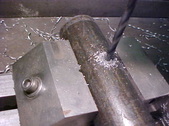
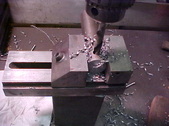
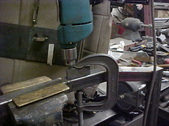
13 They are riveted and spot welded on. I want to keep the sliders adjustment available for fine tuning in the design if needed. I'll drill the rivets and surface drill the spot welds.
14 The fronts are a little bigger. Most all seats have straight runs for the rails so it makes reusing the seats for other stuff nice.
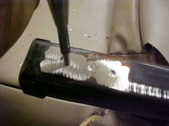
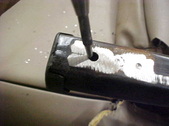
15 I centerpunched the rivets and welds and then just stairstepped a bigger sized drill bit. Just went deep enough on the spot welds to barely go into the base rail.
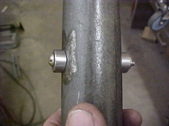
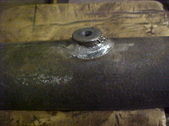
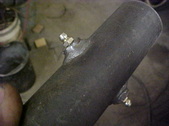
16 I pop the rivet head off and pry up to break the spot weld. Rivet head is off on the lower and the spot it about to break free here.
17 One tap with a hammer and it's off.
18 I'll just punch out the remaining rivet on the left and use it as a mounting hole.
19 Automatic center punch will work fine.
20 Quick and easy hole.
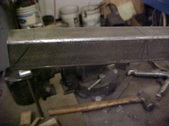
21 I slid a standard 1/4 inch bolt through. The head will clear the track fine.
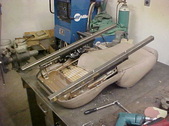
22 Did some measuring and drilled a single hole in 2 pieces of box tubing. I'll now mount them on.
23 With this done I can mark the other holes need by tracing the existing holes. No mismeasures that way. A lot quicker to.
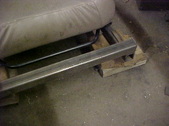
24 Seeing the trace, I just center punch for drilling.
25 Now the holes line up fine and I have a strong mounting frame to work from.
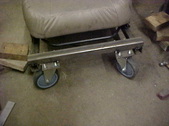
26 I want it as low as possible and I'll have to angle it some to do that. I blocked up the front and laid down on it till it was what I wanted. This is what I'll go off of.
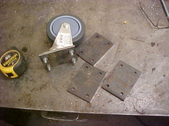
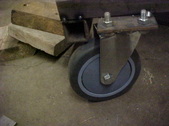
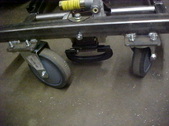
27 Had some bigger casters I pickup up at a yard sale. These do have bearings in them so they will be smooth. If you're going low budget, you can probably get a throw away stroller if you watch curbsides. Need a little more height so I'll move everything up using some 3/4" blocks. It'll just keep anything from dragging on uneven surfaces.
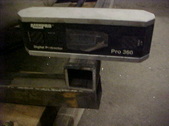
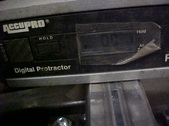
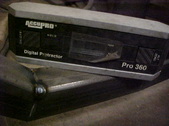
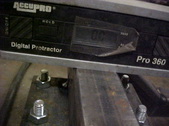
28 Using a digital protractor, it says it is a 6 degree angle. Now time to make the caster mounts.
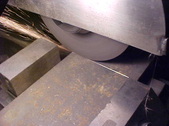
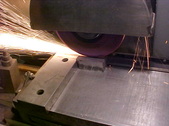
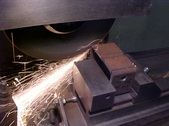
29 Got some flat stock and cut the to size on the surface grinder. I'll need 4 of them.
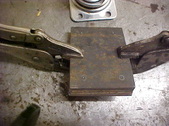
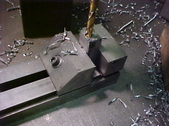
30 Once all cut, I trace one from the caster and mark the holes. Clamp them all together and drill them all at once.
31 Quick and easy.
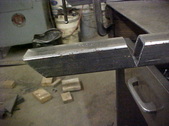
32 Cut another piece of square tubing for a crossmember/caster mount.
33 Used the digital protractor and tacked the box at zero degrees. Got lucky as this height was real close with the caster plate under it so I'll go with it. I'll just fill in the gap with weld when it comes time.
34 Caster clears the box at this position so it's a go for tacking on.
35 Front is ready so no the back is next.
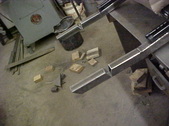
36 I want another flat section to mount the jack so where the rails extend I marked it. Did the math and got what 6 degrees would be in 1.25 inches and marked another line. I'll V cut between the lines leaving the bottom uncut. Gives me another reference point too. Just used a hacksaw.
37 Figured how much of a kick up I needed for the back casters while they were mounted to another crossmember I cut. Used the protractor again and got the angles needed. Marked them out and will cut with a hacksaw again.
38 One side done.
39 With both sides cut I can tack the crossmember and casters on. You can see the other kick up has been welded on the top.
40 With this tacked on, I'll put it on the floor and it should bend easily to close the gap in the pie cuts.
41 Basically just pull up on the crossmember and it'll go into position.
42 Front at zero degrees.
43 Middle within a degree.
44 Back is still good after tacking it.
45 Once I know that it's correct, I'll final weld everything.
46 I'm Mig welding it all so it goes quick.
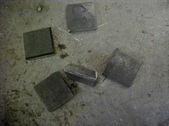
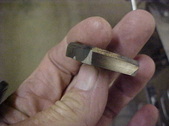
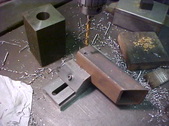
47 Didn't want the box tubing ends to be left open so I made up the 6 plugs needed. Angled the edges on both sides. One side so it will slip in and the other so the weld will fill in there. Corners angled too so they will stay in place after tapping them in to the desired depth.
48 Here's a close up of it.
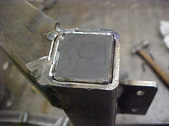
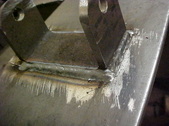
49 Hit the edges of the box with a die grinder to deburr and for weld fill. I just tap them into place with a hammer.
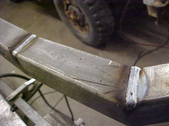
50 Weld to fill and not worried about the looks, going to grind it all smooth.
51 Quick hit with the 9 inch and it's smooth. I'll deburr and round off the corners later when everything is done.
52 Put it all together and when laying down there is too much kick up at the hinge. I'll trim this down some. Pulled the cover up to expose the foam.
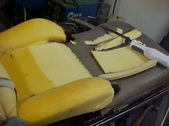
53 Handy hint. You can use a power knife to cut the foam. Works fast and does a great job. It's what pros use in their shops too.
54 Less than 3 minutes and it's done.
55 Next is to work out the back lift. This is going to be a little more involved than I first thought as there in no real solid back to mount to. Just tubes on the top and bottom. I'll overcome this by sliding a plate on the inside behind the foam. here I have cut to length and will weld it to the lower tube. the top will just rest against the top tube.
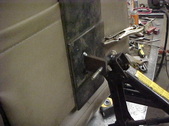
56 Put a piece behind as a heat sink to prevent the foam from burning.
57 Put the cover back on and you can't tell it is even there. Now I'll cut another plate for the outside and just drill and tap a couple holes. haven't decided on how the mount/mechanism will work. I'm more of a full size designer than an on paper. I didn't think about the scissors twist mount moving in/out and up/down so that will be a challenge to deal with.
58 I rounded the corners so they don't dig into or cut the fabric.
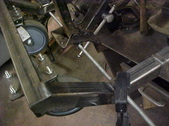
59 Now I can do some layout and measuring with actual pieces. Kind of a blank slate if you will.
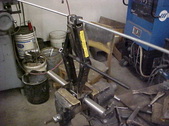
60 Tacked on a few collars to the ends of the jack and clamped a rod so I could see if it was goinG to work. I wanted the shaft to go under the seat so I can drive/adjust the jack from between my legs. Lots of stuff to get in the way as the shaft moves up and down over 5 inches and moves in and out as well.
61 Tacked a pivot point on a plate of steel so I can make adjustments easily till and quickly. One thing effects another here and it's not looking good.
62 Tried about every way I could so this looks like a no go. Time for plan B.
63 This won't be as handy but looks to be a lot simpler to do. I'll take the old pivot collars off and turn then 90 degrees. Looks like an even mount across will do just fine.
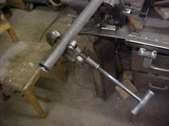
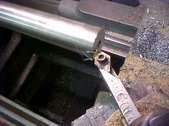
64 I'll keep it simple and just use a piece of pipe for a collar and find a solid bar to fit into it. 1 3/8" bar will be self supporting cross brace. Getting the desired length here with a pipe cutter.
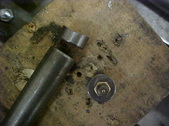
65 Drilled and tapped the bar with a 3/8 coarse. I'll just drill through the box tubing and squeeze the bar. Facing it to length here.
66 Not really needed but why not? LOL Decided to put some grease zerks but the pipe is too thin. Here is a way to to it. Drilled and tapped a piece of bar stock on both ends. I then got fancy and ground the radius of the pipe into it. Chamferred the ends and cut them off.
67 Drilled a hole all the way through both sides of the pipe collar.
68 Then use a long screw and tighten it. This keeps it all in place for welding and like another set of hands that is not in your way.
69 Makes welding a lot easier.
70 Did the other side as well and now I'm ready to tack it to the jack.
71 Cleaned up the weld points and tacked it on.
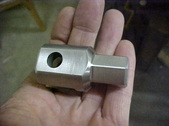
72 Need an adapter for the jack as I want to use a drill or ratchet. Could have just cut it off and welded something on but lets see how fancy we can get. Got some measurements for the hole placement and did that first.
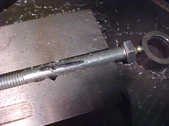
73 I then ground a slot for a tight fit and relieved the edge on the end to clear the flare that is present. I also ground a slot that will self lock the 7/16" bolt head.
74 Here you can see how that will work.
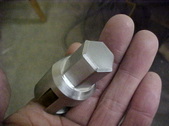
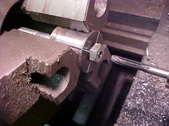
75 Decided to grind a 3/4" hex on the end so I roughed it in quick on the lathe to save grinding time.
76 Ground another flat on the nut side and chamferred and spun ground the edges.
77 Yeah, overkill! ;)
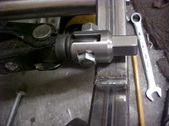
78 Adapter on and it works well. Know I can use either a cordless drill or ratchet with socket if needed.
79 Need a pivot point for the top side of the jack so off to the scrap pile. Nice little chunk is close to the right size so here we go.
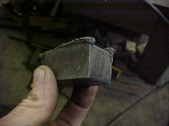
80 I'm going to slide it in here and then weld it solid. The width will give it some smoothness and less binding problems.
81 Bringing the sides true and to size with the surface grinder.
82 Once that's done, did some measurements and drilled a 3/8" hole through it.
83 Used the bars to eyeball align it and then tacked it in place.
84 Did some dry runs for placement for the pivots and measured for the holes. No obvious binding so I think this is going to be okay. Now I'll drill the holes to hold the lower bar.
85 Here's a hint if you want a straight hole. mark your hole an drill it to a smaller size. Then go to the drill press and drill though a thick piece of steel. This hole will now be straight so stick the drill through both holes and clamp down. Then just drill through the bottom. Takes the guess work out of it. Then just step up to your finish hole size from both sides and connect them.
86 As you can see, makes the holes dead straight as this is bolted in.
87 Next is the top pivot. I'll cheat and use a piece of box tubing. marked the hole where I needed it and drilled.
88 Cut it off the end and I'm cutting the top out here. Cut off wheel on a surface grinder makes this VERY simple.
89 After the cut there is basically no cleanup needed.
90 Rounded the corners with an angle grinder with a flap wheel.
91 Moved the seat and jack through the extremes(up and down) and settled a position. I marked that with tape when it was down. Disconnected it and brought it up to tack on.
92 Cycled it through again to be sure and all is fine. I then went ahead and did the finish welding.
93 For the upper pivot, I'll gun drill the bolt 1/2 way through and tap it for a grease zerk fitting.
94 I then drilled a hole in the middle for the grease to come out of.
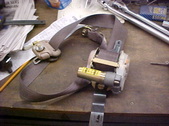
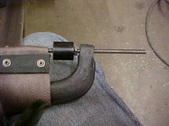
95 Figured I need a pull pull to move it around for any distance. It does have some weight and carrying it might get a little tiresome. I'm going to use a self retracting seat belt assembly from the same car.
96 Didn't want all the lock stuff so after some disassembly I found the slide cams that engage on a fast spin. A single tack weld is all that is needed to bypass it.
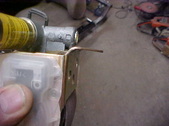
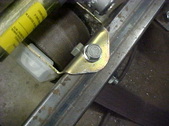
97 Looked around for the most out of the way place to mount the assembly and it ended up being under the headrest end. Mounting bracket was straight and saw if I bend a 90 on it I could use the existing holes and it would be locked in place.
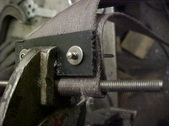
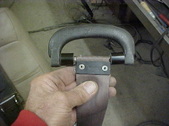
98 Drilled a 3/8" hole all the way through on the bottom and used a self tapping 5/16" on the top.
99 Up next is the belt handle. I want it so when pulled to full extension, it is where you need it. Let go and it winds itself right back. Wanted to use plastic here to keep from dinging everything. Simply folded the belt over and drilled through 2 pieces of flat plastic. Slid the rivet in and put a washer on the crimp end to spread the load.
100 I then cut the belts excess off. Cut 2 poly spacers to centralize the belt in an old handle I found. I'm using a nut on either side of the belt to hold it in place. You have to basically thread it through the handle so it's not going to thread out. I ended up moving the nuts on the other side of the spacer as it worked better.
101 All together and will work fine.
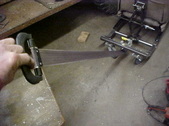
102 This is at full pull.
103 Let go and it puts itself away with no dragging. Easy to reach to move it too. When the seat is up it won't really be needed but when it's down it will be nice.
104 All back together and works great. This is the full down position.
105 Full upright position. Now I'll tear it all down and smooth everything for some paint.
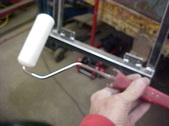
106 Got all the weld slag off and things smoothed out. Wiped it all down with some lacquer thinner to clean and now I'll paint it. I'll just use a brush and mini rolller.
107 If you have never used one of these for small stuff, do yourself a favor and do so. makes the job much quicker and easier. Less runs and even coat as well. I'm not putting any primer on this, just a top coat.
108 A few minutes and we're done.
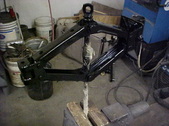
109 As you can see, It glosses out pretty well.
110 Wiped the jack down and just rattle canned it black again. I'll let it all dry and reassemble then.
111 Put it all back together and now it looks like something!
112 Cleaned up the seat and reattached some of the side trim where I could. You can also still move the seat some if you want it to go beyond upright. Don't know why you would, but you can.
113 Rolling around on it, it's as smooth as glass because of the ball bearings.
114 Casters were rated at 400 lbs each so hopefully I'll never overload it. LOL
115 I smoothed everything so it would catch or snag stuff.
116 Bottom rail was never cut clear apart, just pie cuts, bent and rewelded. Then ends were welded on.
117 Running up or adjusting takes seconds. Works super smooth and you can do it while on the creeper. Just reach around with your hand.
118 This isn't all the way up but it's at the comfortable spot!
119 Back support mount is easily held in place with the 2 bolts.
120 Put some poly washers to take up the gaps and keep it working nice. With the greaseable pivot there will be no issues.
121 Same on the bottom mount.
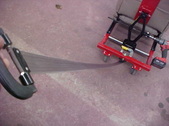
122 I resewed the seat where I had cut it apart for clearance. I don't claim to be a good sewer!
123 Pull is out of the way and tidy.
124 At full extend it is just where you need it and it bottoms out.
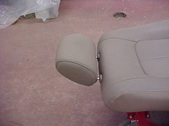
125 Let go and it rewinds itself. The Nut from the bolt mount also makes a nice catch to hold it up.
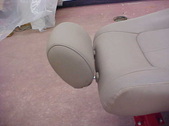
126 Another bonus on this seat is that it has adjustable headrests.
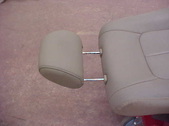
127 It rocks up and down.
128 It also extends and locks. Nice to have options. I'm real happy with the result and so will my back and neck when working. The height will be a limiting factor for some cars and lower vehicles but the truck I work on are pretty high so this is the ticket for me.