How Bulkheads Protect Waterfront
How Bulkheads Protect Waterfront Property from Long-Term Erosion
Waterfront properties are constantly exposed to natural forces that gradually reshape the shoreline. Wind-driven waves, water movement, changing water levels, and unstable soil conditions all contribute to erosion over time. While the damage may begin slowly, the long-term impact can become serious if the shoreline is left unprotected.
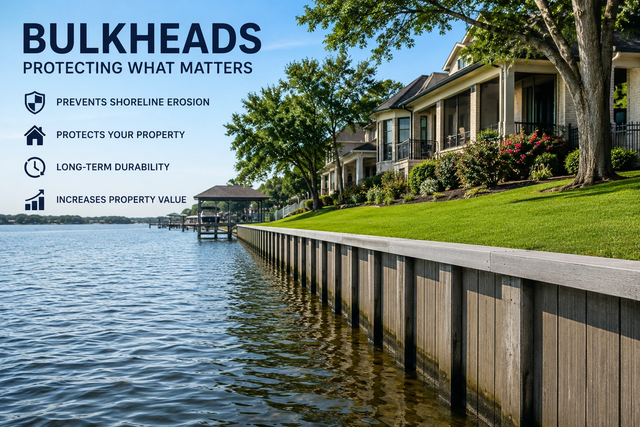
One of the most effective ways to stabilize a shoreline and reduce long-term land loss is through properly designed bulkhead construction. Property owners looking for durable shoreline protection solutions can explore available systems and construction approaches through Shore Protect Team LLC, where different types of bulkheads and waterfront protection methods are presented based on real project conditions.
What is a bulkhead
A bulkhead is a retaining structure installed along the shoreline to create a stable barrier between land and water. Its primary purpose is to hold soil in place and prevent erosion caused by constant water impact. Bulkheads are commonly used on lakes, canals, rivers, bays, and residential waterfront properties where shoreline stability is important.
Unlike temporary erosion control methods, bulkheads are designed as long-term structural systems. They not only stop land from washing away but also help preserve the shape, usability, and safety of the property.
Why waterfront erosion becomes a serious problem
Many property owners do not notice shoreline deterioration until visible damage appears. However, erosion begins much earlier and gradually weakens the shoreline over time.
Continuous wave action - repeated wave impact slowly removes soil particles from the shoreline, weakening the edge and creating gradual land loss.
Water level fluctuations - rising and falling water repeatedly saturates and dries the soil, reducing its stability and increasing the risk of collapse.
Boat wake and water movement - in canals and active waterways, constant water movement accelerates shoreline deterioration and increases pressure on the bank.
Unstable soil conditions - loose or sandy soils erode significantly faster because they cannot resist water pressure effectively.
Storm exposure - heavy rain, strong wind, and storms increase water force and often accelerate erosion dramatically.
Without proper shoreline protection, these factors continue to weaken the property boundary and create long-term structural risks.
How bulkheads prevent shoreline erosion
Bulkheads work by creating a physical barrier that separates soil from direct water exposure. This allows the shoreline to remain stable even under continuous environmental pressure.
Soil retention - the structure holds back soil and prevents it from sliding or washing into the water.
Wave impact reduction - bulkheads reduce direct wave interaction with the shoreline edge, minimizing erosion over time.
Shoreline stabilization - the structure creates a firm and consistent property boundary that remains stable even during changing conditions.
Support for surrounding structures - stabilizing the shoreline helps protect landscaping, docks, walkways, and nearby buildings from soil movement.
Long-term benefits of bulkhead installation
Properly designed bulkheads provide advantages that extend far beyond erosion control.
Protection of property boundaries - preventing land loss helps preserve the original dimensions and usability of the waterfront property.
Improved safety - stable shorelines reduce the risk of slope collapse, unstable ground, and dangerous shoreline conditions.
Reduced maintenance costs - long-term stabilization reduces the need for repeated shoreline repairs and temporary erosion control measures.
Enhanced waterfront usability - a stable shoreline creates better conditions for docks, piers, walkways, and recreational use.
Increased property value - protected waterfront properties are generally more attractive and maintain stronger long-term value.
Different bulkhead materials and their advantages
The performance and lifespan of a bulkhead depend heavily on the materials used during construction. Different environments require different structural solutions.
Wood bulkheads
Wood bulkheads are commonly used for residential waterfront properties. They provide a natural appearance and are often more cost-effective for moderate shoreline conditions.
Traditional waterfront appearance
Faster installation process
Suitable for many residential applications
Vinyl bulkheads
Vinyl systems are designed for durability and minimal maintenance. They resist water exposure and do not rot like natural wood materials.
Long-term durability
Low maintenance requirements
Resistance to moisture-related deterioration
Concrete bulkheads
Concrete structures are typically used in areas exposed to stronger water activity and higher structural loads.
High structural strength
Long service life
Suitable for demanding shoreline conditions
Common mistakes property owners make
Many shoreline problems become significantly worse because erosion is ignored for too long or because the wrong solution is selected.
Waiting too long - delaying shoreline stabilization often increases repair complexity and cost.
Choosing short-term fixes - temporary erosion control methods rarely provide long-term stability.
Ignoring soil conditions - selecting the wrong structure for the site can reduce effectiveness and lifespan.
Focusing only on initial price - lower-cost solutions may require more repairs and maintenance in the future.
Why professional design and installation matter
Bulkheads are structural systems that must withstand continuous environmental pressure for many years. Proper planning and installation are essential for long-term performance.
Factors such as water behavior, soil stability, drainage, anchoring systems, and material selection all influence how well the bulkhead performs over time. A properly designed system helps ensure durability, stability, and effective shoreline protection under changing waterfront conditions.
Final thoughts
Bulkheads are one of the most reliable solutions for protecting waterfront property from long-term erosion. By stabilizing the shoreline and reducing continuous soil loss, they help preserve land, improve safety, and maintain property value over time.
Every shoreline has unique conditions, which is why selecting the right bulkhead system is essential for achieving long-term performance. A properly planned and installed structure provides lasting protection and helps ensure that the waterfront remains stable, functional, and secure for years to come. |
May 25, 20260 Images0 visitsAlbum by william alley |
