7 Best Test Management Tools in 2026
7 Best Test Management Tools in 2026: Features, Integrations, and Comparison
As software architectures increase in complexity and release cycles shrink from months to daily deployments, Quality Assurance (QA) teams face an unprecedented challenge: maintaining high test coverage without causing release bottlenecks.
Traditional test management spreadsheets and legacy tools often struggle to handle modern continuous integration and continuous deployment (CI/CD) workflows. Today’s engineering organizations require unified testing solutions that bridge manual test execution, automated runner results, real-time analytics, and emerging AI technologies.
In this comparative analysis, we evaluate seven top test management platforms, examining their primary use cases, core capabilities, pricing structures, and technical trade-offs to help software development teams choose the right tool for their specific operational needs.
How We Evaluated the Best Test Management Tools
To ensure an objective comparison, we evaluated each platform across five core criteria:
Framework & Automation Integration: Native support for popular testing frameworks (Playwright, Cypress, Jest, PyTest, Cucumber, Robot Framework) and multi-repo CI/CD pipelines.
Manual & Automated Workflow Synergy: The ability to unify manual test execution and automated runner results into a single visual dashboard.
Usability & Workflow Fit: Interface responsiveness, setup complexity, and adaptability for both software developers and dedicated QA engineers.
AI-Assisted Capabilities: Verified AI feature support for generating test scenarios, analyzing execution logs, or accelerating manual test creation based on official vendor specifications.
Traceability & Ecosystem Flexibility: Integration with project management platforms (Jira, GitHub, Azure DevOps, GitLab) without enforcing rigid workflow constraints.
Quick Comparison of 7 Test Management Tools
Platform
Testomat.io
TestRail
Xray
Zephyr Scale
Qase
PractiTest
Katalon
Best For
Unified Manual & Automated QA
Structured Enterprise Manual Suites
Native Jira-Centric QA
Scalable In-Jira Test Management
Developer-Friendly Modern QA
End-to-End Compliance & Traceability
End-to-End Low-Code Automation
Manual Testing
Native
Native
Native (Jira UI)
Native
Native
Native
Supported
Automation Integration
Native framework CLI sync
REST API, CLI & JUnit XML ingestion
REST API & CI/CD pipeline plugins
REST API & automation triggers
Public API, Webhooks & native SDKs
REST API & PractiTest FireCracker JAR tool
Native low-code automation suite
AI Capabilities
AI test generation & QA agent integrations
AI-assisted code drafting (TestRail Automate with AI)
Third-party / Atlassian Intelligence extensions
Atlassian Intelligence integration
AI scenario drafting & auto-completion
Smart insights & analytics-focused AI features
AI visual testing & auto-healing locators
Pricing & Trial
Tiered SaaS (Free plan / Free trial available)
Paid per user/month (30-day free trial, no free plan)
Paid per user/month (30-day free trial for Jira Cloud)
Paid per user/month (30-day free trial for Jira Cloud)
Tiered SaaS (Free plan / 14-day free trial available)
Paid per user/month (14-day free trial, no free plan)
Freemium / Tiered annual plans (Free trial available)
Primary Ecosystem Fit
Cloud / Multi-stack CI/CD
Cross-platform Enterprise
Atlassian Jira Ecosystem
Atlassian Jira Ecosystem
Modern SaaS & Developer Teams
Regulated & Enterprise QA
Integrated Automation Platform
1. Testomat.io — Best for Unified Manual and Automated Testing
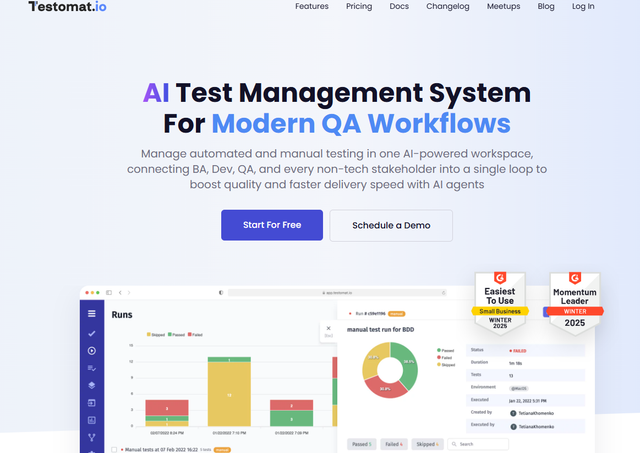
testomat is a cloud-based test management platform designed specifically for Agile teams operating in hybrid environments where manual testing and automated testing co-exist closely. Rather than requiring engineers to manually copy test structures into a standalone web portal, it synchronizes codebase-driven test scripts directly with a central visual dashboard.
Key Strengths & Core Capabilities
Code-to-Cloud Test Synchronization: Uses dedicated CLI utilities to parse automated test suites written in Playwright, Cypress, Jest, PyTest, Cucumber, and Robot Framework. It creates and updates matching test cases in the cloud management dashboard automatically whenever code changes are committed.
Unified Reporting Hub: Merges manual test runs with automated CI/CD pipeline execution results into unified dashboards, providing stakeholders with a single source of truth for build quality across multiple repositories.
AI-Assisted Test Management and QA Agents: Accelerates test design by generating structured manual test cases directly from user stories, product requirements, and Jira tickets. For teams seeking deeper workflow automation, integration with specialized external AI tools like an ai agent for qa testing allows developers to automate project-level triage and requirement parsing.
Flaky Test Analytics: Tracks historical execution data over time to highlight unstable tests, helping QA leads identify intermittent environment failures and maintain pipeline reliability.
End-to-End Workflow Example
In a typical continuous delivery setup, Testomat.io coordinates quality assurance across every stage of development:
Requirements: Product managers outline feature criteria in Jira or markdown docs.
Test Cases: QA engineers generate structured test cases using built-in AI assistance.
Automated Execution: Developers implement automated Playwright or Cypress tests locally; the CLI syncs these steps directly to the test management board.
CI/CD Results: Upon pull request creation, automated test runners execute the suite and report real-time status back to the dashboard.
Analytics: Quality leads analyze unified pass/fail rates and flaky test metrics across both manual and automated suites.
Operational Application: CI/CD Execution Gating
Rapid validation strategies are critical in continuous deployment environments. For example, teams can include smoke testing after each new build in their CI/CD validation process to quickly verify whether core application functionality works, preventing broken code from triggering long, resource-intensive regression suites.
Verified Limitations
Requires initial setup of CLI importers or API configuration to enable codebase synchronization for custom testing frameworks.
2. TestRail — Best for Structured Enterprise Manual Suites
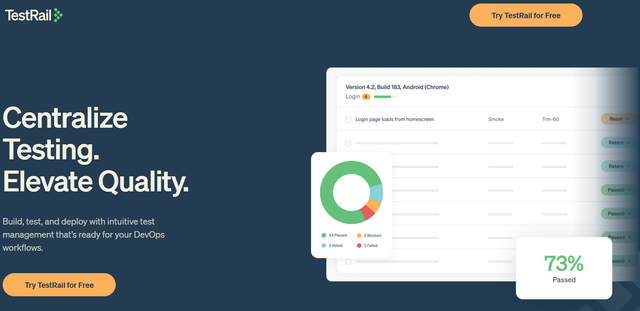
TestRail by Idera is one of the most widely adopted test case management systems, designed primarily for enterprise QA departments managing large, highly structured manual test repositories.
Key Strengths
Flexible hierarchical organization for enterprise test cases, milestone tracking, and audit-friendly execution logs.
Comprehensive built-in reporting templates for tracking release readiness and test coverage.
Extensive native integrations with issue-tracking platforms, including Jira, Redmine, and GitHub.
Integration Approach & AI Features
While historically centered on manual test management, TestRail supports automated result ingestion via its REST API, TestRail CLI, and JUnit XML parsers. Additionally, features like TestRail Automate with AI assist QA teams by generating initial automation script drafts based on manual test descriptions, which engineers can then review and refine.
Verified Limitations
Highly complex configurations across large enterprise projects may require dedicated administrative oversight to maintain clean user permission structures.
3. Xray — Best for Native Jira-Centric QA Workflows
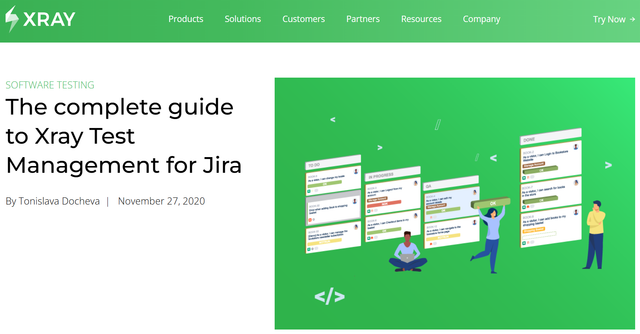
Xray is a specialized test management application built natively on the Atlassian Jira infrastructure. It models tests, test sets, preconditions, and test executions directly as native Jira issue types.
Key Strengths
Eliminates the need for separate external user accounts by operating entirely inside the Jira interface.
Establishes direct traceability between user stories, software requirements, and test execution outcomes on Jira boards.
Offers native support for Behavior-Driven Development (BDD), enabling teams to write Cucumber scenarios directly within Jira tickets.
Integration Approach
Xray ingests automated test results through dedicated REST APIs and CI/CD plugins (Jenkins, GitLab CI, GitHub Actions), mapping automated execution statuses back to corresponding Jira test issues.
Verified Limitations
Because it is built exclusively for the Atlassian platform, engineering teams that do not use Jira as their primary issue tracker cannot deploy Xray as a standalone tool.
4. Zephyr Scale — Best for Scalable In-Jira Management
Zephyr Scale (developed by SmartBear) is designed for organizations using Jira that require scalable test planning across multiple teams without clogging standard Jira issue hierarchies.
Key Strengths
Stores test assets within an optimized, dedicated database inside Jira, keeping project navigation fast even when managing thousands of test cases.
Supports cross-project test library sharing and version control for reusable test steps across different product releases.
Provides clear visual gadgets and sprint execution reports inside Jira dashboards.
Integration Approach
Zephyr Scale provides documented REST APIs and automation integration endpoints, allowing execution data from external frameworks like Selenium or JUnit to populate its reporting metrics.
Verified Limitations
Advanced reporting features that combine data from non-Atlassian development tools require custom API scripting to aggregate metrics externally.
5. Qase — Best for Modern Developer-Centric Teams
Qase is a modern SaaS test management platform recognized for its clean, responsive user interface and developer-friendly workflow integrations.
Key Strengths
Intuitive user experience with minimal onboarding overhead for both developers and QA engineers.
Built-in defect management that can automatically create issue tickets in GitHub, GitLab, or Jira when a test fails.
Public test reporting links and real-time execution views for fast stakeholder updates.
Integration Approach
Offers official SDKs for major programming languages (JavaScript/TypeScript, Python, Java) along with a flexible REST API, simplifying the process of pushing automated build results straight into test suites.
Verified Limitations
Advanced compliance framework controls (such as strict electronic signature workflows) are less tailored for heavily audited industries than specialized governance tools.
6. PractiTest — Best for Compliance and End-to-End Traceability
PractiTest is an enterprise test management solution built for QA organizations that operate under strict regulatory compliance requirements, such as medical technology, financial services, and defense engineering.
Key Strengths
Features an advanced hierarchical filter tree system instead of static folders, allowing users to slice test data by multiple metadata attributes.
Provides end-to-end traceability linking business requirements directly to test design, execution runs, and bug fixes.
Strong security controls, granular user permission levels, and compliance audit logging.
Integration Approach
PractiTest connects to external automation frameworks using its REST API and the PractiTest FireCracker utility—a dedicated JAR-based tool that parses XML test result files from CI/CD pipelines and maps them to PractiTest fields.
Verified Limitations
The tag- and filter-based organization model requires initial team training to set up efficient data categorization compared to traditional folder structures.
7. Katalon — Best for Integrated Low-Code Automation
Unlike standalone test management platforms, Katalon offers an integrated testing platform that combines low-code test authoring, automated execution, and centralized reporting within a unified product ecosystem.
Key Strengths
All-in-one suite for teams seeking codeless or low-code test creation across web, mobile, desktop, and API applications.
Centralized analytics hub (Katalon TestOps) providing execution dashboards and AI-assisted failure classification.
Built-in visual testing capabilities and self-healing object locators to maintain test script stability.
Integration Approach
Operates primarily within its proprietary software suite, while offering plugins for standard CI/CD build engines such as Jenkins, Azure DevOps, and GitLab.
Verified Limitations
Less specialized for engineering teams that prefer writing custom, code-first automation scripts (such as custom Playwright or Cypress framework setups) independently of a vendor ecosystem.
Which Test Management Tool Should You Choose?
Selecting the right platform depends on your team's existing infrastructure, engineering culture, and test automation maturity:
For Agile Teams with Hybrid QA (Manual + Code-First Automation): Testomat.io provides the most seamless bridge between code repositories, CI/CD pipelines, and visual test management.
For Jira-Bound Engineering Teams: Xray or Zephyr Scale offer deep Atlassian integration without requiring external software management.
For Regulated Enterprises & Compliance Workflows: TestRail and PractiTest supply strict structure, deep auditing logs, and formal requirement traceability.
For Fast-Growing SaaS Startups: Qase offers an easy-to-deploy, modern UI with developer-friendly APIs and SDKs.
For Low-Code Automation Focus: Katalon serves organizations looking for an all-in-one platform for visual test creation and execution tracking.
Frequently Asked Questions
What is the best test management tool in 2026?
The best tool depends on your team's operational requirements. For Agile teams combining manual QA with code-first automation (Playwright, Cypress, PyTest), Testomat.io is a top choice. For organizations whose entire workflow centers on Atlassian products, Xray or Zephyr Scale are ideal.
What is the best alternative to TestRail in 2026?
The best alternative depends on why you are looking to switch. If your team wants a modern cloud-first tool that syncs directly with automated codebases (Playwright, Cypress), Testomat.io is an excellent alternative. If your primary goal is tighter Jira integration, Xray or Zephyr Scale serve as strong alternatives.
Which test management tools support automated testing?
Most modern platforms support test automation. Solutions like Testomat.io offer native code synchronization via CLI tools, while platforms like TestRail, PractiTest (via PractiTest FireCracker), and Qase ingest execution results via REST APIs, SDKs, or XML report parsers.
What is the difference between test management and test automation?
Test management platforms plan, organize, track, and report on all testing activities across manual and automated workflows. Test automation tools (such as Playwright, Cypress, or Selenium) execute software scripts to verify functional application code automatically.
Which test management tool integrates with Playwright?
Testomat.io features dedicated CLI utilities that parse Playwright test suites and automatically update cloud test cases. Other platforms, including Qase, TestRail, and Xray, ingest Playwright test outputs using API uploaders or JUnit XML reporters.
Can AI improve test case management?
Yes. AI features in modern test management tools assist QA teams by generating manual test scenarios from user stories, summarizing complex execution failure logs, categorizing flaky test behavior, and streamlining project documentation tasks. |
November 7, 20260 Images0 visitsAlbum by willu akar |
