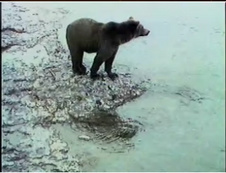
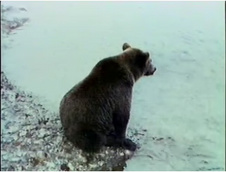
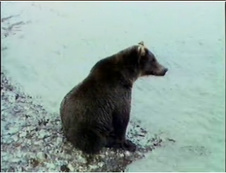
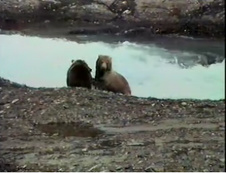
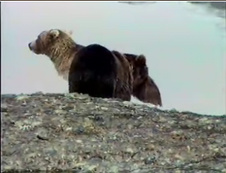
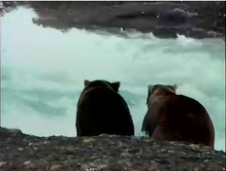
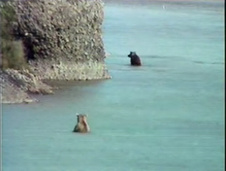
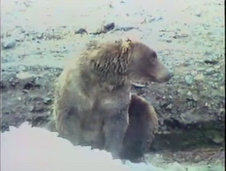
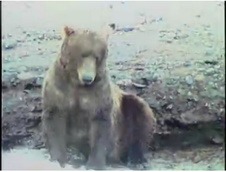
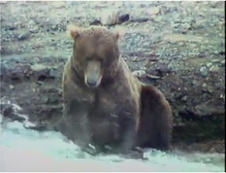
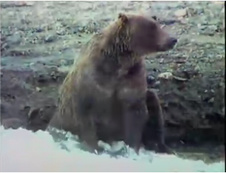
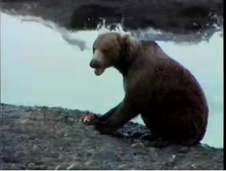
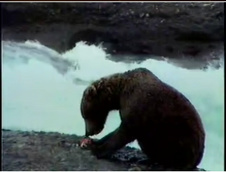
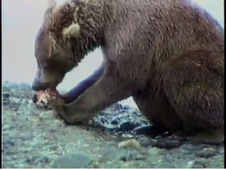
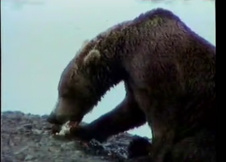
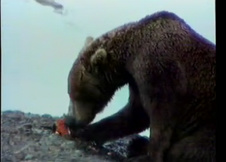
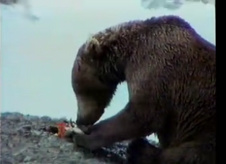
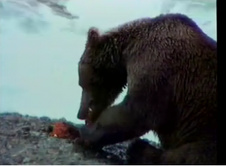
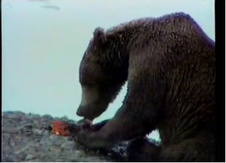
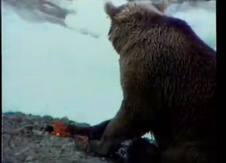
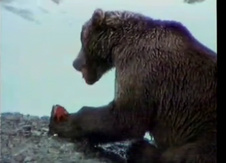
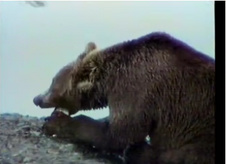
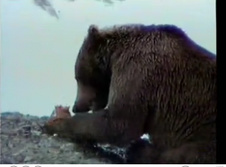
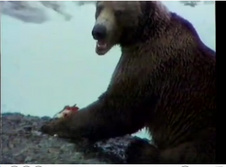
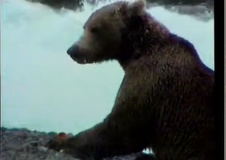
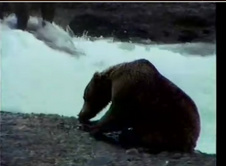
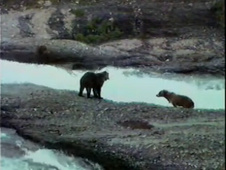
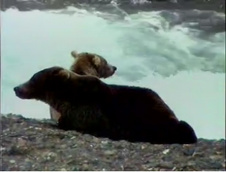
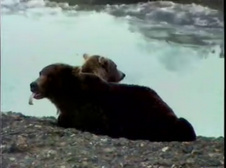
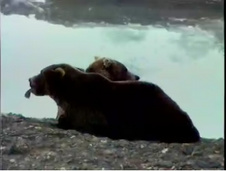
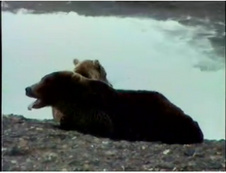
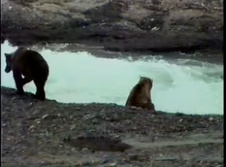
"Roughly how many bears live in a square mile?" "How many bears can be found in the sanctuary/and or surrounding area?" Again, citing Seller and Aumiller 1994, the McNeil Management Plan states that “During the peak of the chum salmon run, brown bear density within the core four square miles around the falls was over 28 bears per square mile…Over 100 individual bears have been observed in this core area on several different days. This represents a minimum number, as it does not take into consideration less tolerant bears that fish at McNeil falls during hours when humans are not present nor is a bear counted unless it is one that staff is confident of recognizing a second time (Aumiller, pers. comm..).”
"What types of foods will they continue to eat until they hibernate?" Salmon (chum - spawned out and live, pink, silver), vegetation (grass, Cow Parsnip, Angelica, sedge), berries.
"How many acres of land does a bear need to maintain a quality of life?" The answer to this question depends on the quality of the habitat and how concentrated food resources are within that habitat. Bears need large areas of unfragmented habitat to get what they need to live and survive as a population (home range). Bears living along the coast have access to more concentrated food resources and may have relatively smaller home ranges compared to bears living in the interior habitats where food resources are more dispersed. Here’s an example from a recent study estimating brown bear population densities just north of McNeil in Lake Clark National Park & Preserve (Lake Clark NPP). The Alaska and Aleutian mountain ranges meet within Lake Clark NPP and split the park into coastal and interior habitats. Brown bear populations in the interior portion of the Lake Clark watershed were estimated at 326+ 125 individuals with a density of 39+11 bears per 1,000km2. The coastal population of brown bears living within Lake Clark NPP was estimated at 466+ 232 individuals with a density of 147+72 bears per 1,000km2."