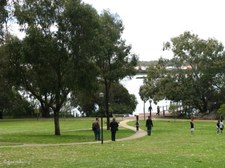
Located 20 kms north of Perth, the 1,400 hectare Yellagonga Regional Park features lakes and wetlands including Lake Joondalup. The area was an important camping area for local Nyoongar Aboriginal people and is named in honour of Yellagonga who was the leader of the Mooro clan of Nyoongar people who inhabited the region at the time of European settlement. Yellagonga Regional Park protects an important chain of wetlands and surrounding bushland of Banksia and Eucalypt woodland with many species of Western Australian Wildflowers. The diversity of these habitats supports a wide variety of wildlife. Nestled between the cities of Joondalup and Wanneroo, the park runs north-south and provides a number of excellent picnicking locations and walking trails.
October 2008Showing 1-132 of 13229141 visitsAlbum by gladysclancyPhotos by Gladys
Entering Yellagonga Regional Park1
Pathway through the Bushland2
A glimpse of Lake Joondalup ahead3
Grasstrees (Xanthorrhoea preissii)4
Majestic Old GrasstreeXanthorrhoea preissi5
Lake Joondalup with Neil Hawkins Park in foreground6
Statue of Bibbulmun Woman and DingoThe woman is a Bibbulmun Yorga. The Bibbulmun tribe gets the name from the fact that they came from the hills country that follows the coastline. These hills have many features that resemble women's breasts or bibbys and also the fact that it is an area ruled by matrilineal moiety.7
Statue of Bibbulmun Woman and DingoThe woman is wearing a kangaroo skin cloak called a buka (pronounced boo-ka). On her head she is wearing a yaggardi. She is holding a wooden dish called a yandi (East Coast Coolamon). The dish carries water, fire wood, food, babies. She is holding a wanna (digging stick).8
Statue of Bibbulmun Woman and DingoThe dog is called dwerda and is the clan totem for Wanneroo, Yanchep, Moora areas. Borunga means totem and Borongorup is the birthplace of all Bibulmun just like the Garden of Eden to Christians. Wanneroo is a songline for a country. Wanneroo is derived from Bibbulmun sacra word which denotes the country of vegetable foods, yams, yanget and tuart roots. How coincidental the Southern Europeans set up market gardens in this area.9
Walking towards the Lake10
Closer to the Lake11
People Feeding the Birds12
Let Nature Feed Itself!Feeding the birds, fish and tortoises that you see living in Lake Joondalup can be harmful to their health. Artificial foods can cause sicknes and in some cases lead to their death.13
Feeding the BirdsNote the Sign at left!14
Birds eating the Seed15
Lake Joondalup looking South16
Reeds along the edge of Lake17
Islands in Lake Joondalup18
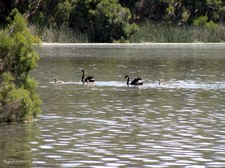
Black Swans and Ducks19
Duck and DucklingsPacific Black Duck (Anas superciliosa)20
Duck and DucklingsPacific Black Duck (Anas superciliosa)21
Ducks and Black SwanNote Cygnet near post22
Black Swan (Cygnus atratus)23
Black Swan with CygnetCygnus atratus24
Black Swans with CygnetsCygnus atratus25
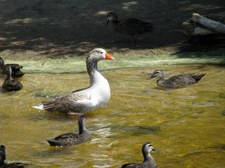
Goose and Ducks in shallows26
Ducks in the Shade27
ReflectionsPaperparks on the shoreline28
Upper branches of Paperbark (Melaleuca)29
Flowers of Paperbark (Melaleuca)30
Fallen Bark from Paperbark (Melaleuca)31
Banksia sessilis32
Banksia sessilis33
Milkmaids (Burchardia umbellata)34
Cutleaf Hibbertia (Hibbertia cuneiformis)35
Milkmaids (Burchardia umbellata)36
King Spider Orchid (Caladenia pectinata)37
King Spider Orchid (Caladenia pectinata)38
Bull Banksia (Banksia grandis)39
Cottonheads (Conostylis)40
Cottonheads (Conostylis)41
Purple Tassels (Sowerbaea laxiflora)42
Native Wisteria (Hardenbergia comptoniana)43
Trigger Plant (Stylidium)44
Trigger Plant (Stylidium)45
Geraldton Wax (Chamelaucium)46
Geraldton Wax (Chamelaucium)47
Granny's Bonnet (Isotropis cuneifolia)48
Stinkwood (Jacksonia sternbergiana)49
Stinkwood (Jacksonia sternbergiana)50
Fungi51
Twining Fringe Lily (Thysanotus patersonii)52
Twining Fringe Lily (Thysanotus patersonii)53
BBQ Area54
Childrens Playground55
Walk / Cycle Pathway56
Banksia and Eucalypt WoodlandOpen forest of Jarrah, Marri and Banksia, with scattered Tuart trees.57
Bull Banksia (Banksia grandis)58
Bull Banksia (Banksia grandis)59
Bull Banksia (Banksia grandis)60
Bull Banksia (Banksia grandis)61
Bull Banksia (Banksia grandis)Fallen Seed Cones62
Crow preening its FeathersBut the eye is still watching me!63
Zamia (Macrozamia riedlei)64
Galah (Cacatua roseicapilla)65
Galah (Cacatua roseicapilla)66
Mangles Kangaroo Paw (Anigozanthos manglesii)67
Cottonheads (Conostylis)68
Green Mulla Mulla (Ptilotus polystachyus)69
Green Mulla Mulla (Ptilotus polystachyus)70
Yellow Leschenaultia (Lechenaultis linarioides)71
Yellow Leschenaultia (Lechenaultis linarioides)72
King Spider Orchid (Caladenia pectinata)73
King Spider Orchid (Caladenia pectinata)74
Golden Longheads (Podotheca gnaphalioides)75
Golden Longheads (Podotheca gnaphalioides)76
Stinkwood (Jacksonia sternbergiana)77
Stinkwood (Jacksonia sternbergiana)78
Cottonheads (Conostylis)79
Blue Devils (Eryngium pinnatifidum)80
Dainty White Flower81
Butterfly in the Grass82
Butterfly in the Grass83
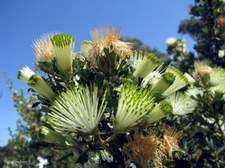
Flat-Topped Coneflower (Isopogon asper)84
Flat-Topped Coneflower (Isopogon asper)85
Cutleaf Hibbertia (Hibbertia cuneiformis)86
Cutleaf Hibbertia (Hibbertia cuneiformis)87
Cutleaf Hibbertia (Hibbertia cuneiformis)88
Rush-Leaved Patersonia (Patersonia juncea)89
Grasstrees (Xanthorrhoea preissii)90
Mixed Vegetation91
Grasstrees (Xanthorrhoea preissii)92
Cottonheads (Conostylis)93
Twining Fringe Lily (Thysanotus patersonii)94
Wild Violet (Hybanthus calycinus)95
Banksia sessilis96
Bee on Banksia sessilis97
Purple Tassels (Sowerbaea laxiflora)98
Milkmaids (Burchardia umbellata)99
Grasstrees (Xanthorrhoea preissii)100
Banksia and Eucalypt Woodland101
Duck's Nest high above the ground in Hollow TreeEnlarge to see Down in 'V' of hollow102
A well-used Tree HollowMost likely a Parrot's nest103
Lakeside vegetation including Freshwater Paperbarks104
Along the winding Pathway listening to songs of the Birds105
Tall Trees tower above the understorey106
Lake Joondalup beyond the Trees107
Eucalypt Woodland with Zamia understorey108
the Trees were alive with the sounds of Birds109
Cutleaf Hibbertia growing in old Tree Stump110
Decorative Seed PodsPossibly an introduced grass species111
Broomrape (Orobanche)Possibly an introduced species112
Environmental WeedsThe colourful flowers of Environmental Weeds may be pretty to look at, but unless controlled, they overtake the local natural vegetation. Sections of this Park were previously cleared and used for pasture and grazing which has encouraged the spread of these introduced weeds.113
Environmental WeedsThe presence of environmental weeds is a major problem within the Park. The area occupied by weeds continues to grow and unless controlled will lead to the eventual demise of the local vegetation.114
Environmental WeedsThe invasion of weeds is a major threat to the conservation values of the Park and it is vital that measures are introduced to limit or control the degradation processes.115
Environmental WeedsThere are many reasons for the presence of weeds in the Park including:- Past land uses such as clearing and developing pasture for grazing; Soil disturbance from vehicle access; Construction of paths and other facilities or drainage channels which allow weeds to establish; Frequent fires which promote the growth of weeds; Drainage outlets that carry storm water from adjoining areas and promote the spread of weeds in wetland areas; Dumping of garden refuse in the Park which introduces many plants that vigorously compete with local vegetation; Invasive species being planted in adjoining gardens; Increased nutrient levels; Transportation of weed seeds by birds; and Grasses planted for amenity purposes in parkland settings invading bushland areas.116
Native Flora with some Environmental Weeds117
Viewing PlatformThis platform situated on a rugged limestone outcrop overlooks Lake Joondalup and the bushland that makes up Yellagonga Regional Park118
Lake Joondalup from Viewing Platform119
Lake Joondalup from Viewing PlatformSuburb of Wanneroo on the horizon120
Lake Joondalup from Viewing PlatformWalkway/cycleway below121